A passionate but disappointing Las Fallas
Pieter Hildering
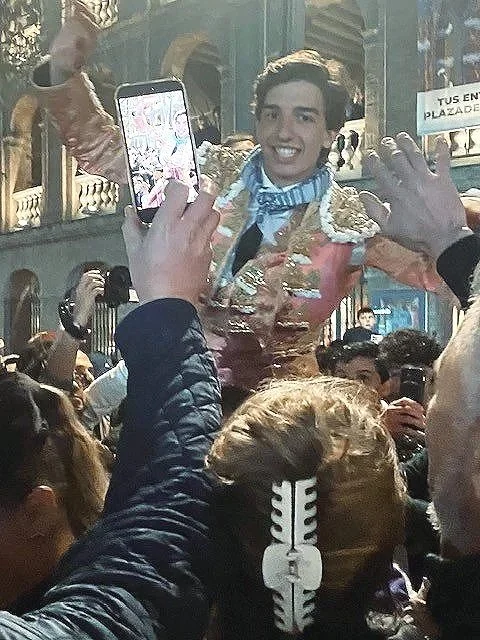
Novillero Julio Norte leaves Valencia’s bullring on shoulders (Image by Pieter Hildering)
Sebastián PalomoLinares was the very first torero I saw in a Fallas corrida. He appeared with Montalvo bulls alongside Dámaso González and José María Dols Abellán Manzanares. All three have since passed to the eternal dehesa in the sky. I had come to Valencia to attend a so-called ‘corrida de arte‘ with matadors Antonio Chenel Antoñete, Curro Romero, Rafael de Paula, Curro Vázquez, Pepe Luis Vázquez and Luciano Núñez. I don’t think I‘d ever heard of an artistic bullfight before, but it was a good excuse to see Romero and, especially Paula. Fourty-one years later, this happened:
Friday afternoon March 13: La Quinta gets a second chance and blows it
La Quinta had brought eight good-looking specimens of pure Santacoloma to Valencia. They hoped for another glorious performance of their bulls. “We’ve selected four four-year-olds and four five-year-olds and, of course, hope they’ll be as succesful as last year,” said ganadero Martínez-Conradi when he accepted the trophy for ‘Famoso‘ as ‘best bull of Fallas 2025’, which – under the appreciative eye of King Felipe– had given local torero Román the finest evening of his season.
Almost a year later, Román was back. With him stood the Malagueñan Fortes and David Pérez Sánchez, known as David de Miranda. On paper, a line-up for aficionados, though it seems they were the only ones here as the plaza was only half full when the paseíllo got under way.
The first bull was named ‘Cuarteron‘. He weighed 500 kilos, had the familiar grey colour and was greeted with a passionate ovation. Fortes stepped out to welcome him but had the capote ripped from his hands at the first attempt at a verónica. The bull was piced badly (in the coming events, almost every bull would be piced too far back, or in the ribs) and gave no trouble to the banderilleros. A dedication to the public was followed by fine series of righthand passes which were applauded by the public, but “the bull had no left horn,” so naturales were out of the question. Fortes continued with elegantly linked derechazos. His first attempt to kill failed but a well-placed sword brought the bull down. ‘Cuarteron‘ was dragged out of the ring in silence.
During the sorteo that morning, I had picked out a bull as my favourite. His name was ‘Cartujano‘, a large, alert, dark grey toro with great horns. I was convinced this bull would equal his illustrious predecessor ‘Famoso‘. He was Fortes’ second opponent. But, although the bull charged the horse from a distance, it immediately sank to its knees, and, while he proved no problem for the banderilleros, he could not keep up with the pace of the faena and was quickly dispatched of.
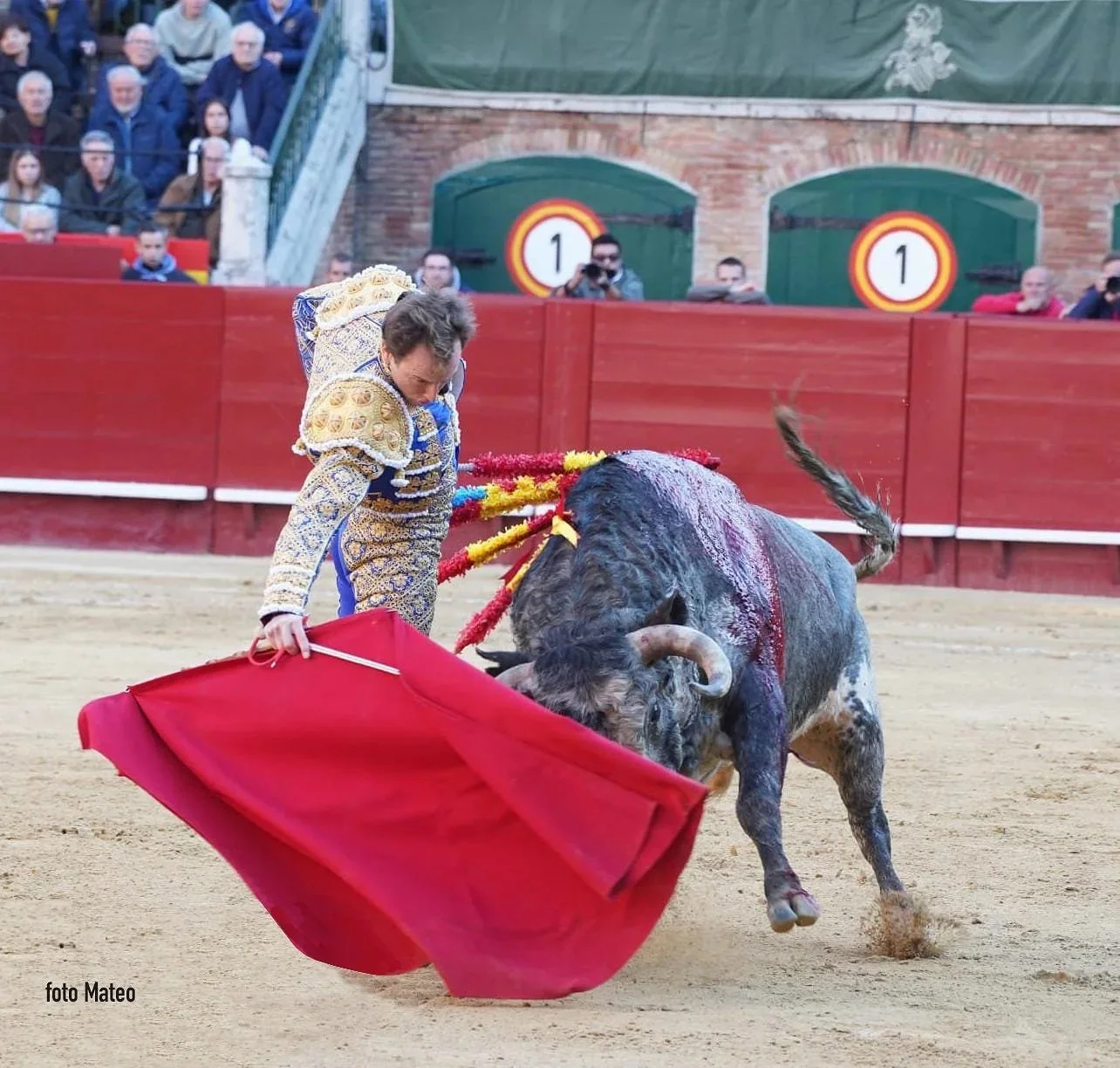
Román’s swordwork let him down this year (Image by Mateo)
‘Corbatillo‘ was a light grey animal weighing 505 kilos and the first for Román. While the bull’s trapío was applauded, the valencian’s first verónicas were cheered. Fernando Sánchez placed two remarkable pairs of banderillas and Román started his faena with a fine series of righthand passes cited from a great distance. Another series followed and the muleta changed from right to left hand. But, because the bull refused to use its left horn and Román had to go back to his original muletazos, the faena became a bit tedious. An estocada trasera finally got the bull down and a small section of the public waved everything they could lay their hands on. Román thanked his supporters from within the white lines. His second bull was a serious and well-built animal which was given an ovation from the crowd when it entered the ring, as was Fernando Sánchez for keeping the memory of Montoliú alive. Román’s second faena was a copy of his first. Again he cited from a great distance to which the bull charged. “Tiene alegría,” remarked my neighbour. It was an expression I had heard before but never understood. As I watched the eager, almost cheerful way it repeatedly attacked the muleta, I understood what alegría in a bull meant. No doubt Román’s fine faena was inspired by this bull and he would have surely been rewarded for his efforts had the sword had been more accurate. Instead, he was given a polite applause.
The first bull for de Miranda fell over as soon as it hit the capote and again after it felt the picador’s sting. It took some time to convince the president to show the green flag and ‘Ibarreño‘ joined the herd of cabestros to exit the arena. The plaza de toros in Valencia doesn’t have its own group of oxen. For some years now, it has rented them from Florencio Fernández Florito: he might have retired from Las Ventas, but in Valencia he is lord and master over these well-trained creatures. I imagine, once the feria is over, they are boxed up and leave for another ox-less bullring.The substitute bull in no way deserved to be called a toro de lidia and I was surprised it had passed the rigorous veterinary examination. This sad imitation of a bull was surely shoved in by the ganadería to make up for the required number and was never expected to be called for. It was certainly not a bull to celebrate de Miranda’s first visit to Valencia. It was quickly despatched.
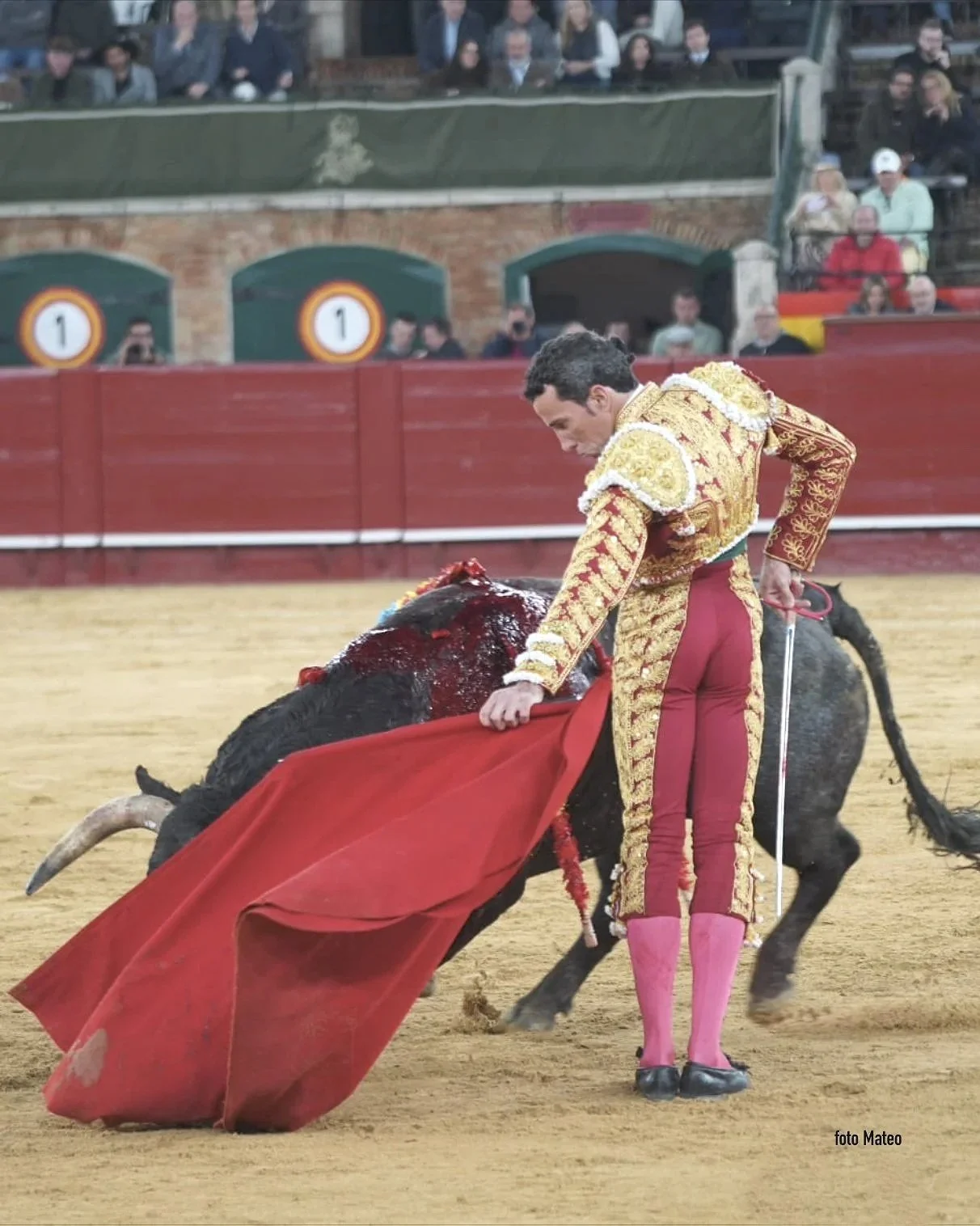
David de Miranda making use of the pico (Image by Mateo)
De Miranda’s last bull had no intention to work with him, but we were given a fine example of the matador’s excellent technique. First we were treated to a handful series of lovely right-handers, and, after unsuccessfully tempting the bull on the left with the smallest of muletas, the matador resorted to the pico to move the animal around him, which it did in fine oval curves. It was the first time I had seen someone genuinely apply the outside tip when offering the ‘panza’ of the muleta didn’t work. De Miranda cut the first ear of the feria.
Saturday afternoon March 14: The first Puerta Grande
Samuel Navalón, the 21-year-old matador from Ayora, was awarded his first Valencian trophy two years ago in a novillada sin picadores. Since then, his star had been rising until that fateful afternoon in Algemesí six months ago when he was almost decapitated by a Carmen Arroyo novillo. So gruesome was the injury that it was uncertain when he would ever return to the ring. But today, a fully-recovered Navalón stood between Alejandro Talavante and Andrés Roca Rey to face six bulls from Victoriano del Río. The crowd welcomed him with a heartfelt ovation.
After a quite of chicuelinas, Talavante’s first bull withdrew against the wooden fence without any intention to engage in an encounter with the matador. And even though Talavante tried to start a faena, it was no use. All that was left was a silent exit for the dead bull and silence for the torero. The fourth victoriano received two good pics and was well prepared by Talavante’s banderilleros. Surely we were in for a treat? But, after passing the bull on his knees, the show ended and the expected treat never happened. (I told my neighbour I thought Talavante the most un-aesthetic matador on the planet, and she agreed.) Like an over-confident cockerel, Talavante strutted around the bull while he ocasionally shook his muleta. He never completed one pass and always offered the pico of the muleta, well away from the bull. His sword went in through the ribs and we trembled at the idea having to sit through this again in five days‘ time.
Roca Rey was back in the Valencian arena and was ready to face his first toro bravo which went by the name of ‘Jarretero‘. The bull weighed 590 kilos, overturned the horse on the first encounter, and, after an excellent quite of chicuelinas by Navalón, bull and matador met. The faena started in the centre of the plaza with two series of derechazos and a couple of new-fangled naturales. But the Roca Rey show really caused a sensation when he slowly circled the bull around him from back to front, and, had his sword been as good as his muleta, he surely would have been awarded an ear. Unfortunately, he needed too many attempts to kill.
The Peruvian’s performance continued with ‘Jaceño‘, only six kilos heavier than his predecessor, but equally imposing. ‘Jaceño‘ was another bull with ‘alegría’, another eager animal. After a spectacular battle with the picador, it charged the muleta from a great distance and seemed to take control of every situation. This confused the matador who was led around the arena and wasted an amazing bull. Roca Rey left Valencia empty-handed.
Samuel Navalón made his presence in the Valencian bullring felt with two confident and well-acclaimed largas cambiadas and some excellent capework, and, after a series of low righthand passes with which he started his faena, there was no doubt that the young Valencian had fully recovered from his injuries. The vigour and commitment in keeping the bull concentrated on the muleta in a series of well-linked and slow naturales brought the crowd to their feet. “Torero! Torero!,” they shouted, and weren’t put off when the sword first hit bone before it sank into the bull’s back. The tendidos exploded in a surge of white handkerchiefs demanding both ears. The excitement only stopped when the president awarded Navalón one and ordered the bull to be slowly dragged around the arena in a triumphal victory lap.
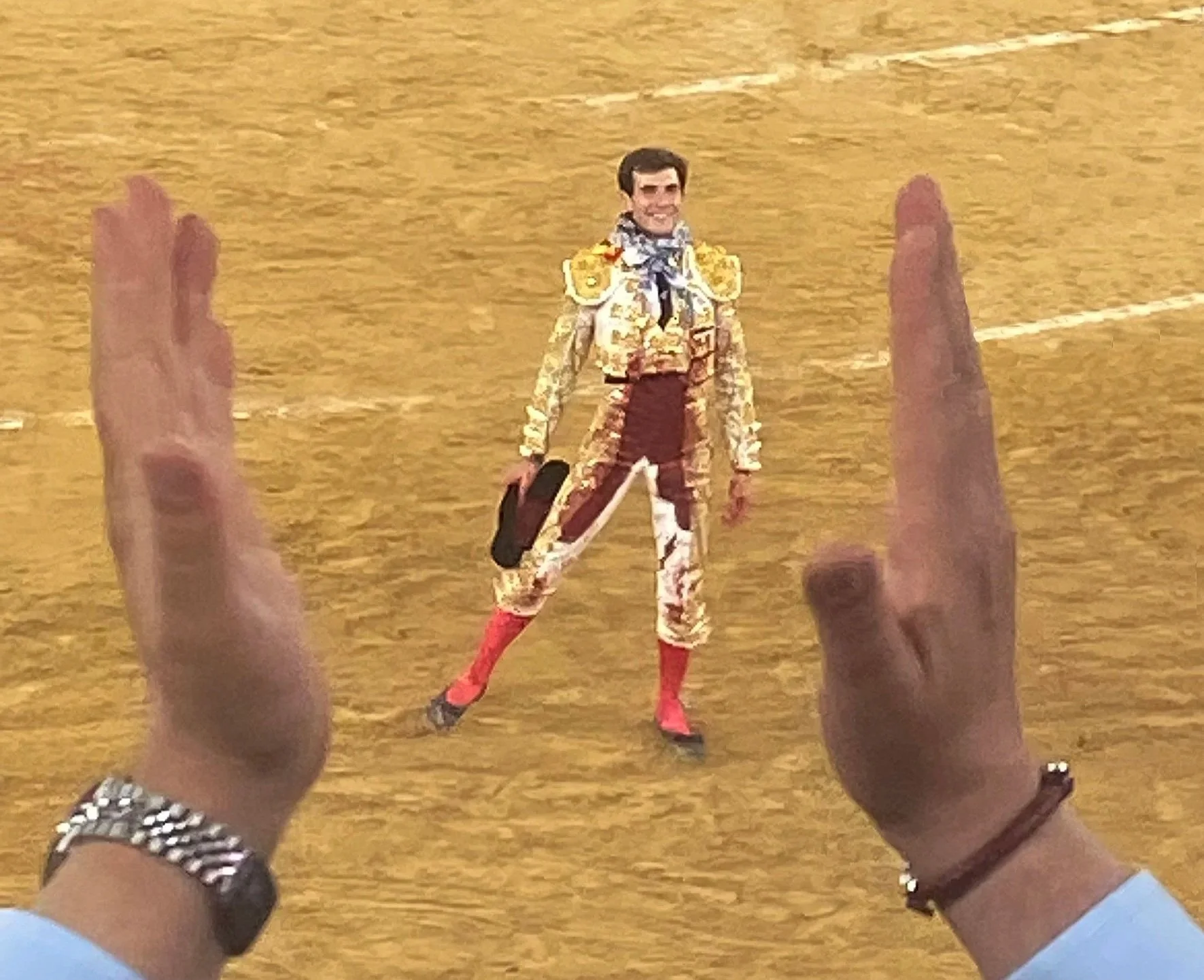
Samuel Navalón had a triumphant afternoon (Image by Pieter Hildering)
It was clear that Navalón was aiming for an exit through the Puerta Grande as he walked across the sand and knelt in front of the toril gate to wait for his second opponent. The bull ‘Tallista‘ was a mountain of an animal, tall and long, and weighed 697 kilos. It went straight for the lure of the capote and charged the horse from afar in a classical confrontation between bull and picador. The matador then stepped in to dazzle his public with a series of superb chicuelinas and Curro Javier took off his hat after expertly placing two pairs of banderillas. The faena started with a slow series of kneeling derechazos and continued with elegantly linked passes over both horns which brought the house down. Unluckily, the sword needed two attempts, but the number of white handkerchiefs allowed Navalón to exit through the big gate. To my surprise, ‘Tallista‘ only received a standing ovation where it should have been awarded a bigger honour. A week later, Samuel Navalón was declared the feria’s overall winner by every trophy-awarding-institution in town, while his peón de confianza, Curro Javier, was hospitalized suffering from a pulmonary infection.
Sunday morning March 15: Rejones
I’m not a great fan of corridas on horseback. I am not an expert on horses and I find them rather tedious. But, Sombra becomes Sol and Sol becomes Sombra and I enjoy a morning in the sun... for an hour or so. The result of this Sunday morning event was as follows: Bulls from Guiomar Cortés de Moura. For: Andy Cartagena, ovation and ovation after an aviso. Diego Ventura, one ear and one ear. Lea Vicens, ovation after an aviso and ovation. Diego Ventura was carried out on shoulders. I did notice something peculiar, though. One of Andy Cartagena’s horses was immortalized by a great Spanish master. In circa 1635, Velázquez painted an equestrian portrait of King Philip III. The horse in that picture is now in Andy Cartagena’s stable.
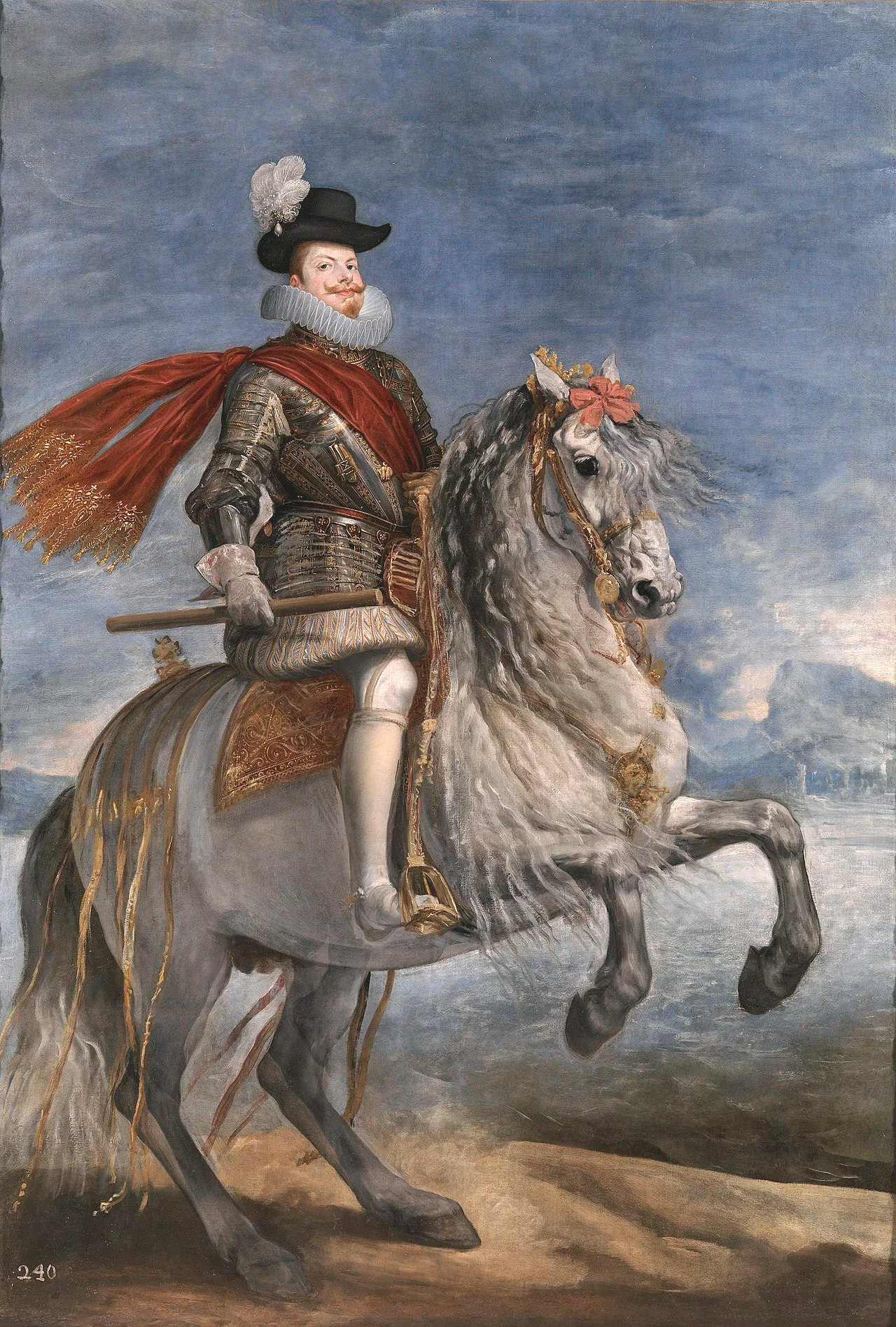
Velázquez’s portrait of Rey Felipe III
But here’s an interesting question: as a rejoneador wears traje corto, do you think his auxiliadores (his assistants) should wear trajes de luces?
Sunday afternoon March 15: Castella and ‘Artista‘
As the sorteo had taken place while the rejoneadores were galloping around, I was unable to take a look at the animals in the corrals and assumed we would see the announced jandillas. Five hours later, I learned that three of Borja Domecq’s products had been rejected and replaced by toros from El Puerto de San Lorenzo. Both ganaderías were nicely grouped, though: the three from El Puerto came first, then came the jandillas in fourth, fifth and sixth place. Contracted to torear them were Sebastián Castella, José María Manzanares and Pablo Aguado and their respective cuadrillas.
The first bull jumped into Castella’s capote feet first, stumbled to its knees and slid under the horse while the picador attempted a pic, the puya landing in the bull’s backside instead. The bull got up and withdrew to the side of the arena, where it remained for the rest of its lidia. There was no faena possible, and, after Castella’s fumbling of the sword, the crowd remained silent apart from one man who shouted: “You’re boring, Castella!”
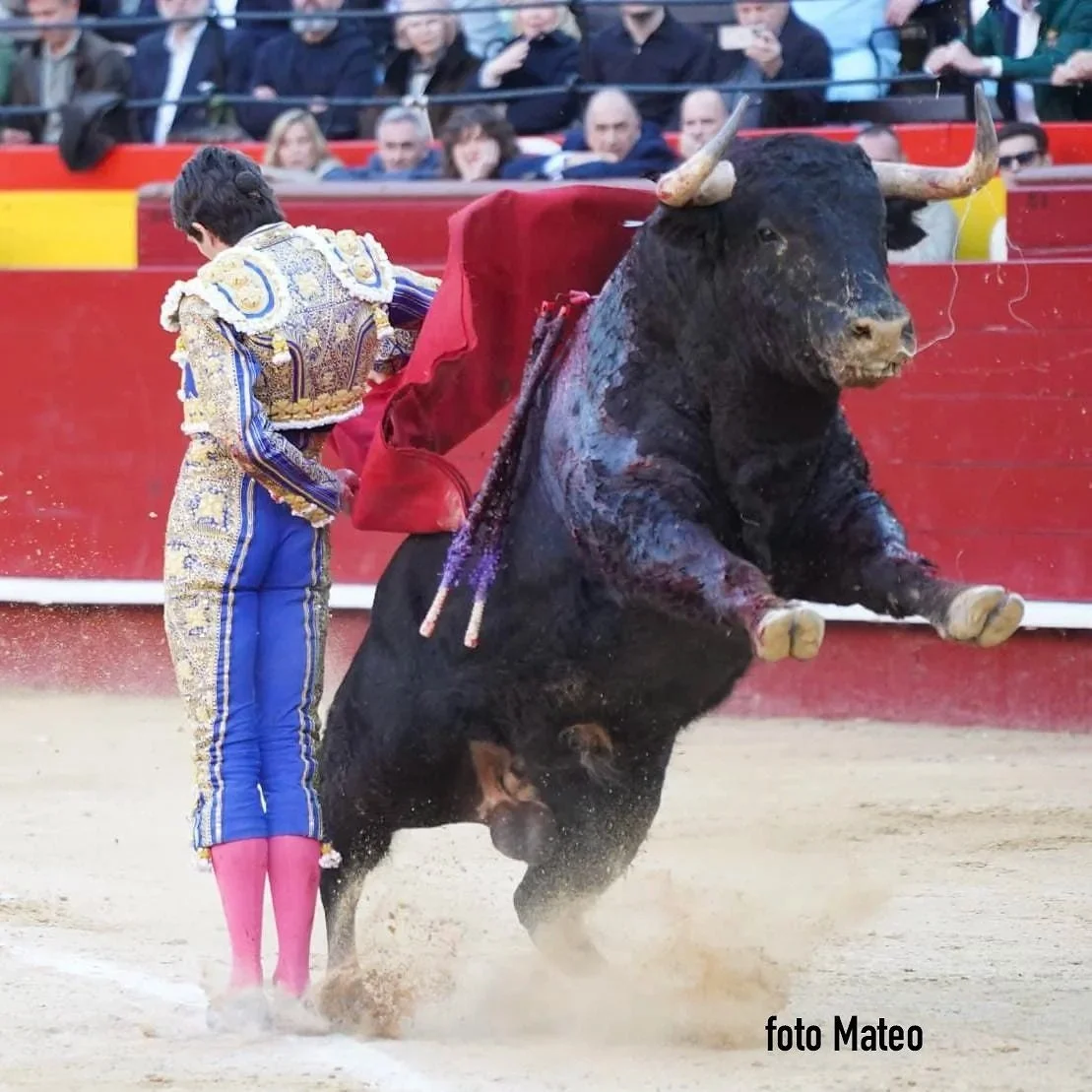
Castella’s efforts went unappreciated (Image by Mateo)
He wasn’t boring at all with his second opponent, a Jandilla bull with more energy and more speed. Its name was ‘Artista‘, and it was a toro bravo that charged the capote like it wanted to control the evening. It pushed the horse well against the fence, but moved back before the second pic could be placed. Castella started his faena with some pases por la espalda that were much appreciated, followed by fine series of low righthand passes, good naturales and sweeping pases de pecho. I have never been a great fan of Castella’s toreo, but I appreciated his understanding of this bull; moreover, I liked the way he prepared for the kill by leading ‘Artista‘ to the centre of the ring as if he wanted to remind us of the bravery the bull had shown throughout. It would have been a fine finale if the sword, placed too far back, had not hit bone. Castella’s disappointment was obvious when only a minority showed its appreciation for the effort he had put in.
Lately, I’ve noticed that the noble verónica has undergone a change. I realised this when José María Manzanares welcomed his first bull of the evening. Instead of catching the first charge head on and turning the bull round for the next charge, he stood in profile and used his capote to lengthen the trajectory of the bull’s charge instead of turning its course. Like the (ab)use of the pico de muleta, it is a subtle, but very discouraging change to the most classic of passes, and to see Manzanares (the son of one of the finest capeadores in history) apply it, was very disheartening. The bull seemed to lose strength after its first pic, and during the faena it clearly protested the muleta, hooking and jumping at the cloth. The matador’s right hand gave us a nice series of passes, after which he changed to naturales and the Puerto de Lorenzo bull decided it would co-operate no more. The sword went in far beyond the spot and Manzanares retreated in silence. Which he also did after perfectly killing the jandilla, although events leading up to the kill had not been very exceptional as the bull had chopped at the muleta and protested against the use of the muleta’s pico (as did I). I remembered saying previously somewhere that I thought José María’s toreo had lost its spirit. After seeing him today, I still thought so.
Pablo Aguado, one of the two modern Sevillians whose taurine ideas I find very attractive, received a La Ventana del Puerto bull with a bunch of breathtakingly slow verónicas which ended in a classic media. (La Ventana del Puerto is a sister herd of El Puerto de San Lorenzo, but using Jandilla stud bulls.) ‘Mitinero‘ took two pics with Aguado performing a quite of his characteristic verónicas and another brilliant media verónica in between. Although some of his righthand passes were of great beauty, he lost a trophy because of his bad attempts with the sword and because the bull became difficult to control during the faena. The crowd awarded him a resounding ovation.
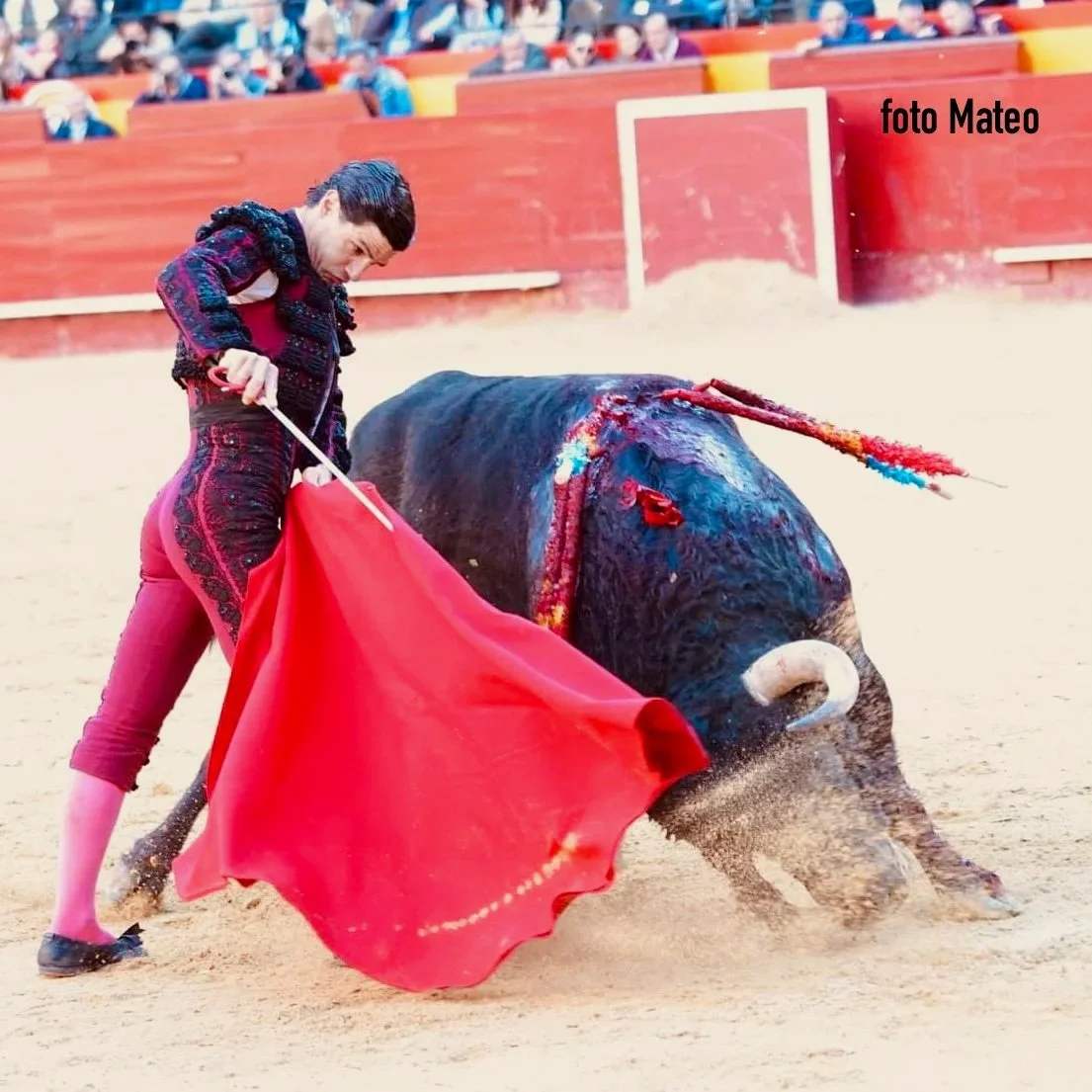
Pablo Aguado didn’t convince the valencianos (Image by Mateo)
The oddly-named ‘Repipi’ (a Jandilla bull weighing 545 kilos) was Aguado’s last adversary of the evening and again the Sevillian gave us his typical relaxed, almost stoical, style of toreo. The way he passed his bull with the capote, as well as during his faena, restored my confidence in him. Especially impressive was how he did the series of naturales as naturales should be done - citing to the opposite horn from the front with the feet firmly planted together. It wasn’t enough to convince the plaza.
Monday afternoon March 16: Not a good evening, don Ricardo
We were halfway through and it was time for the second novillada of the feria (I was not in Valencia for the unexciting first). Today, expectations were high as the renowned ganadero Ricardo Gallardo had brought eight of his many Fuente Ymbro novillos to town. With an average weight of almost 500 kilos, these were an especially sturdy bunch of three-year-olds. But whether it was their weight, or these animals hadn’t a clue what to do when confronted with a man waving a large cloth, shall remain a mystery. It turned out Ricardo Gallardo had made a big mistake.
Only two served a novillero well. That novillero was Julio Rebaque Luís Julio Norte, a 17-year-old from Salamanca, son of the former matador of the same nickname. The other two, Juan Alberto Torrijos, from down the road Algemesí, and Julio Méndez, another 17-year-old (but from Ávila) who has the support of maestro José Ortega Cano, were left with bulls that either left no impression or had come off the wrong assembly line. However, this boring afternoon wasn’t entirely the fault of the bulls. It was much too early for Méndez to be booked for a first category feria; the lack of his taurine personality was still too obvious. And, although Torrijos (another son and grandson of local retired bullfighters) tried all the popular moves like the pase de espalda and endless manoletinas, he couldn’t handle his novillos. He received two avisos while attempting to kill the bulls and failed with the descabello sword more than five times. That didn’t help either. However, and in their favour, they should sack their picadors.
Which left us with Julio Norte. His faena started on his knees and, after he had got up, good series over the right horn followed, the novillero lowering his hand. Certainly his novillo didn’t make it too difficult for him, but he then pulled off a series of good-looking naturales (of the popular kind). Even though his sword wasn’t accurate, it got the bull down and he received his first ear of the evening.
The last bull, a sobrero named ‘Labrador‘, was clearly the best novillo of the evening. It reacted well to the novillero’s lances a rodillas, had speed and concentration, and underwent two good pics. The first passes of the faena on his knees almost sent the boy to the infirmary, but he recovered well and continued with a series of solid righthanders. The bull kept focussed on the muleta in more righthand passes and more naturales, again of the popular kind. The pinchazo was followed by an estocada, but still the president showed a white flag, presenting Julio Norte with the key to the Puerta Grande.
Later that night and purely by coincidence, I met Ricardo Gallardo and thanked him for sending us this fine novillada. He looked a bit shocked.
Tuesday afternoon, March 17: Puerta Grande for Marco Pérez
All today’s Santiago Domecq bulls wore the black ribbon of mourning in memory of Ana María Bohórquez, the mother of the ganadero. Why El Mundo called his bulls feote (ugly), I couldn’t tell you, because, in my opinion, Santiago Domecq brought a most attractive string of toros to Valencia. There were some black ones and others of colorado colour, but the first to open the afternoon session was ‘Marquesón’, a beautiful salinero with awe-inspiring horns. Miguel Ángel Perera watched him come into the arena, opened his capote and welcomed him like one welcomes taurine royalty. After it was led to the horse, the bull underwent two severe puyazos, but endured them bravely and had three pairs of banderillas planted in its back. Perera then started his faena with a group of solid derechazos with a bull that seemed to be glued to the matador’s muleta. I was glad to see that the following naturales were completed without the use of the dreaded pico, although it was clear the left horn wasn’t the bull’s favourite. Perera moved back to the right hand, and, had he not screwed up the moment of truth, I’m sure he would have received more than silence as the bull was dragged out of the arena.
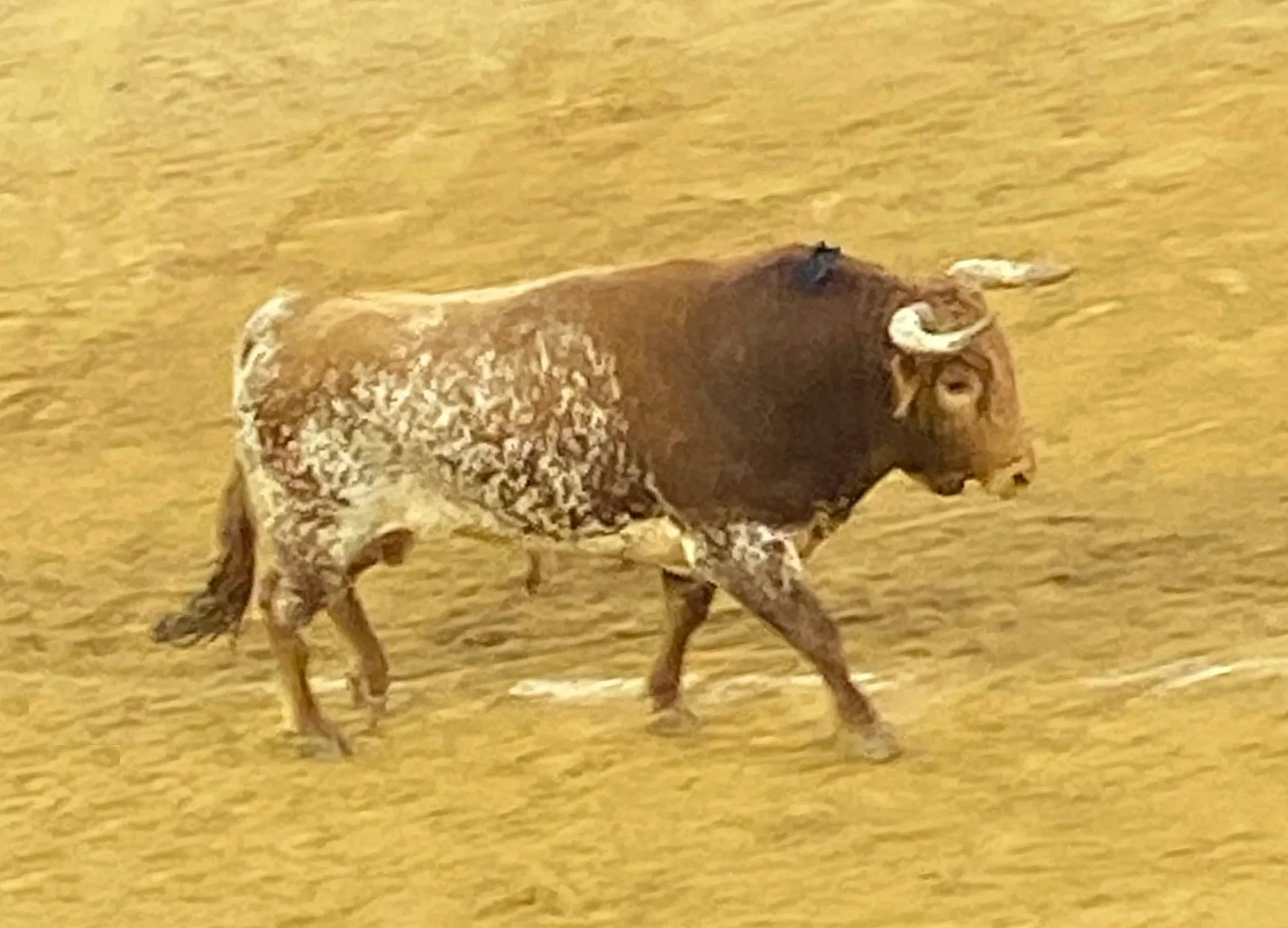
The 565 kilo Santiago Domecq bull ‘Marquesón’ - Perera’s first bull (Image by Pieter Hildering). Below, Miguel Ángel gives a gaonera to his second animal (Image by Mateo)
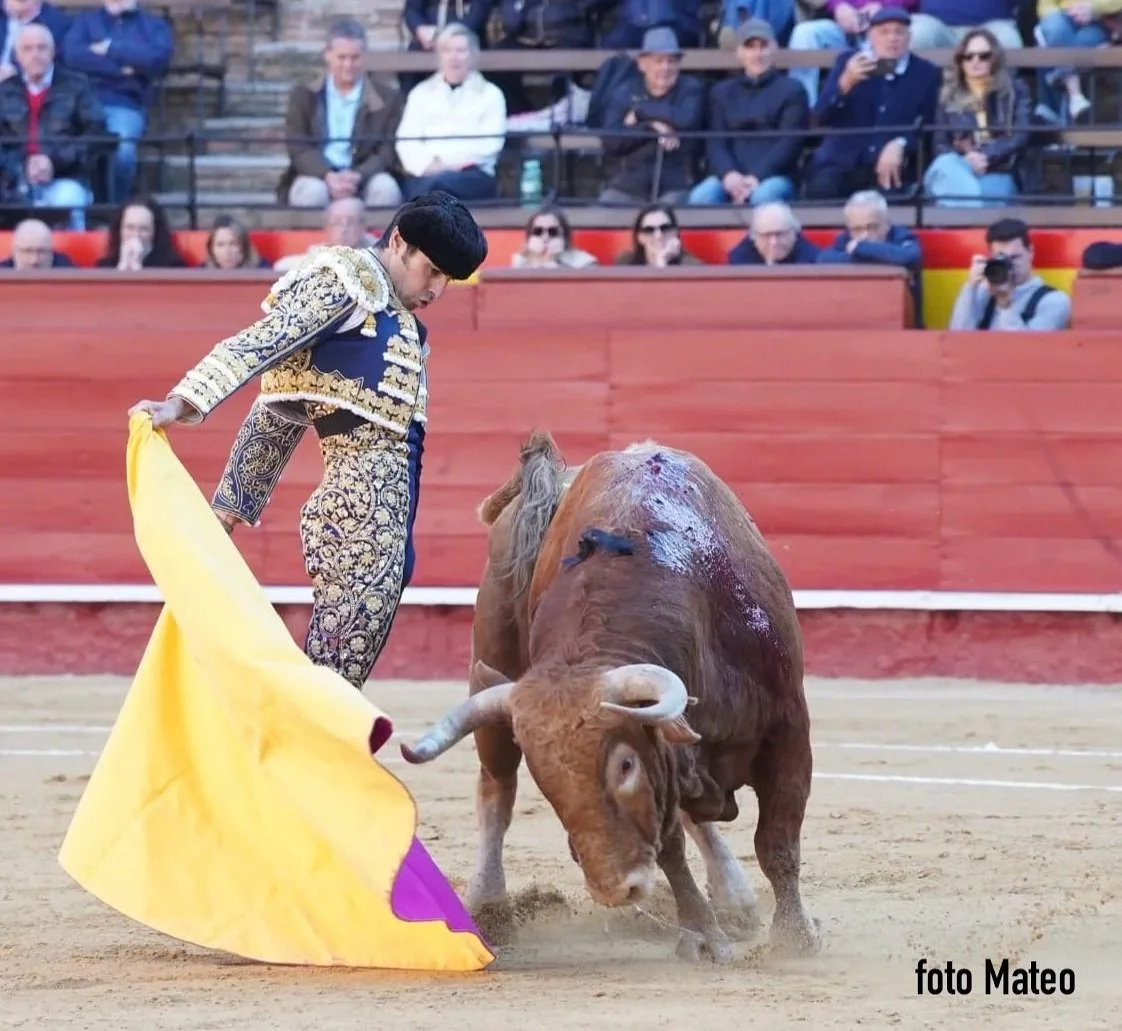
The second bull destined for Perera broke its foot when it collided with the picador’s horse and was clearly unfit to continue. But according to the rules, a bull can only be replaced by a sobrero if it comes into the arena already showing a physical defect. This bull came into the arena perfectly fit and had already been seen to by the picador. Therefore, and still according to the rules, it should have been toreared – in this case killed – by Perera. Instead, the president chose to avoid a popular revolt and ordered the bull out. It staggered to the exit, surrounded by Florito’s nine cabestros.
Fortunately, the president’s decision to send the invalid bull out gave us ‘Lunero‘, a sobrero from the same house and equally as good-looking as its unlucky brother. The bull pushed hard against the padding while the picador delivered two well-placed pics, and, after his peones placed the coloured sticks, the matador took his bull out to the centre of the arena. His faena was mostly made up of derechazos, while he was back to using the outer tip of the muleta in the naturales. Perera finished his performance with a fine series of redondos, but, because of a badly placed sword, left Valencia without even a vuelta to his name.
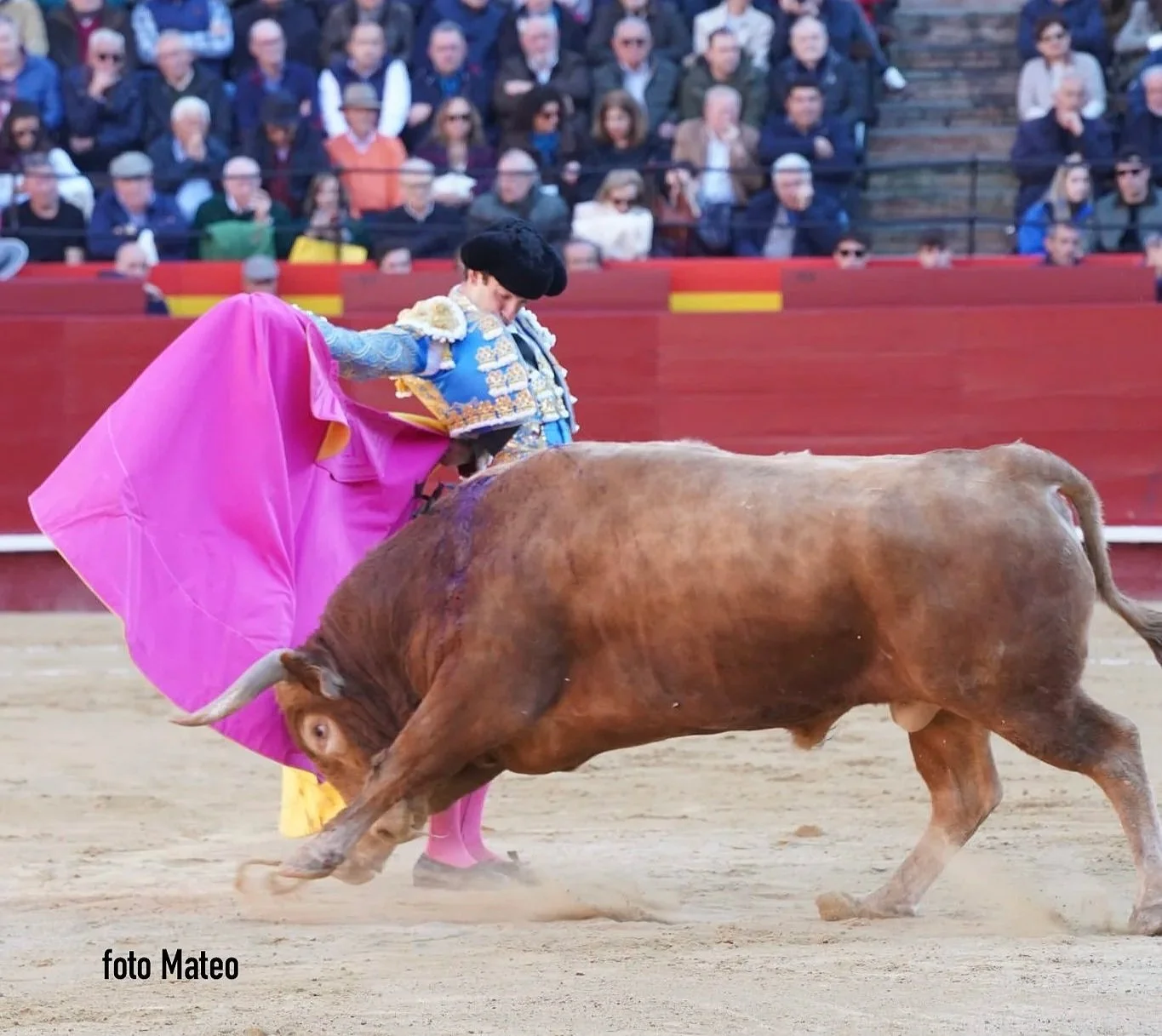
Víctor Hernández in one of his favourite lances - a saltillera (Image by Mateo)
The first time I saw Víctor Hernández was during a semi-final of Málaga’s Certamen Internacional de Escuelas Taurinas in 2017 and I saw him again last year in the same plaza in a corrida de toros. I can’t say he left a lasting impression, but it would appear he did to someone to be included on this cartel. Although he was invited to circle the ring after his first appearance, he didn’t impress me much. The usual righthand passes and the usual naturales were given with a mostly enlarged muleta, but it must be said that his second bull – although strong during the tercio de varas – lost a lot of strength during the faena. I suppose a sword hitting bone and five stabs with the descabello didn’t help him much in securing a second contract with the Valencian caretakers.
The plaza was well filled and we were anxiously waiting. Almost everyone had come to see the new taurine ‘child prodigy’, 20-year-old Marco Pérez from Salamanca. His first rival was ‘Bravío’, a beautiful Santiago Domecq bull of 566 kilos which was given an ovation as it sped through the toril, Pérez welcoming the animal with a farol de rodillas. A tremendous first pic by Francisco Ponz Puchano, a much-praised picador, was followed by an equally well-aimed second. The faena started with the standard passes around the back, two of which performed on the knees. ‘Bravío’ charged Marco’s muleta from a great distance and it was because of the bull’s behaviour that the young matador was able to pull off his performance. He finished like a real pro with much-appreciated gallery play to the Sol section, but killed the bull in the centre with a colossal estocada. His first ear was in the bag.
When his second bull entered (another visual masterpiece of bullbreeding), Pérez stepped in with his capote at the ready. He tried something on his knees but decided against it, got up and passed the bull with some hurried verónicas. After dedicating his faena to Perera, he did a lot of things in the minutes that followed, and mostly kneeling down. The public lapped it up. But I must commend him for a grand estocada for which he received another ear. If I had anything to say about it, I would declare ‘Bravío’ the best bull of the feria in every category.
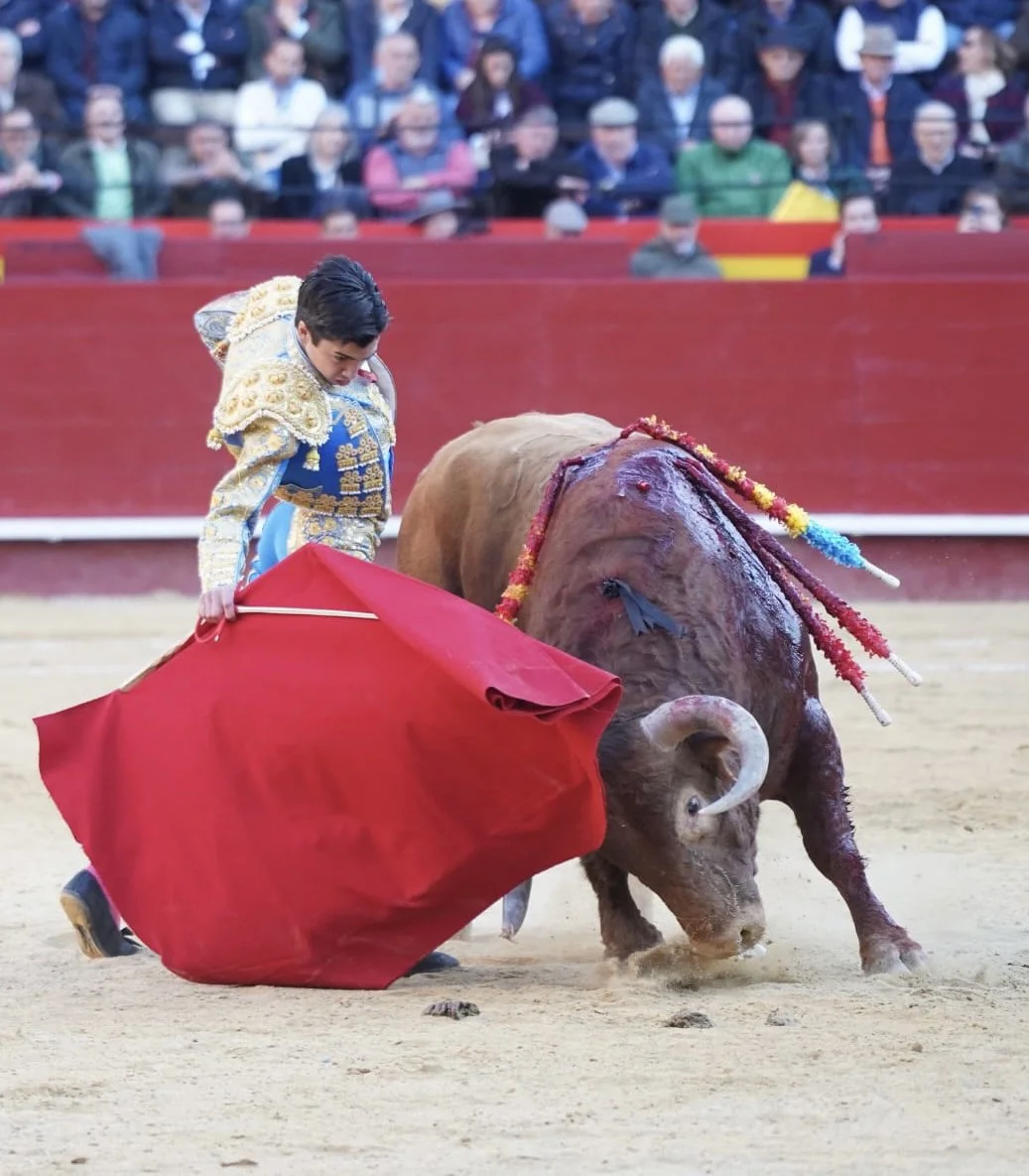
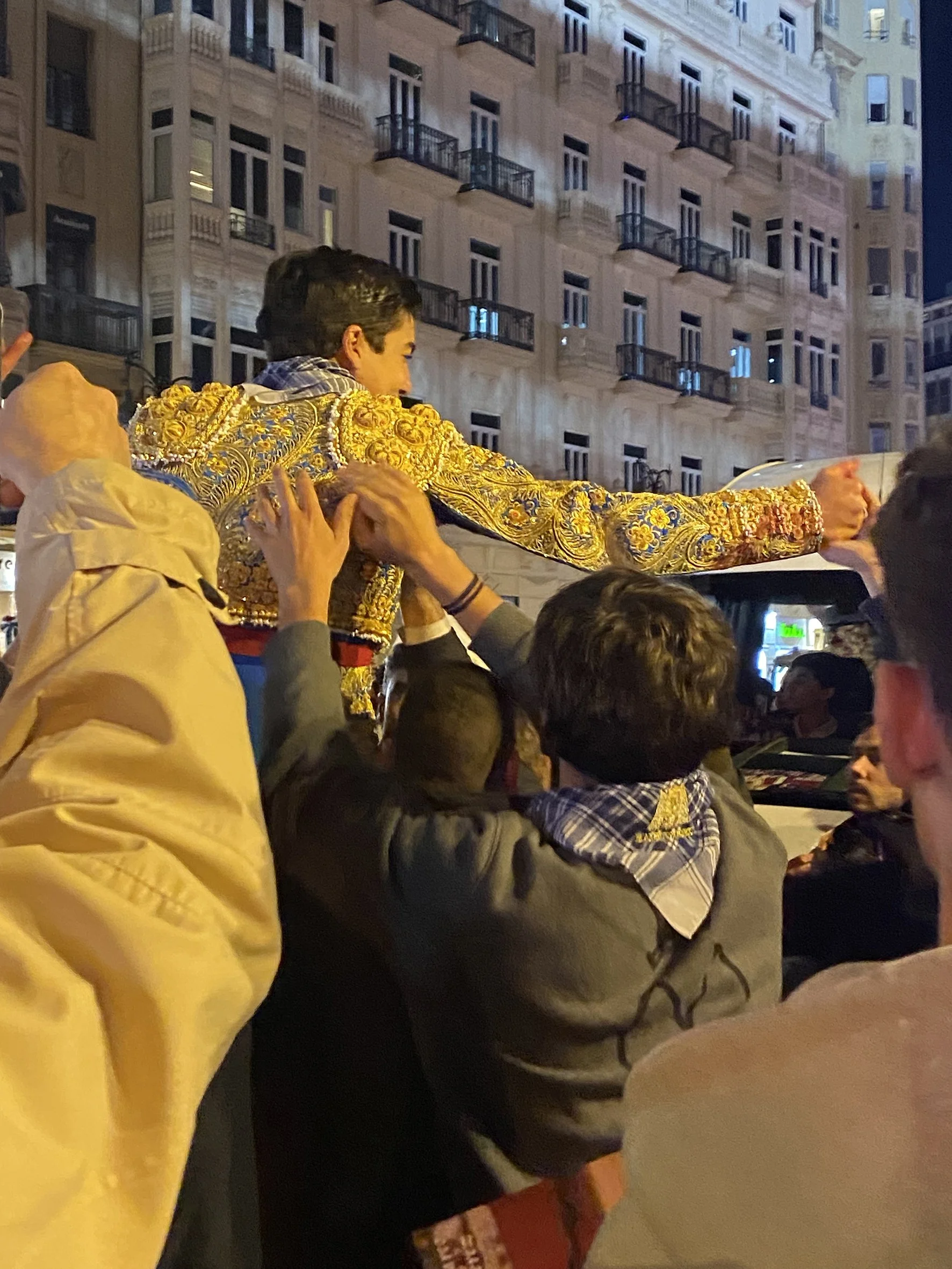
Young Marco Pérez became the second matador to go out through Valencia’s Puerta Grande this feria - where the crowd promptly purloined parts of his clothing (Left image by Mateo/Right image by Pieter Hildering)
Meanwhile, outside the plaza the public had gathered to worship their new hero as he was about to be carried through the main gate. At the same time, mounted riot police got ready to make sure the crowd stayed well-behaved. It resulted in chaos. Once the victorious matador came into sight, people stumbled and fell over each other while attempting to take pictures. Others got caught up in the terror caused by the advancing police horses. And while Marco Pérez was pushed and shoved to his waiting van, his traje de luces was ripped to pieces by the grabbing hands of souvenir hunters.
Wednesday afternoon March 18: A policewoman commits a robbery
On Tuesday evening, a sad-looking Álvaro de la Calle took his seat next to me. He had come to Valencia to act as a sobresaliente for the mano a mano between Borja Jiménez and Tomás Rufo. He was a fully confirmed matador de toros (2006), but, in the past four years, his name has mostly been seen as a ‘just in case’ matador. In trying to cheer him up, I told him, “But all the times you‘ve acted as a sobresaliente, you were truly sobresaliente.” It must have been a play of words he had heard more than once, but still he smiled politely, and, rather embarrassed by my awful joke, I wished him good luck for the next day. On the evening of the mano a mano, Álvaro de la Calle walked five paces behind the two leading characters as they started their paseíllo. Behind him came a large group of subalternos and picadors. None were his. He had only brought his mozo de espadas, who waited for him across the ring to collect his heavily embroidered dress cape. In the following three hours, Álvaro unfolded his capote only once, to defend himself against a bull that accidentally came his way. His friend and he left the arena in silence.
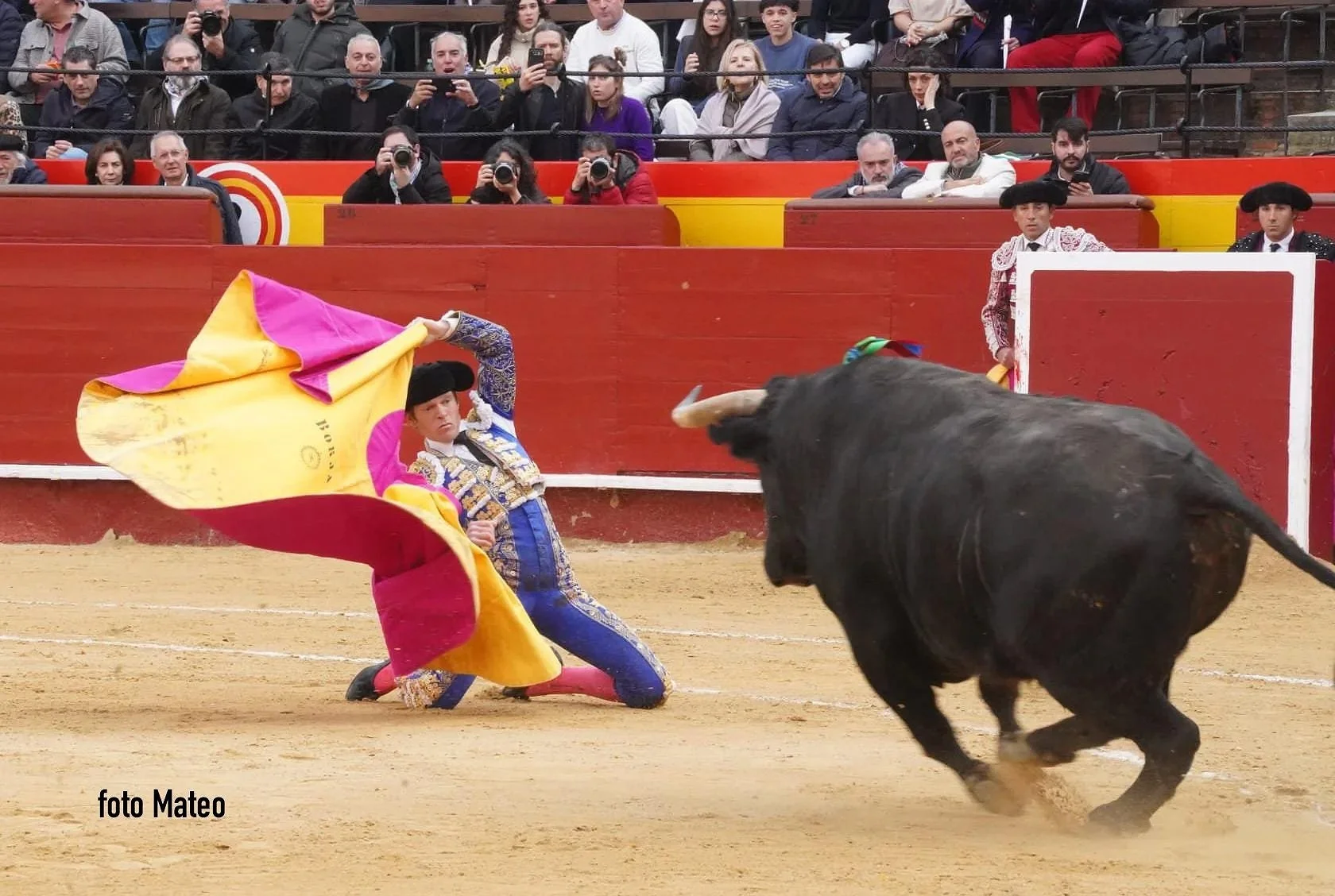
Borja Jiménez executing a larga cambiada de rodillas (Image by Mateo)
‘Azulado’ was the name of the first bull for Borja Jiménez - a short black bull with fine horns. It was welcomed with some verónicas that took the animal to the centre of the circle before the horsemen came in. There was no tercio de varas, only random stabbing and a quite by Tomás Rufo. Borja’s short faena started with a series of righthand muletazos, but, when he changed hands, the bull protested heavily. The final kill came after several attempts which all hit bone. Bull number three rushed past the kneeling torero waiting at the toril but charged Jiménez’s swirling cape once the bullfighter had got to his feet. There is a Dutch saying that goes: “A child’s hand is easily filled,” which precisely describes the faena: some derechazos, an assortment of so-called naturales and more tricks that made the public believe something wonderful was being created. The pinchazo and a dubious estocadaresulted in silence. Borja Jiménez’s last visit to Valencia in Las Fallas wasn’t successful either. Some half-passes on the right were followed by some suspicious naturales. His playing to the gallery and a sword to the side was all I bothered to write down. All I remembered of Borja Jiménez was the speed with which his performances were carried out. The principle of templar seemed to be lost forever and, in my opinion, isn’t the only thing that has gone missing and Borja isn’t the only one guilty of misplacing it.
Tomás Rufo was a torero I wanted to see. His performance last year was awarded two ears and I’m sure he was anxious to repeat that. He met his first bull with a porta gayola and a nice series of verónicas. The bull rushed to the waiting picador, who placed his lance in two good pics with Rufo doing a decent quite of chicuelinas in between. We had the pleasure of seeing Fernando Sánchez’s Montoliu-inspired pair of banderillas. My notes say: “Great start of faena, low passes on both sides. Fantastic bull, more wonderful series, great faena! Good estocada”. But, in spite of an excited crowd eagerly waving their white handkerchiefs, there was no material reward, so a disappointed Tomás Rufo took a vuelta instead.
At this point, it is appropriate to introduce today’s president: Pilar Bojó, a high-ranking policewoman with the Valencia police force. Today was the first time she’d presided over a corrida de toros and, boy, was she going to make her presence felt!
Whether or not it was his frustration about doña Pilar’s decision, Rufo’s next faena was far less interesting. The muletazos on his knees almost went wrong. Although the bull proved bravo and noble and the faena was carried out in the middle of the ring, the cloth was mostly directed at the right horn while the bull was sent outward in only a few naturales. The sword fell to the side and Tomás walked another vuelta.
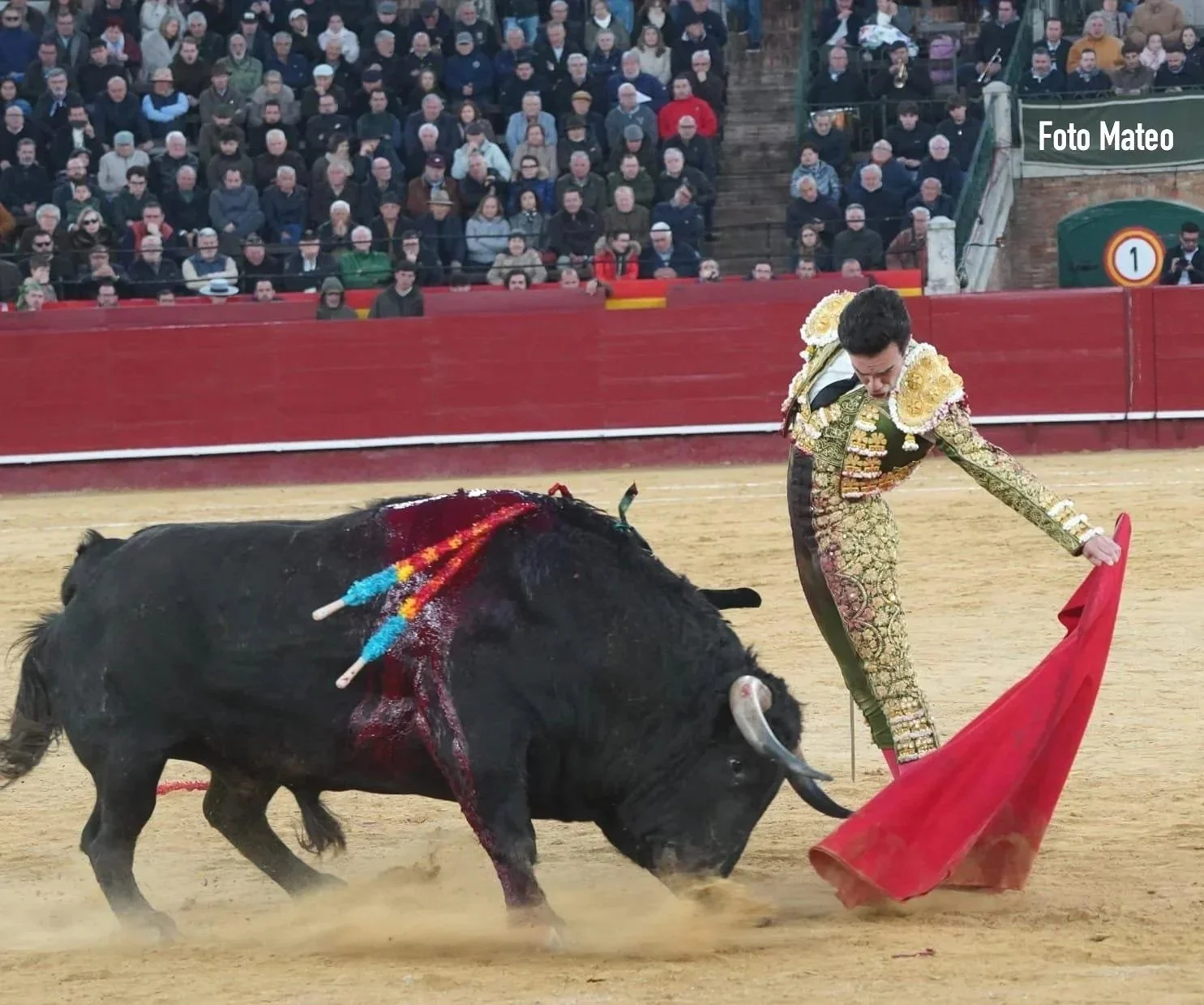
A natural de frente from Tomás Rufo, denied a Puerta Grande triumph (Image by Mateo)
The last bull ran out and it was clear that Tomás Rufo was determined to get his revenge. He met the animal with a porta gayola which, followed by several ‘lighthouse’ lances (afaroladas) and a great series of verónicas with an obediently charging bull. During the tercio de varas, the toro seemed to stagger and lose its initial fire. Rufo brought it back with a series of excellent righthand passes and some great naturales and the sword thrust seemed to be to the hilt and in the correct place. The crowd took out everything they could wave to convince the president. At last, when the muleteers had almost hitched the carcass to the mules, Pilar showed a white flag and awarded Tomás one ear. Intent on more, the crowd went wild in frustration, and, when the trophy was handed to the triumphant matador, he threw it away in disgust. Surely this had been a two-ear petition! He was robbed!
The following day, the uproar continued, with every taurine journalist having a say about the matter. Even the ganadero chipped in with a statement. An angry press release by the Valencian Taurine Federation said they felt cheated and quoted article 82 of the 1996 Reglamento Taurino Español. They demanded Pilar Bojó and her advisor should receive a stern rebuke. To which the presidenta replied that she was quite aware of article 82 but that, in her opinion, the petition had not been of a majority because she did not accept loud shouting, booing and clapping. She also said that, afterwards, Tomás Rufo and she had had a talk about it all and both considered the matter closed. I did too. We had one more corrida to go.
Thursday afternoon 19 March: The final day of Saint Joseph
The last day of Fallas had arrived, the day Valencia turns into a madhouse. It is the day of Saint Joseph, patron saint of carpenters, and every Valencian named José (and every variety of José) has to be congratulated. Also, from early in the morning till well after midnight, the town is gripped by fire, music and the loudest fireworks I have ever experienced. It is the day that, in the plaza de toros, local bullfighters get a chance to show their skills; traditionally, the cartel of 19 March features at least one Valencian torero. I would have given Román a second appearance in view of his grand triumph here one year earlier. Maybe restore the bleak future of Jordi Pérez El Niño de las Monjas, a novillero every aficionado, every critic, was passionate about when he first appeared on the scene and who took his alternativa in September 2024. And, as a tribute to San José, place José María Manzanares in the position of director de lidia. But I’m clearly no empresario taurino. He gave the corrida to Alejandro Talavante (his second), Emilio de Justo and Juan Ortega. An odd group, no doubt put together as a commercial vehicle for Talavante instead of tradition. The bulls came from Núñez del Cuvillo.
Unfortunately, my day went wrong. Firstly, I forgot to bring my cushion, though that could easily be remedied by renting one. Not as comfortable, but still... More annoying was that I forgot to bring my pen. I tried to fix that by borrowing one from my neighbour, but soon realised that, with all the notes I took, his pen would be empty halfway through the corrida. My next idea was to use my phone to take pictures of essential moments in the performances of the three men. That didn’t work because I couldn’t decide on the essential moments. The result is that all I can give you are the rather boring administrative details. Bull number one was ‘Tramposo’, a negro mulato. born in 12/21 and weighing 530 kilos. Talavante received an ovation. Second was ‘Cacareo’, born in 09/21 and weighing 503 kilos. Emilio de Justo took a lap of honour. Next came ‘Campanita’, a red-brown bull of 501 kilos, born in October 2021. The crowd remained silent after Juan Ortega killed badly. This was followed by ‘Aguafria’, a castaño coloured animal born in 11/21 with 537 kilos on his ample frame. Talavante left in silence. Number five, ‘Codelero’, was another castaño of almost six years and 514 kilos. Emilio de Justo cut the only ear of the evening after a very fine faena which could have given him both trophies if he hadn’t screwed up the kill. The sixth bull, ‘Comilón’, was the second five-year-old negro mulato. He was born in November 2021 and weighed 502 kilos. Juan Ortega ended Las Fallas to silence, but I clearly remember his lovely, quiet faena, how he linked his passes and the clean naturales that kept the bull by his side. I’m sure, if his sword hadn’t failed him, he would have had got more than the indifference he received. But it was the evening of San José and, by the fifth bull, everyone was anxious to get back to their neighbourhood to start the night’s festivities.
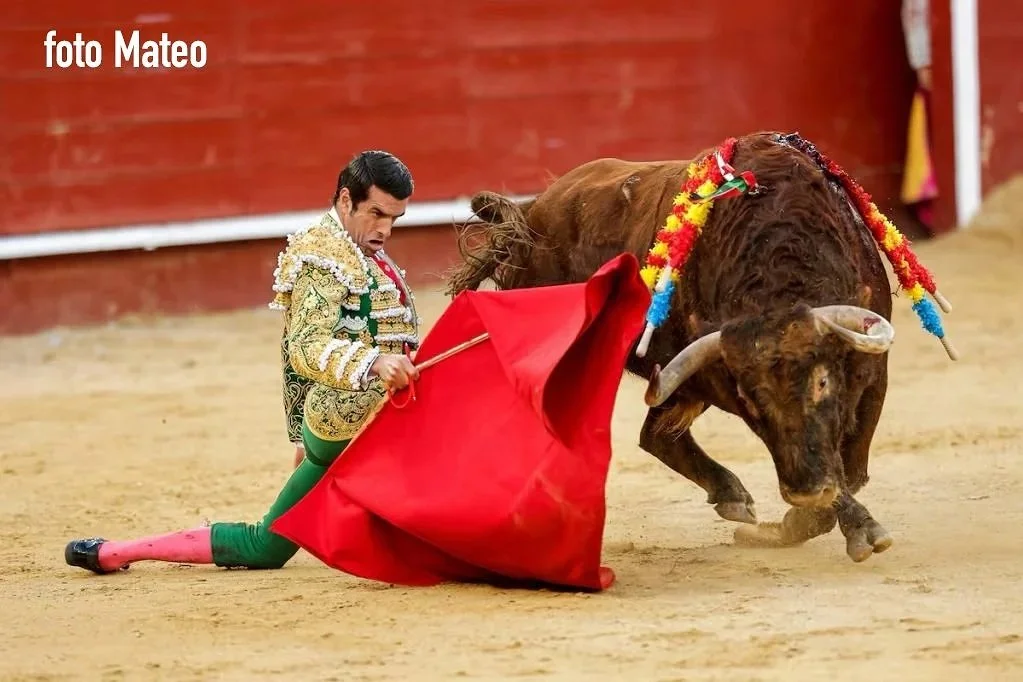
Emilio de Justo -last to win an ear at this year’s Las Fallas (Image by Mateo)
It hadn’t been the feria I had hoped for. Although three youngsters were carried through the puerta grande, only five matadors and a novillero had cut ears. One bull had been given a lap of honour and, as I’d suggested after the corrida, Santiago Domeq was chosen as the best ganaderia of the feria. Samuel Navalón took all the other trophies. It had mostly been a week of disappointment seeing so many well-respected and historic moves watered down, hearing old political slogans re-enter the arena and undergoing so much stupidity from an ever-increasingly ignorant crowd. I wished that the escuelas taurinas would treasure a pupil’s personality instead of turning out bad carbon copies of so-called figuras.
There was only one thing for it. I had to go back to Valencia in May for a novillada with the unfortunate Alberto Donaire and renew my acquaintance with the young Mexican Ignacio Garibay. Maybe they would be able to restore my confidence, for, if Las Fallas 2026 had taught me anything, it was that the future of tauromachy was in the hands of 20-year-olds.
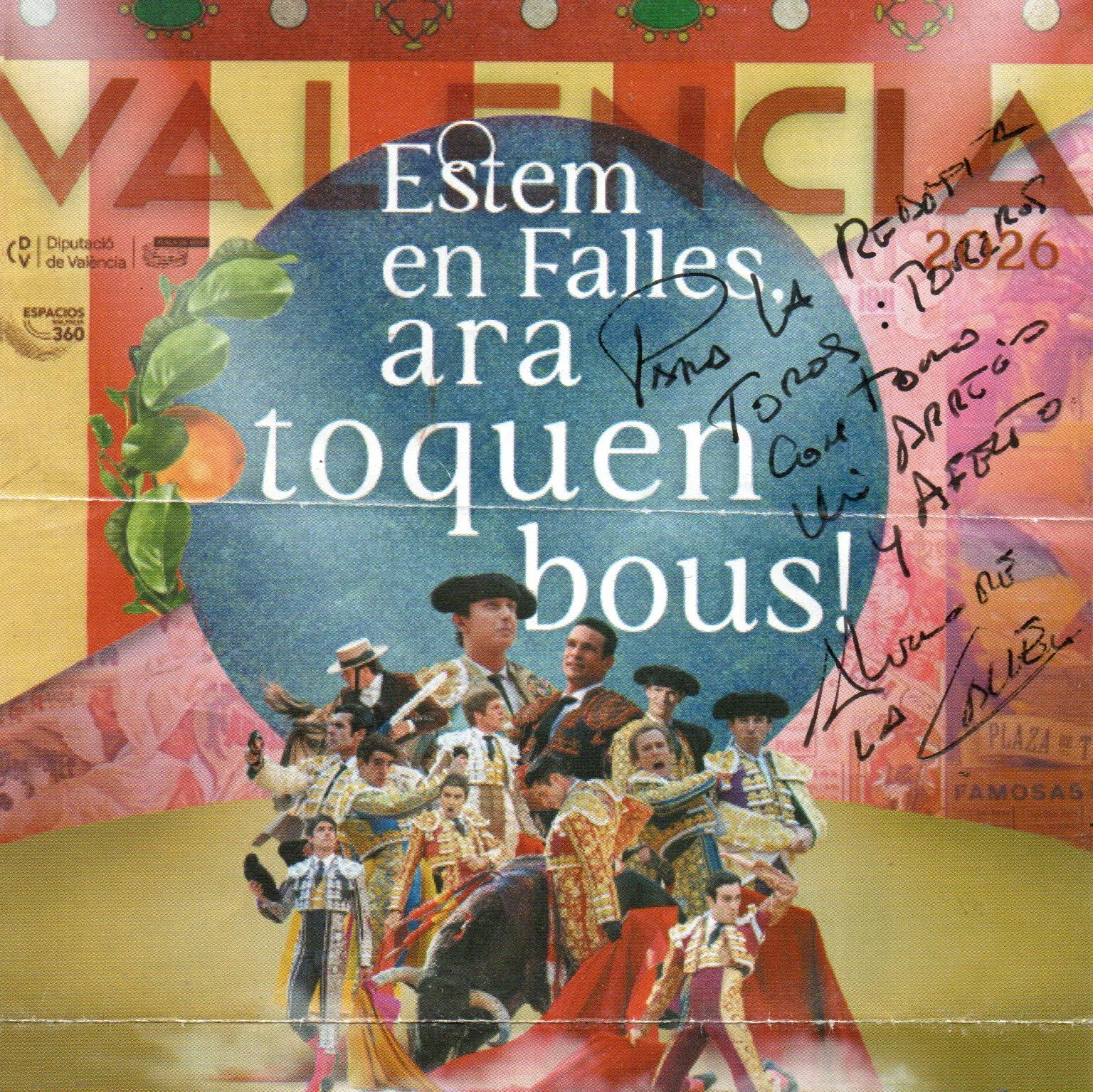
Sobresaliente Álvaro de Calle had time to sign a dedication to this blog site! (image by Pieter Hildering)