
(Image from latierradeltoro.es)
Each autumn, Spain’s Boletin Oficial del Estado (BOE) publishes the names of those matadors who will comprise the Grupo Especial (also known as Grupo A) for the following temporada. In fact, the Boletin categorises matadors into three groups - Groups A, B and C - with the minimum rates of pay for each group (dependent on the category of plaza they appear in) published annually as well.
For example, in 2025, a member of the Grupo Especial would have expected the following minimum earnings for an appearance in a corrida in a first class plaza: 29,743 euros for his cuadrilla, 17,742 euros to cover general costs and 19,359 euros for himself. Minimum earnings then reduce for lower category plazas. Should he have opted to appear in a fourth class plaza (a temporary plaza portátil), for instance, the minimum anticipated payments would have reduced to 25,237 euros for the cuadrilla, 16,875 euros for general costs and just 8,278 euros for himself.
The different groups are categorised according to the number of appearances a matador has made in the temporada just ended. Since 2022, to be in the Grupo Especial, a matador must have made 37 appearances in Spain, France or Portugal; a Group B matador must have made between 13-36 appearances; while fewer than 13 appearances means a matador’s in Group C.
These groupings can also be reflected in contract conditions taken on by bullring empresas. In a recent article in Aplausos, for instance, the empresa Carlos Zuñiga hijo commented, “A few years ago in Gijón, I had a contract that forced me to hire all the Group A matadors. In the recent tenders, that requirement has been withdrawn - thank God, because sometimes those toreros are not the ones who are the most interesting.”
For 2026, there are just eight matadors in the Grupo Especial - Alejandro Talavante, Borja Jiménez, Emilio de Justo, Juan Ortega, Morante de la Puebla, Sebastián Castella, Manuel Escribano and Andrés Roca Rey. Group B matadors with more than 30 corridas last season were Miguel Ángel Perera (35), Tomás Rufo (34), Daniel Luque (33), José María Manzanares (32), and El Fandi and Pablo Aguado, both on 31 appearances. It’s debatable which of these qualify as “the most interesting” of today’s bullfighters.
Changes afoot?
Looking towards next year, there could well be changes in the membership of the Grupo Especial, partly given the trend for increasing numbers of corridas and partly reflecting matadors’ changing fortunes.
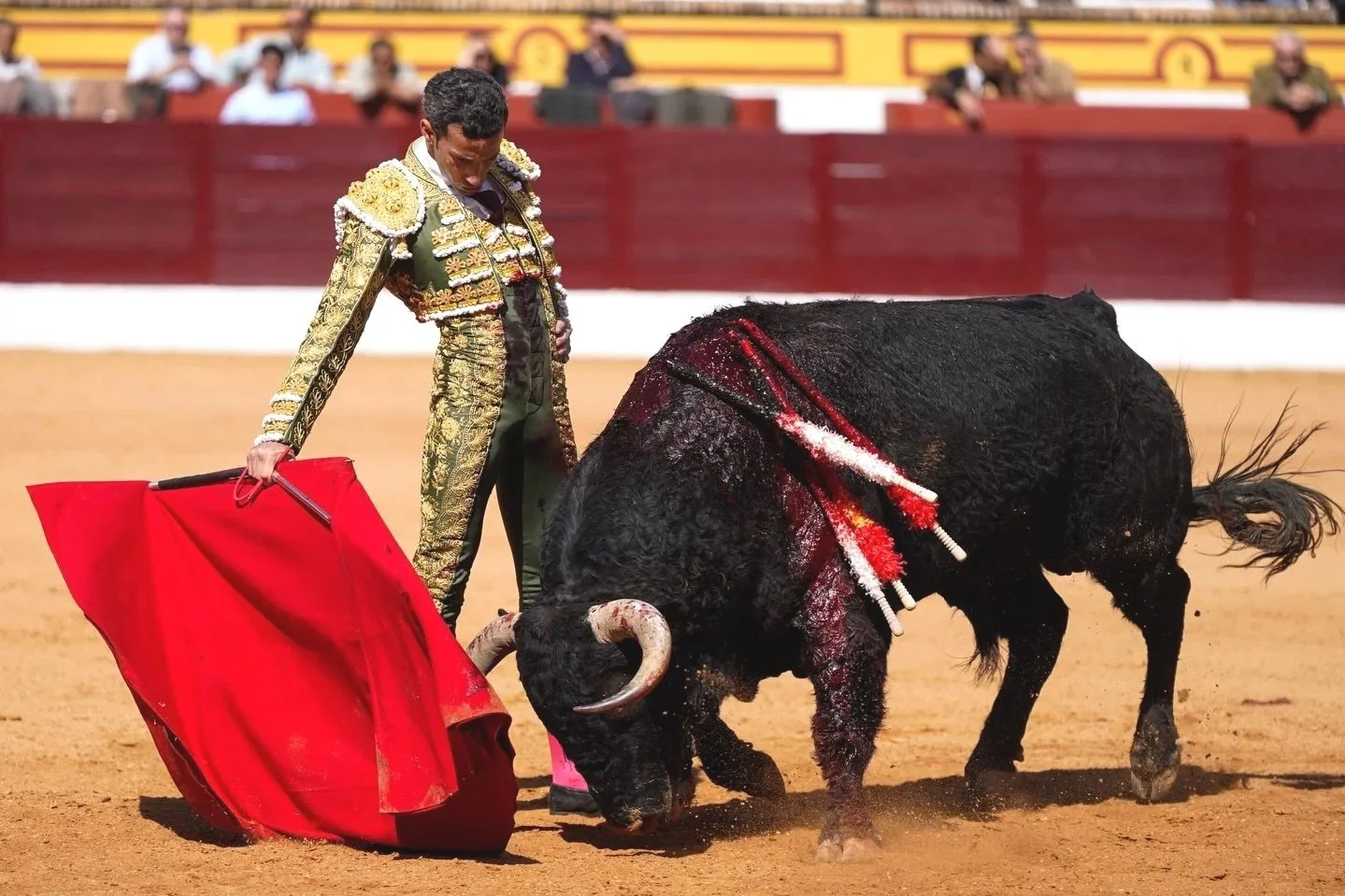
Will David de Miranda be a Grupo Especial member in 2027? (Image from the matador’s Facebook page)
The most vulnerable of the current group members would appear to be Manuel Escribano, Sebastián Castella and Emilio de Justo - possibly, too, Morante de la Puebla if he limits his 2026 appearances, although currently, despite each of his contracts being announced in the taurine media as some kind of miracle, it looks like another busy temporada lies ahead of him. If their 2026 seasons go well, David de Miranda and Marco Pérez, Rufo, Luque and Aguado must all be contenders for Grupo Especial status, while there remains the possibility of a major break-through by the likes of Víctor Hernández or Aarón Palacio. Certainly, de Miranda and Pérez (at Olivenza) and Palacio (at Castellón) were among the headline winners on the first weekend of March when the season properly got underway.