A veedor looks back
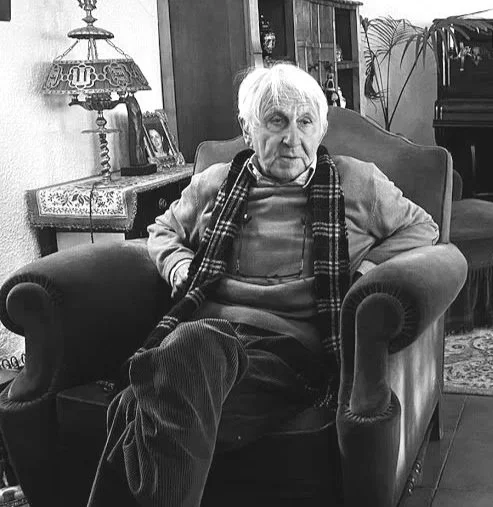
Retired veedor Fidel Sanjusto Fernández (image from toreoenredhondo.blogspot.com)
Last autumn, ‘Rafa de Tarragona’, proprietor of the website toreoenredhondo, published an interview with a horn-shaver (see my December 2024 article). Now, he has published an interview with a former veedor, Fidel Sanjusto Fernández, that - despite much of the interview being ‘off the record’ - again throws light on the murkier aspects of the mundillo.
Veedores are employed by empresas or by individual toreros and are charged with identifying suitable bulls for their employer’s festejos. It’s a role that requires extensive knowledge of the fighting bull, the encastes, the individual ranches and the stages their animals are at. There’s a common saying that there is one bull in the field, another in the corrales, and a third in the ring, which makes it vital to know the animals' reactions, the characteristics of each one, and their behaviours. The veedor must also have an appreciation of the particular wishes of the matador for whom they’re working, or, if employed by an empresa, of the particular expectations of the plaza the bulls are bound for.
Fidel Sanjusto Fernández was born in Cantabria and tried to make his name as a torero, appearing under the name Curro González and retiring in 1982. Shortly afterwards, he was approached to act as veedor for the empresa Justo Benítez and later went on to fulfil the role for a number of other empresas, including Justo Ojeda, Paco Gil, Balañá, la Casa Matilla, los Lozanos and José Antonio Chopera. He spent 23 years working for the empresa of Las Ventas, and was often responsible for overseeing 100 or more corridas a year. He was also employed in the same role by several matadors, including Roberto Domínguez, Joselito, Ortega Cano, Julio Robles, César Rincón, Enrique Ponce, El Juli and José Tomás, representing the last of these for over 15 years.
On Tomás, Sanjusto told ‘Rafa’, “I didn’t work for him, but once we happened to meet at a ranch. He asked me how much I charged to look over corridas, and I said 70,000 pesetas. 'I’ll give you 250,000,' he said. I was in charge of the corrida selected for him, even if the cartel included other figuras. I remember one time I had to assert myself at the ranch in front of the other two toreros’ managers and I told them that I alone would handle that bullfight...”.
Describing his role, Sanjusto told Paco Cañamero in 2020: “For bulls that are going to be fought in the first class bullrings, I start going to the countryside around October, once the empresa tells me with which ranches they have committed. [Oddly, there is no mention that the empresa’s decisions on which ganaderías to favour will have been based on the veedor’s earlier reports on what is available en el campo.] After that, you have to keep going to see the animals and monitor them continuously to keep an eye on them, in case a bull comes up short in size, or too big, and you have to replace it with another. Bulls can change a lot in a year. From October until it’s time for the animals to be shipped to the bullring, you have to check on the corrida quite frequently. And not neglect it.
“Once the season arrives, you have to be present at the shipment to the bullring and make sure that the bulls you have selected are there, that they don’t have any anomalies, and that everything goes according to plan. […] I make sure to check the corrida’s outcome, how the bulls performed, and if any of them were rejected.” Many years ago, Sanjusto stopped attending corridas where the bulls he’d selected were being fought. “At first, I did go,” he told ‘Rafa’, “but when a bad bull came out, everyone would turn to look at me as if asking for an explanation. What could I do? I said I would never go again, and I kept my word.”
Now retired, Sanjusto clearly reckoned he could be more open with ‘Rafa’, who asked him whether toreros were more concerned about bulls’ horns or their ‘kidneys’ (the power in their hindquarters that can increase the force involved in a goring).
“Neither. What you have to look at is whether they have a long neck and short forelegs, that's the main thing.”
“And horn-shaving - did you shave at the ranch or at the bullring?”
“Always at the ranch.”
“Manolo Lozano said three years ago that all bulls are shaved, even the animals for Madrid and Seville...”
“Of course. It's true.”
“You used to get paid by the torero and then a portion from the ganadero, is that right?”
“Yes. There was a fixed amount from the matador, and, if I arranged the bullfight, I also got a percentage of the ganadero’s fee.”
Like a lot of old taurinos, Sanjusto is scathing about modern times: “Apart from Florito, today’s veedores are a disaster. What’s more, they no longer need to know anything about encastes because the same kind of bull is fought all the time.”
“Are you pessimistic or optimistic about the future of the Fiesta?”
“Pessimistic... this will never return to what it was before. The money that used to circulate no longer does, and the few who take it all leave nothing for the rest. I come from a time when a handshake still meant something. Now, it's over. There’s no loyalty or camaraderie, you can already see it among the novilleros... Bah! It’s a ruin!”
Recent veedor arrangements
In recent years, cultoro.com has reported that the salmantino José Carlos Carreño (currently the veedor for the French plaza of Céret amongst other bullrings) and the andaluz Francisco Núñez Currillo were the most important veedores apart from Florencio Fernández Castillo Florito, who has just stepped down from the role for the empresa de Madrid after 39 years’ service. Antonio Cutiño (who has previously acted as veedor for El Juli amongst other toreros) now covers the Andalucía region for Nautalia, while Alberto Encinas (who has also been the veedor for Albacete’s bullring and for Morante de la Puebla) looks after things for the empresa in Extremadura and Salamanca and Florito’s son Álvaro covers Central Spain. In Sevilla, Santiago Ellauri (the new apoderado of El Cid) and Manuel Tornay have been veedores for Pagés, while Manuel Sánchez-Mejías has performed the veedor role for los Choperas, covering Andalucía, Extremadura and Portugal. Other men who act as veedores are the empresa Carlos Zuñiga hijo, Antonio Muñoz, Manuel Rodríguez Manolón, ex-matador Manolo Sánchez (who works for the Choperas in central and northern Spain and also looks over Roca Rey’s corridas), José Antonio Galdón El Niño de Belén (veedor for Lances de Futuro) and Miguel Cubero. La Casa Matilla, the founder of which was a veedor, employs Manuel Moreno (who also acts for José María Manzanares) and El Rabia as veedores. Silverio Sierra, father of the banderillero Juan Sierra, has been the veedor for matador Miguel Ángel Perera, while former banderillero Valentín Luján has acted as veedor for Alejandro Talavante. Despite his recent stepping down from his roles as mayoral and veedor at Las Ventas, Florito continues to operate as the veedor for a number of bullrings, including Alicante, Nîmes, Ciudad Real and Toledo.
Combatting fraud
The role of veedor is unregulated, there not being a mention of this position in any of Spain’s taurine regulations. Yet it is clear from the interview with Fidel Sanjusto Fernández that veedores are crucial participants in selecting animals for bullfights and in relationships between ganaderos, empresas and the leading toreros - both areas where is scope for abuse - as well as in horn-shaving.
When bullfighting began, the choice of bulls for particular events was left to the ganaderos. As the corrida became more professionalised and the role of matador more important, so the influence of the top toreros grew, with empresas who wanted to feature them in their carteles having to take account of their preferences, even to the extent of ceding control as to which ganaderías they appeared with. That has contributed to the situation the corrida finds itself in today, where the leading matadors only want to appear with half a dozen ganaderías, frequently sharing the resultant carteles to the exclusion of other toreros, or standing aside from some ferias when their choice of bulls cannot be realised. Neither of these situations are in the best interest of aficionados or the paying public in general.
The situation would be improved by a regulatory ban on veedores acting for toreros, so they could only act for empresas or for individual bullrings, and a stipulation that their payment could only come from those empresas or bullrings, so that the practice of veedores’ receiving payments from ganaderos ceases.