Daniel Luque
José Carlos Arévalo
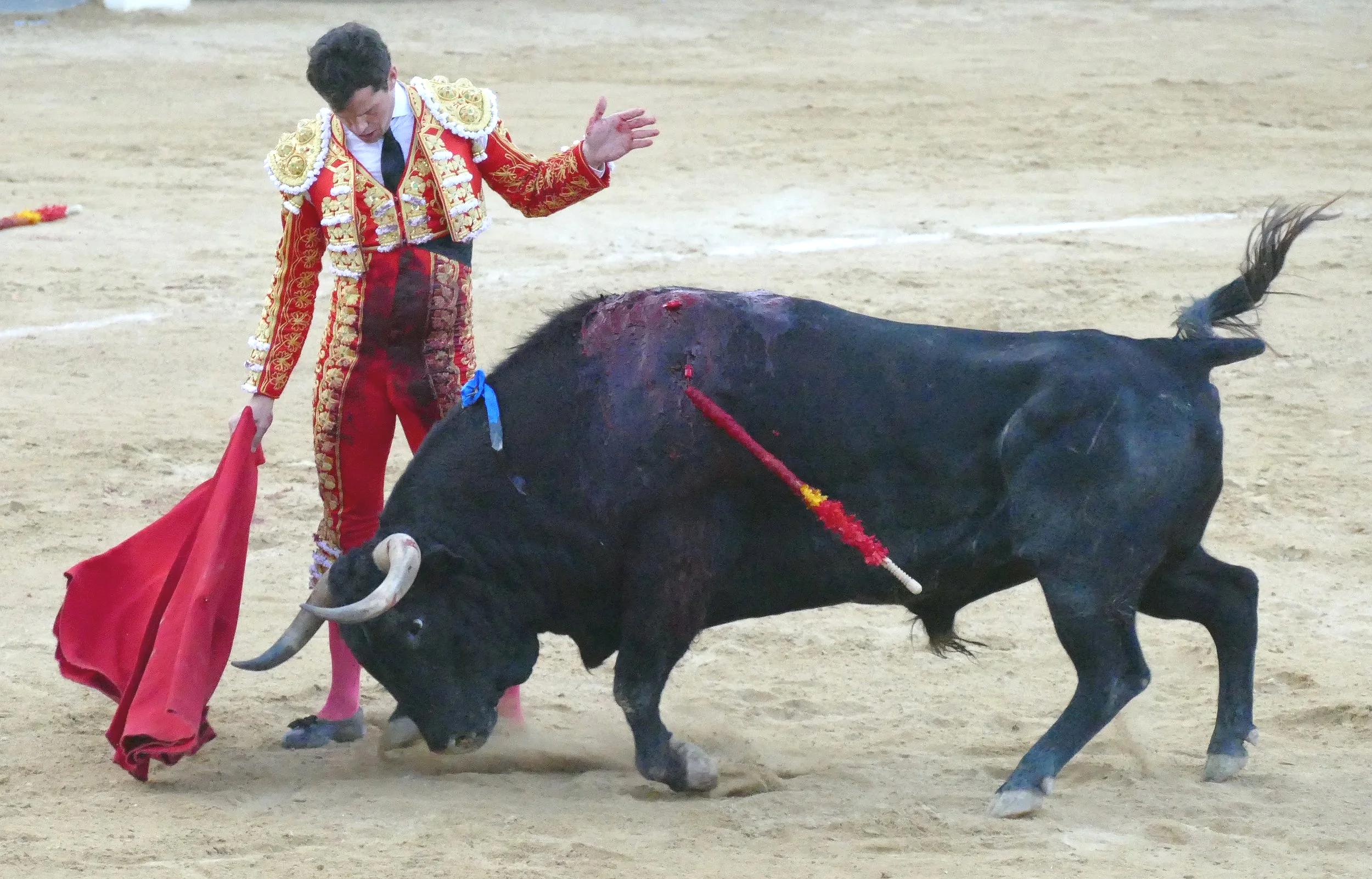
Many years ago, José Ortega Cano's case surprised the aficionados. A grey and acceptable bullfighter, who fought little and seemed doomed to end his irrelevant stint in la Fiesta, was suddenly resurrected as if he were another torero. I believe it was with the help of Victoriano Valencia, his manager at that time of unusual transition. Because the man from Cartagena became for many years a true figura in bullfighting. His performance with a bull from Peñajara, in a San Isidro whose date I do not recall, is one of the best that have been seen in the Las Ventas bullring.
The case of Daniel Luque is similar, but logically different. Each torero is his own world. Daniel took the alternativa with impetus. He maintained it for a short time. José Luis Marca, who was at that time a very influential figure in bullfighting, even became his manager. But in the Fiesta, influences mean nothing. At most, they serve so that, in that brief juncture, toreo finally 'breaks through.' This was not the case with Luque. He lacked two definitive triumphs, in Sevilla and in Madrid, and he opted for Las Ventas, where he faced six bulls and nothing happened.
Luque emerged in France, a small but significant bullfighting country. From there, Emilio de Justo skyrocketed. And there, a Daniel Luque was rediscovered - artistic, masterful, brave, all-powerful. He came back to Spain as if he were a novelty. He swept through everywhere and was consecrated in Sevilla with somewhat unusual bulls with a lot to take on, some of them half-good. But in Madrid, where, since his comeback, he has always performed well, none has come out right. Not a single one to show who he is. Which, in Madrid, means he does not warrant the recognition of the great aficionados who exist, nor the respect of the ayatollahs (whom he overwhelms, even if they don’t say it), nor the sympathy of a public that recognizes his worth. In Madrid, what he needs is for a bull to come out. That would be sufficient.
But not in my case. I met Daniel Luque as a child, when he was not a child prodigy but already a remarkable bullfighter. It was at the Los Martínez ranch, the fiercest one I discovered in Mexico. Its rancher, Jorge Martínez Lambarry, along with the madrileño Miguel Luque, is the best aficionado I have ever known. Both can see a bull or a bullfighter from a kilometre away. And they are never wrong. That day, there were four fierce and spirited cows, and a child who was a bullfighter at the top of his game. When the rancher asked me my opinion, I said: “This kid has the intelligence of Camino, the courage of Puerta, the style of Cortés, the composure of Cepeda and the mastery of Espartaco”. But a few weeks later, he ran away from the Pastejé school. In a way, he was right. Bullfighters are made in solitude: not formed in a team like athletes. And, like prophets and great artists, they must all make their solitary journey through the desert.
Years later, Daniel had found the most hidden secret of bullfighting and had tamed his character. Nowadays, there hasn't been a bull that’s been above him. I go to see him torear with the excitement - always confirmed - of discovering things about bullfighting that I didn't know before. I’ve never seen a bullfighter so powerful and with so much art. Out of the entire escalafón, he is the teacher who interests me the most, along with Morante, Urdiales and Juan Ortega. If bullfighting were a religion, it would be polytheistic.
[This is a translation of a piece published by burladero.tv and entitled ‘El caso singular de Daniel Luque’ - TW]