Las Ventas and the challenges facing today’s novilleros
José Carlos Arévalo
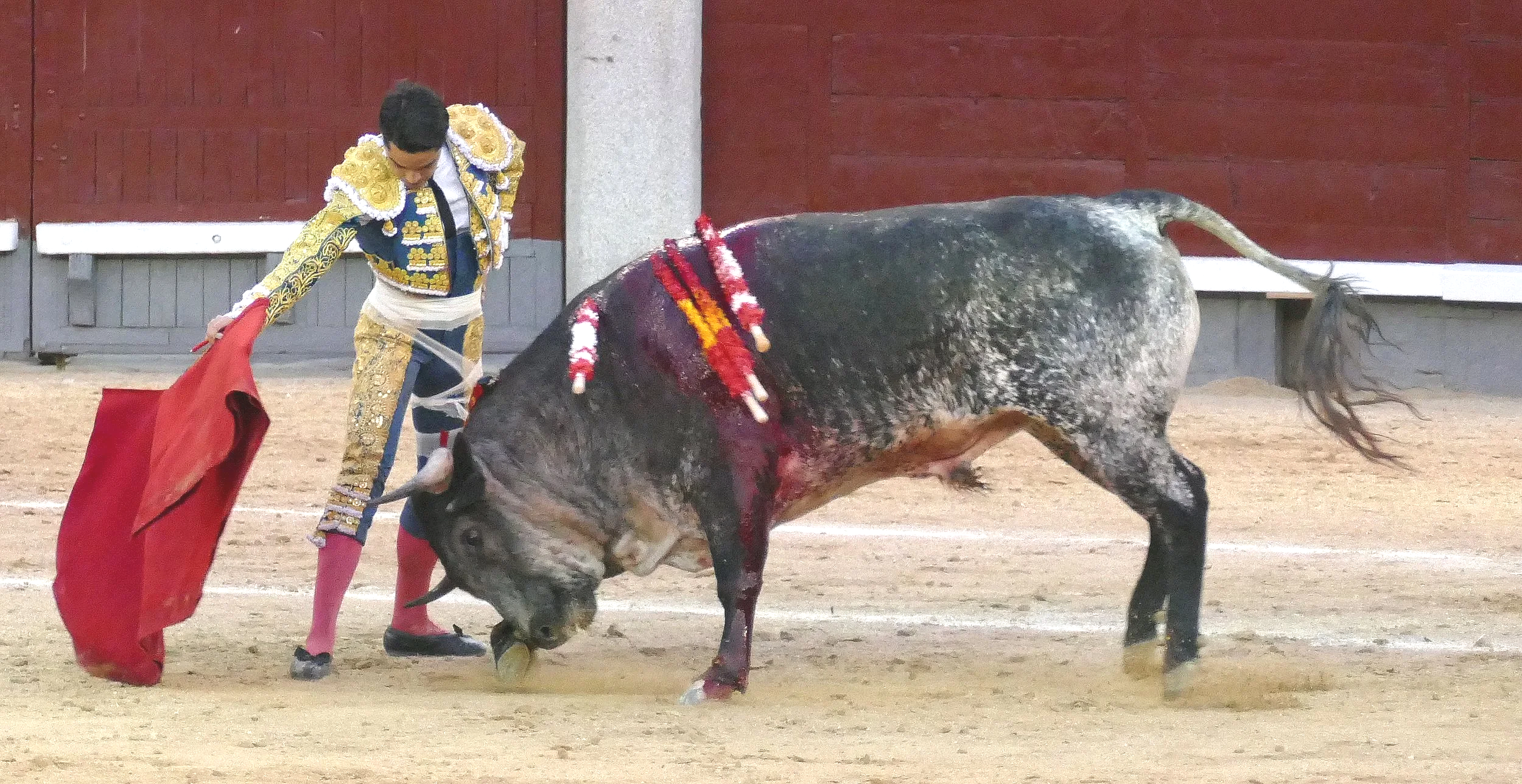
Mario Navas in Las Ventas with a novillo of Los Maños (San Isidro, 2023)
Years ago, when bullfighting chroniclers criticized the Fiesta so as to gain credit as good aficionados among the aficionados and respect as good journalists among the journalists, things were not going so badly in the continually battered world of bullfighting.
There are many positive components of the Fiesta back then I could refer to. One of them is the novilladas. It was harder for the unapprenticed youngster. His life followed an older ritual: fleeing the parental home; the hungry solitude of the road; the most abysmal tests of bravery (less controlled than now); the true initiation into the solitude that accompanied toreo; the random encounter with a mentor, generally a retired banderillero, a precarious manager who transferred his dreams to the young man who was what he had once been. Yes, the path was harder in its initial stage. It was nothing like the bullfighting school of these days, rich in teachings, in line with the evolution of society, promoting the arrival of the aspirante in the ring.
But at that specific point the old difficulties end and today’s difficulties begin. Then, the so-called ‘natural selection’ was done by the bull and only by the bull. A debutant would cause a commotion in a bullring - any bullring - the press would report it, and the young novillero would emerge. Manuel Granero only needed a festival in Salamanca - the first time he performed in public - for all the bullrings to open up to him. And it was always like that, more or less, depending on the worth of the newcomer. Now, it’s the opposite; when the novillero arrives, he stops bullfighting.
The reason for this is very simple – there are no novilladas. They say there’s no interest, but that isn’t true. What hasn't existed for several decades is information. Previously, in Madrid, just by reading the last two pages of the Hoja del Lunes, you knew thoroughly how the novillero ranks stood from A to Z. They even informed you about novilladas sin picadores. To be clear, the aficionados - and those who were not - knew how things were, and novilladas had their spectators, fewer than those of the corridas, but enough to put the novilladas on. Today, people don't know the names of even three novilleros. And since they don’t go to see them, there are no novilladas. Who is going to an espectáculo without knowing what they’re going to see? What’s more, even if some novilleros have triumphs, their successes are not publicized. And so they take the alternativa without momentum, and later end up sitting at home. Forever.
A few years ago, there were rings that specialized in launching novilleros. Not only Vista Alegre, which was a source of new talent. Even the first-class arenas, outside of the feria season, launched novilleros. Especially Barcelona, the ring that has contributed the largest number of great toreros to the rest of Spain; but Bilbao, Sevilla, Valencia and Zaragoza also infused new life every year. However, what doesn’t appear in the media ceases to exist. The ferias of Arnedo, Calasparra, etc., are praiseworthy, but the insufficient information about them limits their well-intentioned programming. That’s why now, for your typical novillero to succeed, he has to triumph in Madrid. Therefore, almost all of them come to Las Ventas having fought very few bulls. An absurdity. What’s more, in Las Ventas, it’s not two novillos that await them, but two mature toros, for how does a toro differ from a well-fed novillo that has a toro's trapío, its horns, and its behaviour, but is six months, four, or three shy of reaching a toro’s age?
Last Sunday in Madrid, a brave, noble, and serious young novillada of Couto de Fornilhos took place, which was an authentic corrida de toros. It was fought by three novilleros who, a year ago, weren’t old enough to shave, and of whom no one knows how much or where they’d fought, nor who had recommended them. Today, ‘natural selection’ is called Florito. Or Florito chico, as you prefer.
[This is a translation of an article published on burladero.tv and titled ‘En Madrid, los novilleros matan toros’. – TW]