Los toros in Peru
Paco Delgado
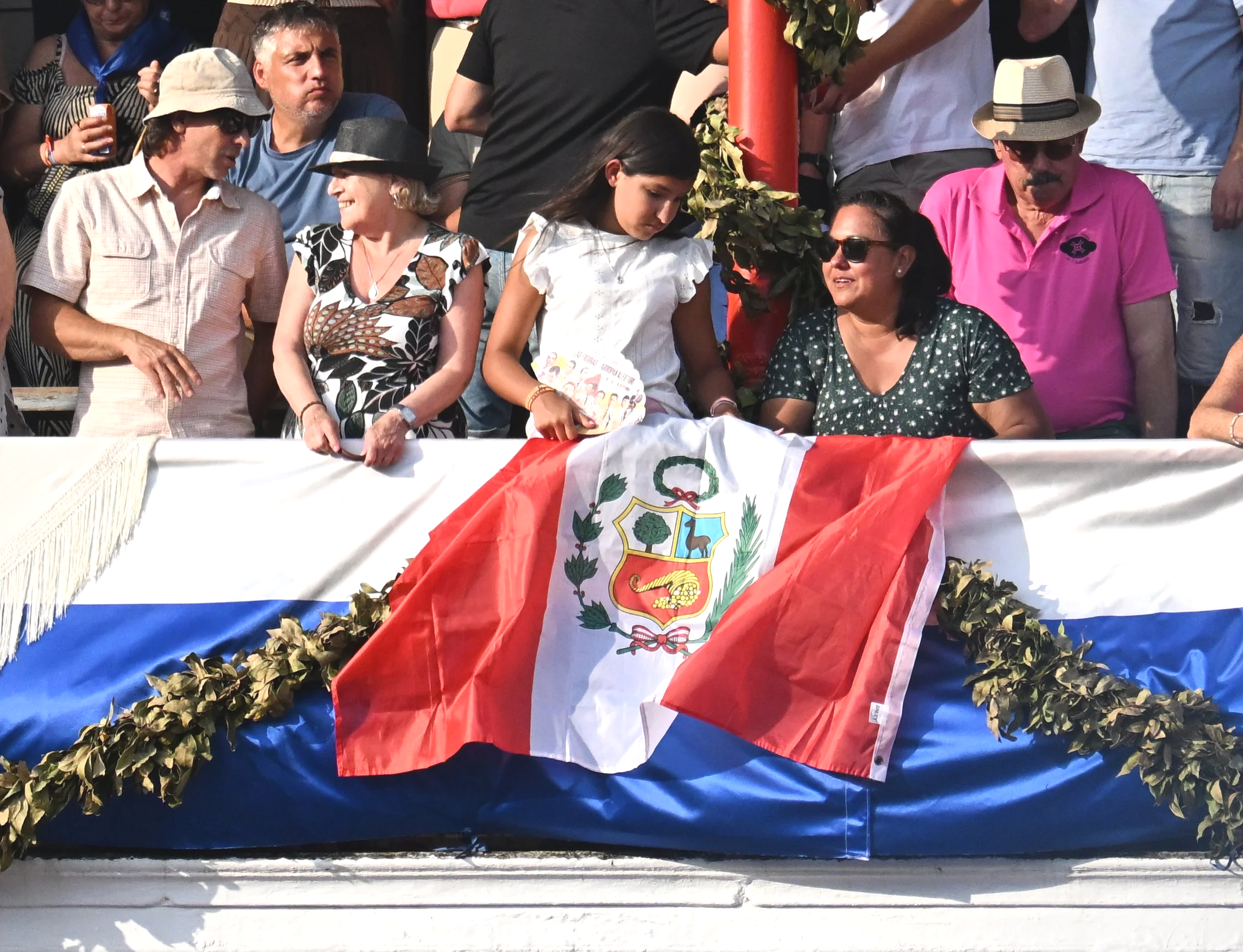
The Peruvian flag on display during a corrida featuring Andrés Roca Rey, whose success has doubtless boosted bullfighting’s popularity in his home country
The injury suffered a few weeks ago by the Valencian bullfighter Jordi Pérez Presencia El Niño de las Monjas, and the no less stressful and overwhelming odyssey that took place in order for him to receive medical attention after the mishap, have once again put in the spotlight a country whose toromaquia is still very unknown despite the fact that its temporada occupies practically the entire year.
It seems that the first bullfight held, in a more or less formal way, in those lands took place in 1540, a celebration of which it is said - although the data is far from proven - that Francisco Pizarro speared bulls in the Plaza Mayor of the Peruvian capital. However, Ricardo Palma gives as the first bullfight in Peruvian lands one held in 1538, although there is no reliable source that accredits that data either.
The corrida, a spectacle made official by the Cabildo of Lima in 1558, was gaining in popularity and the celebration of a bullfight on June 27, 1622, in Lima, to entertain the new Viceroy, Diego Fernández de Córdoba, Marquis of Guadalcázar, is documented. During his mandate, espectáculos taurinos proliferated (seven were given to celebrate the birth of Prince Baltasar Carlos in 1629) and the name of Juan de Valencia already stood out as a brilliant bullfighter on horseback and author of a treatise on bullfighting rules.
These festejos not only excited the Spaniards in Peru, but also the natives, who too began to take an active part in these festivities, which, in the 18th century became more regulated, evolving towards the predominance of the torero on foot and the publication of lists of the bulls that would appear in each bullfight and who would face them, that is, a kind of cartel or programme for each performance.
With the consolidation and regularization of the bullfights, already considered a mass spectacle, several Spanish bullfighters travelled to torear in Peru: Manuel Romero, El Jerezano, Antonio López, Miguel Utrilla, and, after the country’s independence, Gaspar Díaz Lavi, José Lara Chicorro, Vicente García Villaverde, Francisco Sánchez Frascuelo, Manuel Hermosilla and Francisco Díaz Paco de Oro.
Until relatively recently, Lima’s Feria del Señor de los Milágros, created in 1946 by journalists Fausto Gastañeta and Manuel Solari Swayne, was the best known and most popular event of all those that take place in Peruvian lands. Every year, the main figuras of the escalafón appear in it. However, there are many ferias held in the Republic throughout the year. Until recently, that of Chota - whose plaza de toros bears the name of the Zamoran bullfighter Juan Fernández Lorenzo El Vizcaíno – was the best known after that of Lima’s Plaza de Toros de Acho, even though getting to Chota was a real adventure: flying, a lot of hours on the bus, crossing rivers, crossing mountains and jungles... Consequently, it was mainly modestos more in need of contracts who were announced in the city’s San Juan festivities.
But all this has changed and, for a little while, in this part of the world we see and read that there are frequently bullfights in a good number of Peruvian bullrings, and in them perform first-rate bullfighters. Even Manzanares this year has fought in Bambamarca. And with him have gone Escribano, El Fandi, El Cid, Colombo, Ferrera, Ureña, Galdós, Perera, Garrido, Román, Lama de Góngora, Fernando Adrián and a long etcetera in which we must include the valenciano Miguel Giménez [who took the alternativa at the Madrid ring of Navas del Rey in 2015 - TW], who has been there for several years fulfilling seasons of more than 30 performances.
Cutervo, Socabaya, Ayaviri, Usquil, Puquio, Lajas, Celendín, Palcamayo, Ollachea, Andagua, Ancash, Paiján, Huallanca, Coracora, Arequipa, Ayacucho, Socota, Lampa, Matara, the new bullring of Las Tunas... they are bullrings and ferias in which, as well as speaking about tradition, we must talk about the present... and of the future.
[This is a translation of an article published by www.burladero.tv under the title ‘El descubrimiento del Perú’ - TW]