Ricardo Díaz-Manresa
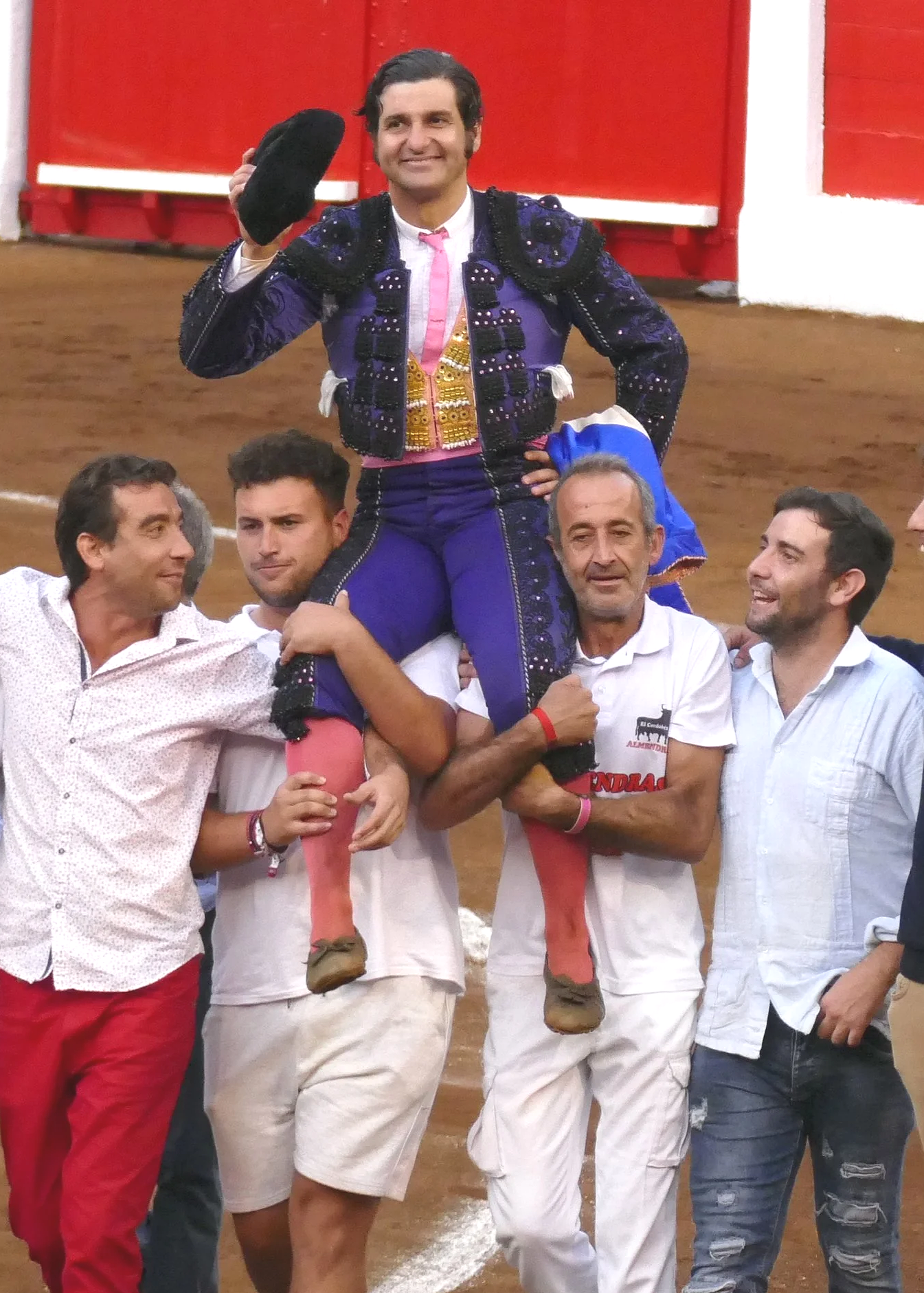
Evidently, the popular clamour that Morante is raising is something special. It could clearly be seen, in case any evidence was needed, on Easter Sunday in Seville. The crowd massed in front of the hotel and almost didn’t permit the matador to leave. It appeared as if there had never been bulls before in La Maestranza.
Canal Sur presented the occasion as the great world event of the day. Later, the public were excessively kind towards the man from La Puebla, even awarding him a double trophy. The torero had set out to triumph and the public, of course, to see him triumph, no matter what. The matador had already told us that it was a matter of need and that was why he had reappeared (or, in other words, continued to appear). He has been fortunate that he is indeed needed because there is a shortage of interesting espadas. In Seville, there have been several bullfighters better than Morante, while in the escalafón in those times there were other toreros of interest as well. And so they were put on together, like Pepe Luis Vázquez, who had Manolete by his side, the diestro from Córdoba filling everywhere he went. There were several similar cases.
In recent seasons, José Antonio was practically indispensable, but it was the farewell in Madrid that caused the volcano to erupt. Rarely have I seen so many tears and lamentations because we were left without an important bullfighter. And as the days went by - and this is another truth - many people, amongst the fans and the so-called generic press, insisted that he return. There have been few cases like this. Or, at least, I don't recall any. And, as continuing was going to be very profitable, and because Morante hadn’t said goodbye to Sevilla, his Sevilla, and he wanted to do the same in other places, the complete turnaround was forged for him to come back without ever having left. He merely rested during the winter months, as he does every year.
The atmosphere of euphoria in la Maestranza was such that even Ruiz Miguel - who has been granted a third career by God as a commentator, after being a bullfighter and a rancher - speaking at the height of ecstasy and exaggeration, said that the three toreros in the Easter Sunday corrida might leave through the Puerta del Príncipe... The three of them, no less!
In short, Morante is praised by the public, who have turned him into a myth and regard him as the great protagonist in each of the bullfights in which he performs. Positive for bullfighting, but a case of collective madness.
As occurred with Manolo Benítez, who revolutionized the masses. That was completely different - a career based on his total commitment and his rough, inelegant manners. Those were the times of the Beatles. Of a happy Spain. And a mass that believed in El Cordobés, so different from the rest - their bullfighter, their idol, their revolution. And a revolution did take place. Such was the madness unleashed, that even his running his hand over his head brought shrieks of emotion.
Different madnesses for different bullfighters. One proclaims and exhibits the toreo of art and feeling and beauty, while the other was jerky, on his knees, making the salto de la rana, etc. Morante's toreo will make more of a mark than that of El Cordobés. But both served well in their time.
José Tomás came out hitting hard, but what he achieved is of far less intensity and duration compared to what Morante and El Cordobés have done.
May the morantistas and their friends have great enjoyment, and may this euphoria last.
[This is a translation of an article titled ‘Ahora Morante, antes El Cordobés: dos locuras diferentes‘ published by burladero.tv - TW]