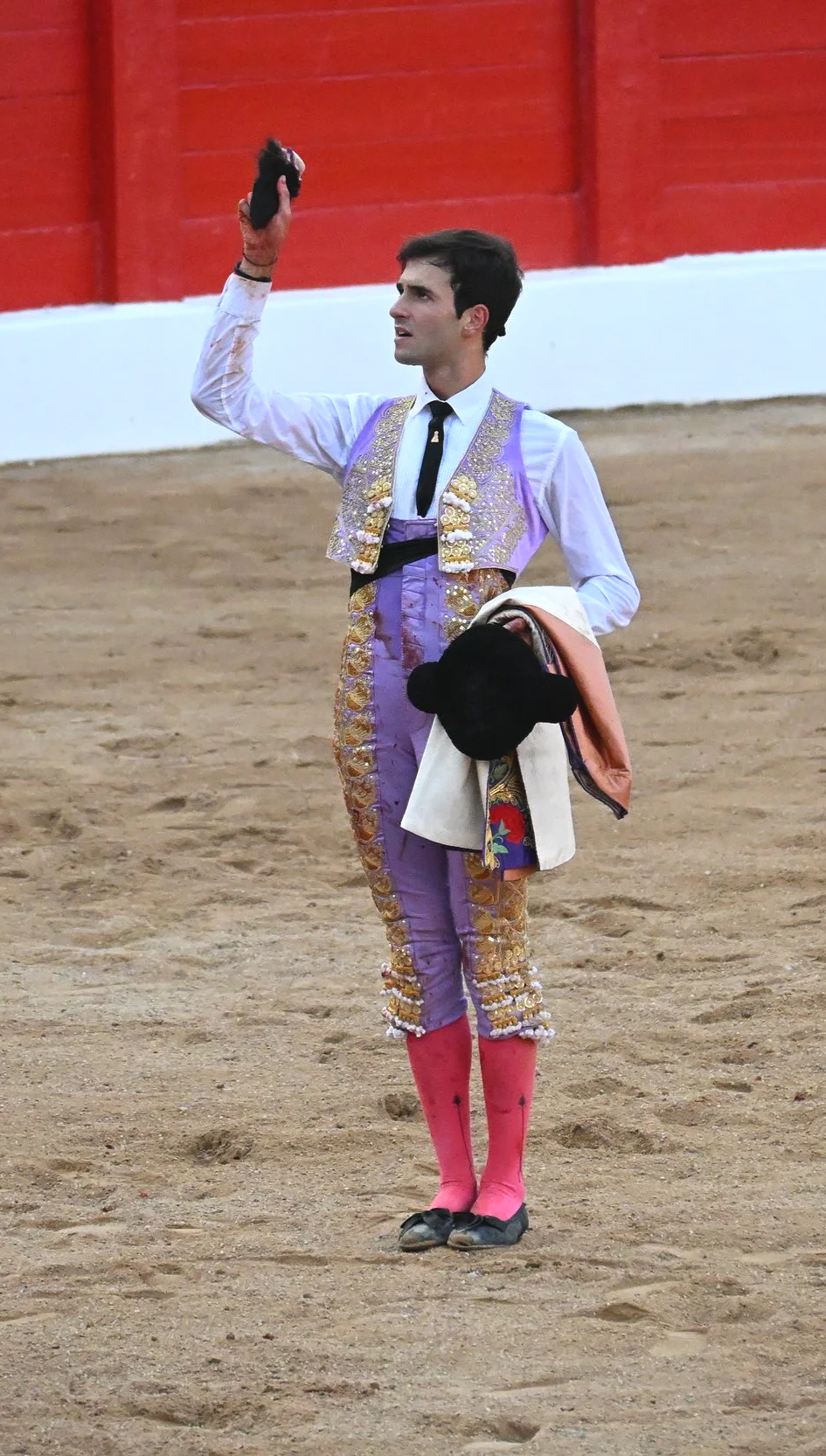
A battered Samuel Navalón shows the ear he won from today’s last bull
Don Álvaro Martínez Conradi’s La Quinta ganadería had two showings at this year’s Feria de San Isidro, disappointing on both occasions, and, on the basis of today’s showing in Santander, continues to go downhill, with one local journalist even commenting that the animals were losing their traditional Buendía appearance as well. Three of this afternoon’s bulls, while proving sufficiently mobile for toreo, failed to transmit any sense of power: two others were simply dangerous.
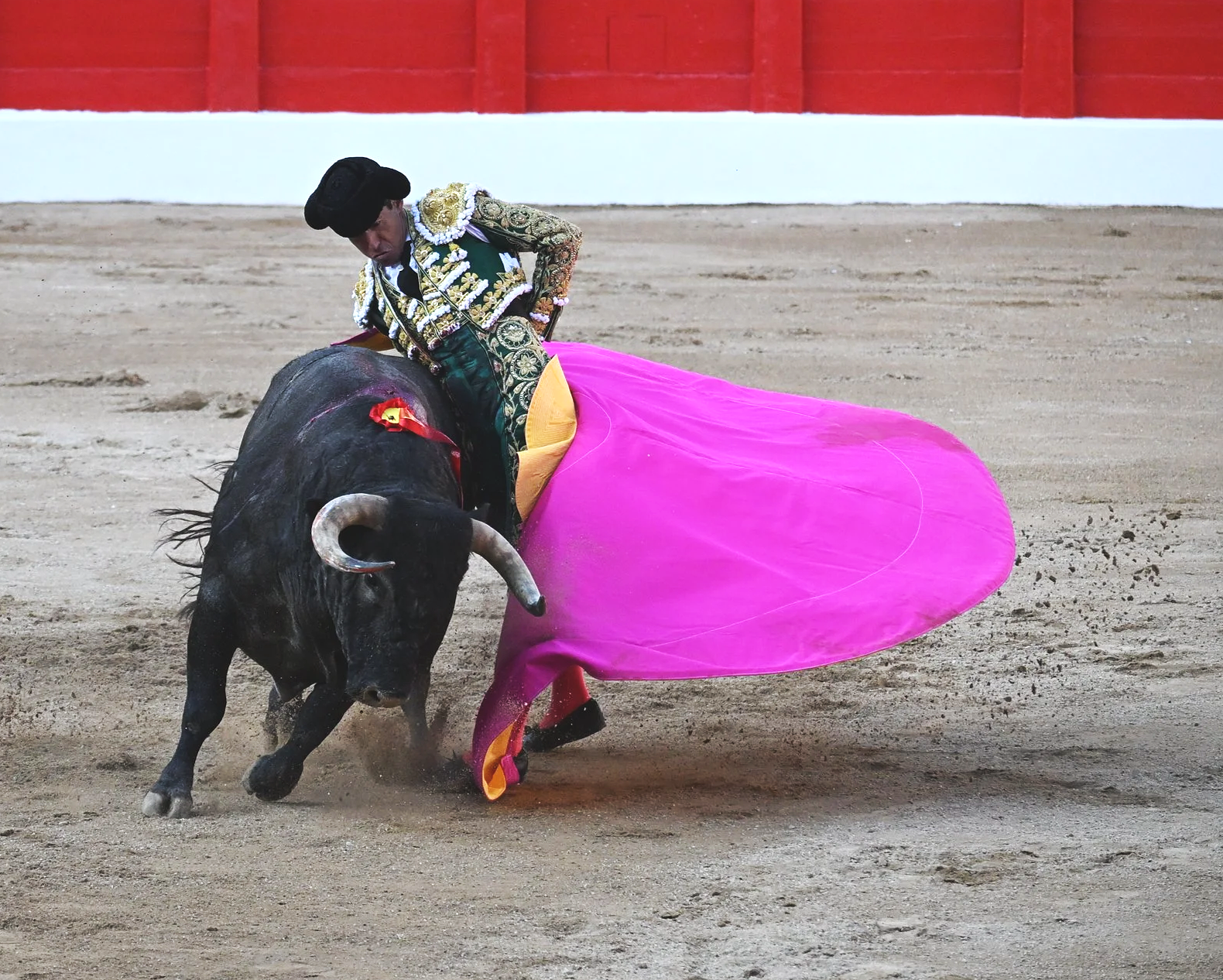
Diego Silveti in a revolera (above) and (below) a natural
No one was quite sure why the veteran Mexican matador, Diego Silveti, was on the bill - his first appearance in Spain for a decade - but perhaps he was following the example of his compatriot El Payo (see the earlier article ‘San Isidro as the World’s Fair’). He was unconcerned about facing Spain’s toro bravo once more, signalling for a tercio change when both his animals were still in the peto following their sole varas. Indeed, these soggy beasts leant themselves to Diego’s stately and statuesque toreo, comprising derechazos in the main, but also pases ayudados, trincheras, chest passes, bernadinas cited with half the muleta, pases mirando al público. There was capework on his second bull as well - verónicas, a media verónica with the feet together, and a quite of gaoneras, a revolera and a chicuelina to escape from trouble. If his animals had transmitted a challenging strength, and if his killing had not been so weak (although, to give him credit, Silveti attempted to kill both his bulls recibiendo), the Mexican might even have won something.
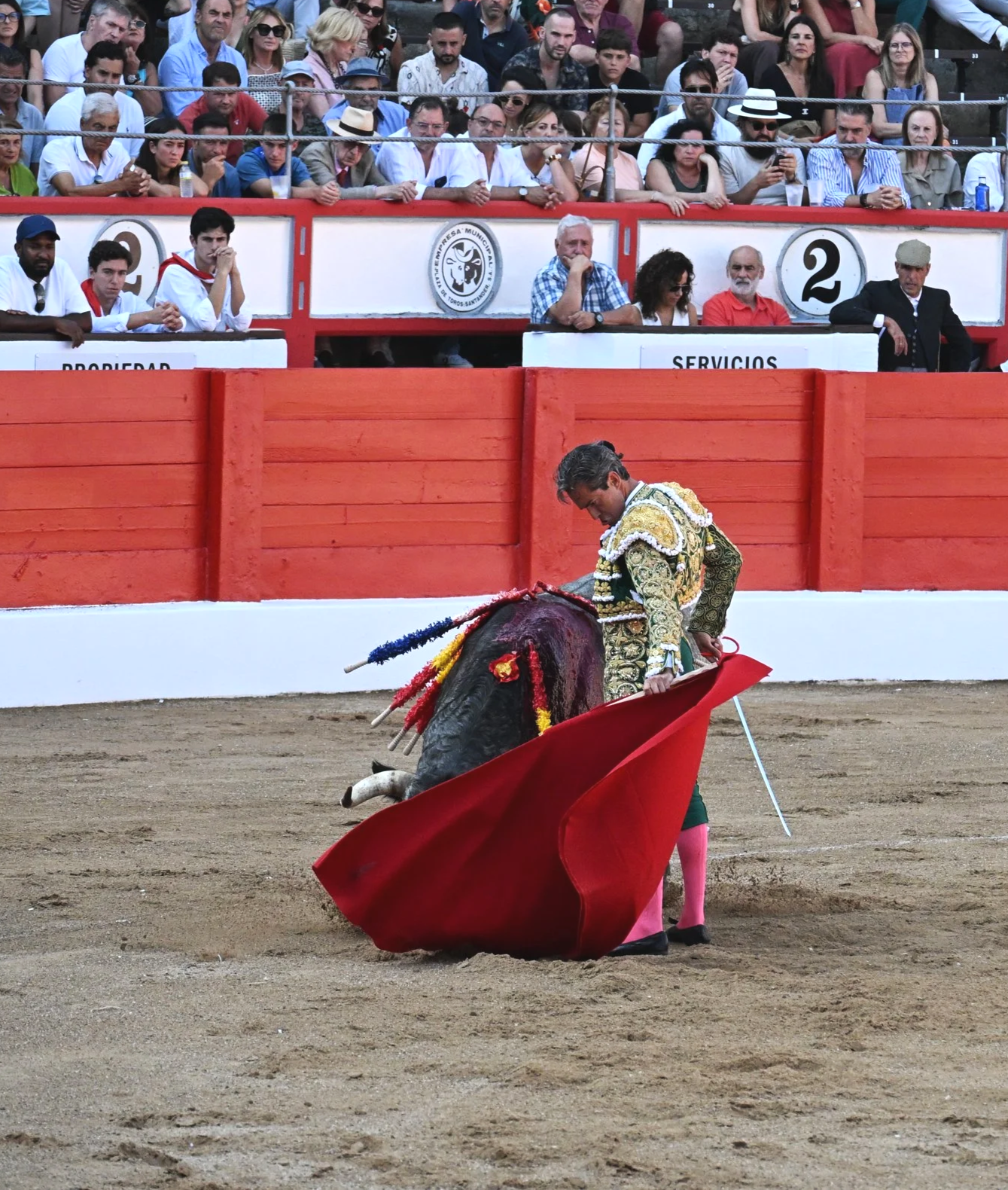
A pase de pecho by Román to his first bull
Román, making his Santander debut, drew a mixed pair of bulls - the only one of today’s string that showed casta, and another that inspired no confidence in the valenciano at all. With the first, given great sticks by Gómez Escorial and Fernando Sánchez, Román dedicated to the tendidos and produced a faena de màs a menos, giving his opponent space to charge and bringing off some fine linked derechazos, but then finding the bull’s speed and today’s coastal breeze too much to accommodate linked naturales. A return to muletazos in the right hand and some closing manoletinas restored things somewhat, but the faena ended wth three pinchazos and a decent estocada. Román clearly perceived danger from his second bull, for, despite words of encouragement from colleagues at the barrera, this faena was a jittery affair, the matador’s legs moving, and he soon sought to bring it to an end with an estocada. The swordthrust was excellent - for some reason, Román opted to repeat it! - and the valenciano’s Santander afternoon finished in silence.
Samuel Navalón came to Santander on the back of being declared triunfador of Valencia’s July feria, where he’d also received a nasty cogida. Before seeing him today, I’d been pondering my aversion to his toreo and concluded that my first, positive, sighting of him had been in the tienta ring of the Nazario Ibañez ganadería where he was working and where his toreo had been simple and unadorned as he played with becerras in between the main performers. There had been none of the strutting, the accentuated torería or interaction with the spectators that, for me, has been such a negative feature of my subsequent viewings of him. With his first bull today (at 458 kilos, lighter than all but one of Saturday’s novillos!), he nearly won me over producing splendid naturales and luquesinas and some lovely pases de pecho. His capework had been good, too - a larga cambiada de rodillas, verónicas, tafalleras, a media verónica and a larga. All looked set for an ear to be won, but instead there was a pinchazo, a two-thirds sword and an aviso.
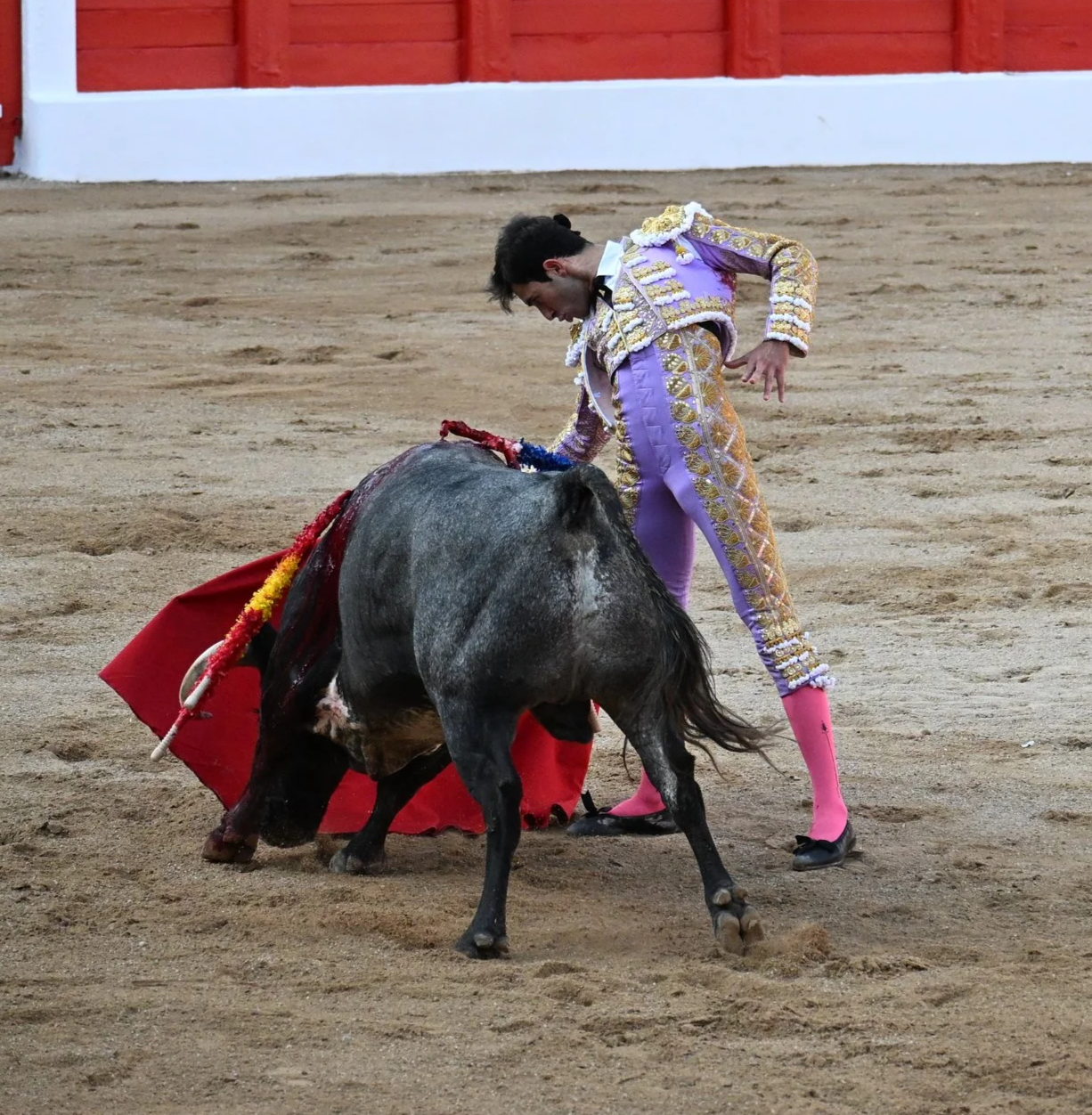
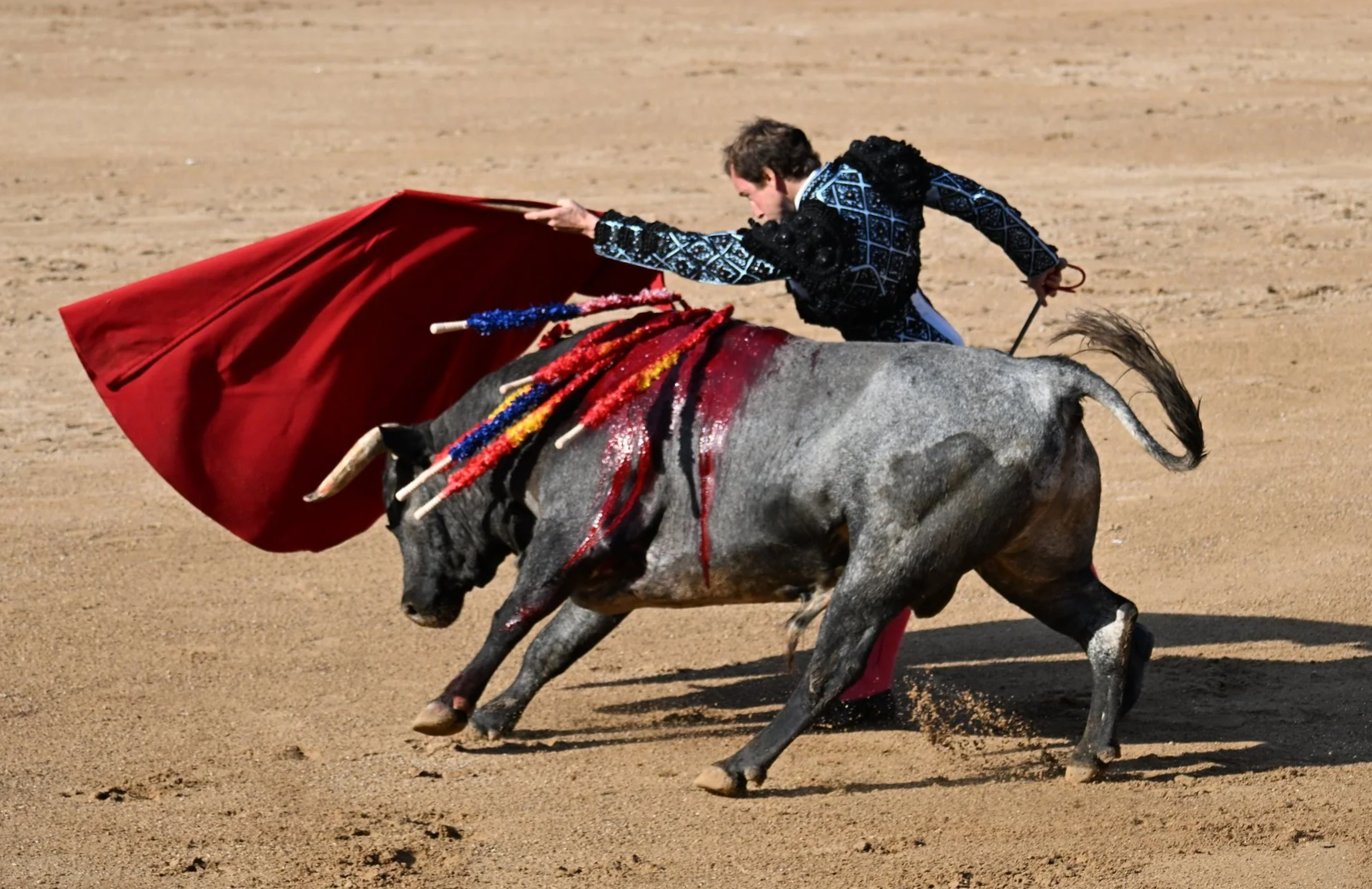
Samuel Navalón (above) in a derechazo. His swordwork cost him a probable ear from his first bull, but he won one on his second, although a cogida (below) left him limping and with a blood clot on one of his lungs
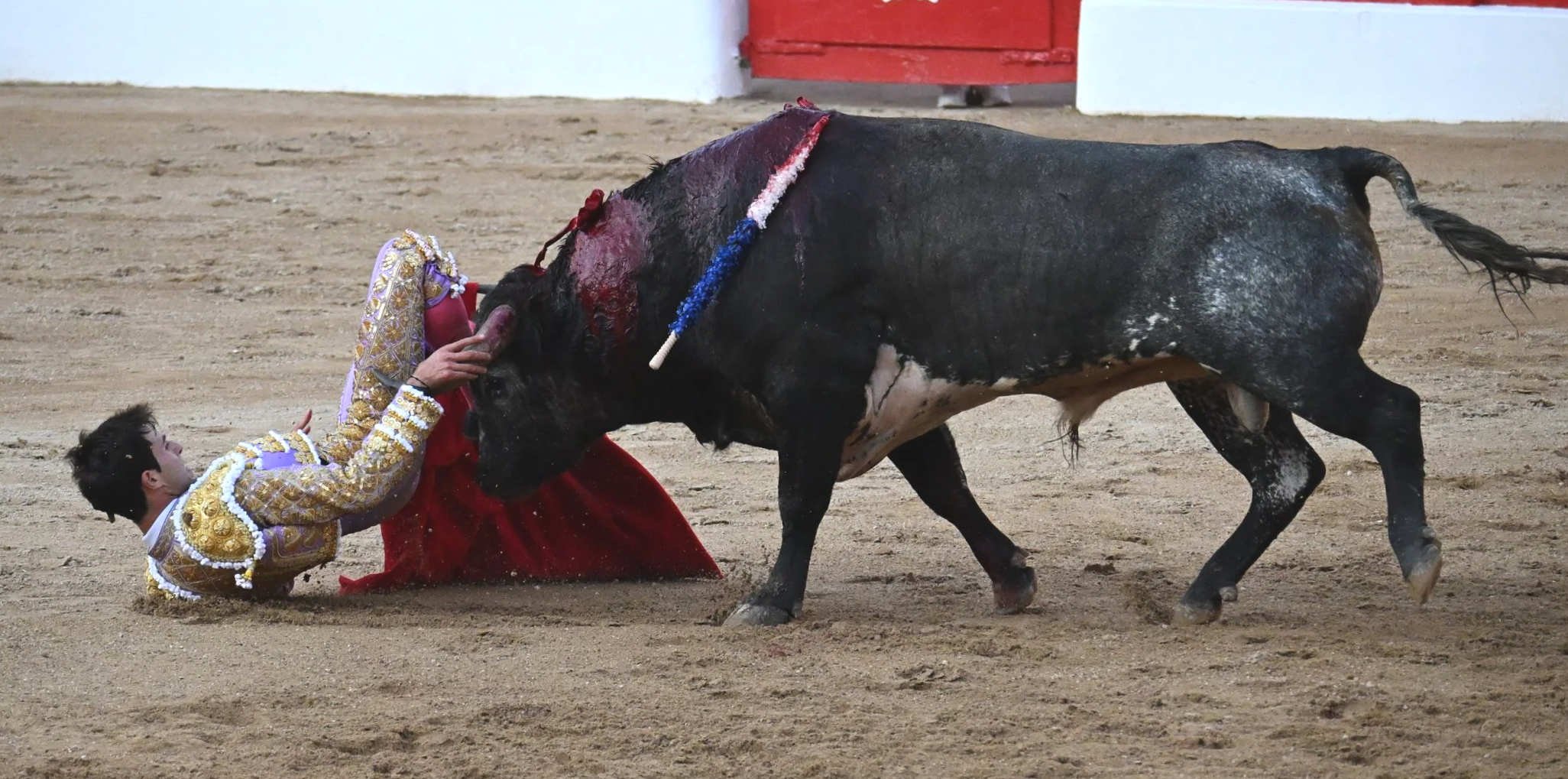
Last year, the plaza only received its new sand shortly before the feria began and people said it would take time to settle in. This year, it is clear there is far too much sand in the plaza. It cuts up easily, providing unlevel footing for man and beast, a trap for bulls’ horns to dig into, so deep that when an arenero appears to restore the rayas on the uneven surface, only rough and ragged lines result. Adding to this messy scene, we had a chaotic tercio de banderillas on Navalón’s second bull, with the unusual sight of Curro Javier suddenly dropping his capote and running and then the banderilleros attempting to place their sticks without the assistance of a bregador. The bull was clearly dangerous, and its danger meant there was no time for fripperies, Samuel having to concentrate hard to remain in control. Now I was won over. Despite an early desarme, the matador produced a strong faena, the derechazos being particularly excellent, and it was not until he cited close to the bull for manoletinas that the animal finally caught him in the chest, lifting him off the ground, then trampling on him. Navalón came away from the cogida limping heavily, but, jacket removed, returned for further passes and a fine estocada that had a rapid effect. Awarded an ear, Navalón showed it to the crowd before leaving immediately for the infirmary. It was later announced that the cogida had left him with bruising and a blood clot in his right lung. The youngster is taking risks with his toreo, but making an impact which should see him well-placed in next year’s ferias.