Santander, July 23: Toros bravos are back in town
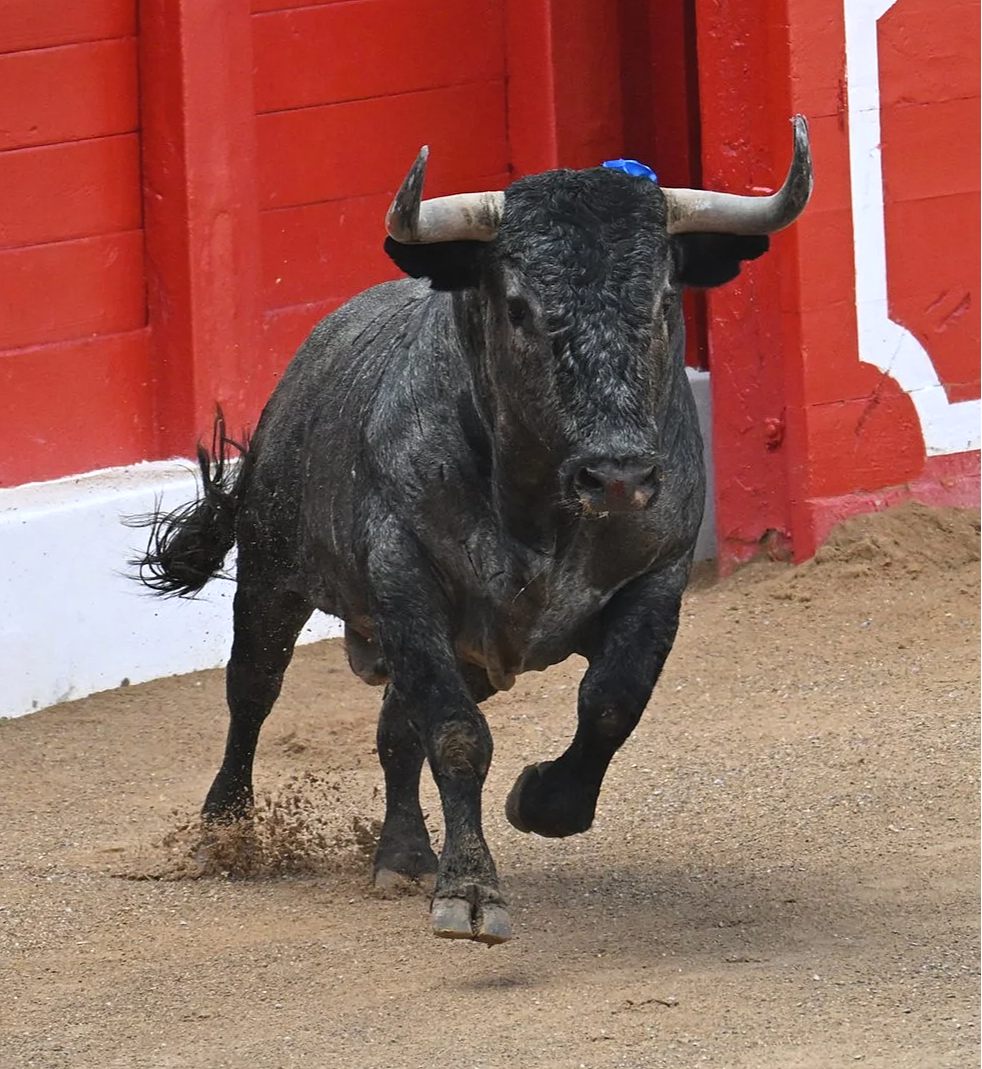
The opening victorino
It was with some relief that, after days of poorly presented and poorly performing bulls, unworthy of this second class plaza, with the animals of Victorino Martín it felt like we finally had a proper corrida de toros. The cartel featured two victorino specialists in the form of Manuel Jesús El Cid and Manuel Escribano, and Tomás Rufo, a triunfador here in 2024 but absent from last year’s Feria de Santiago.
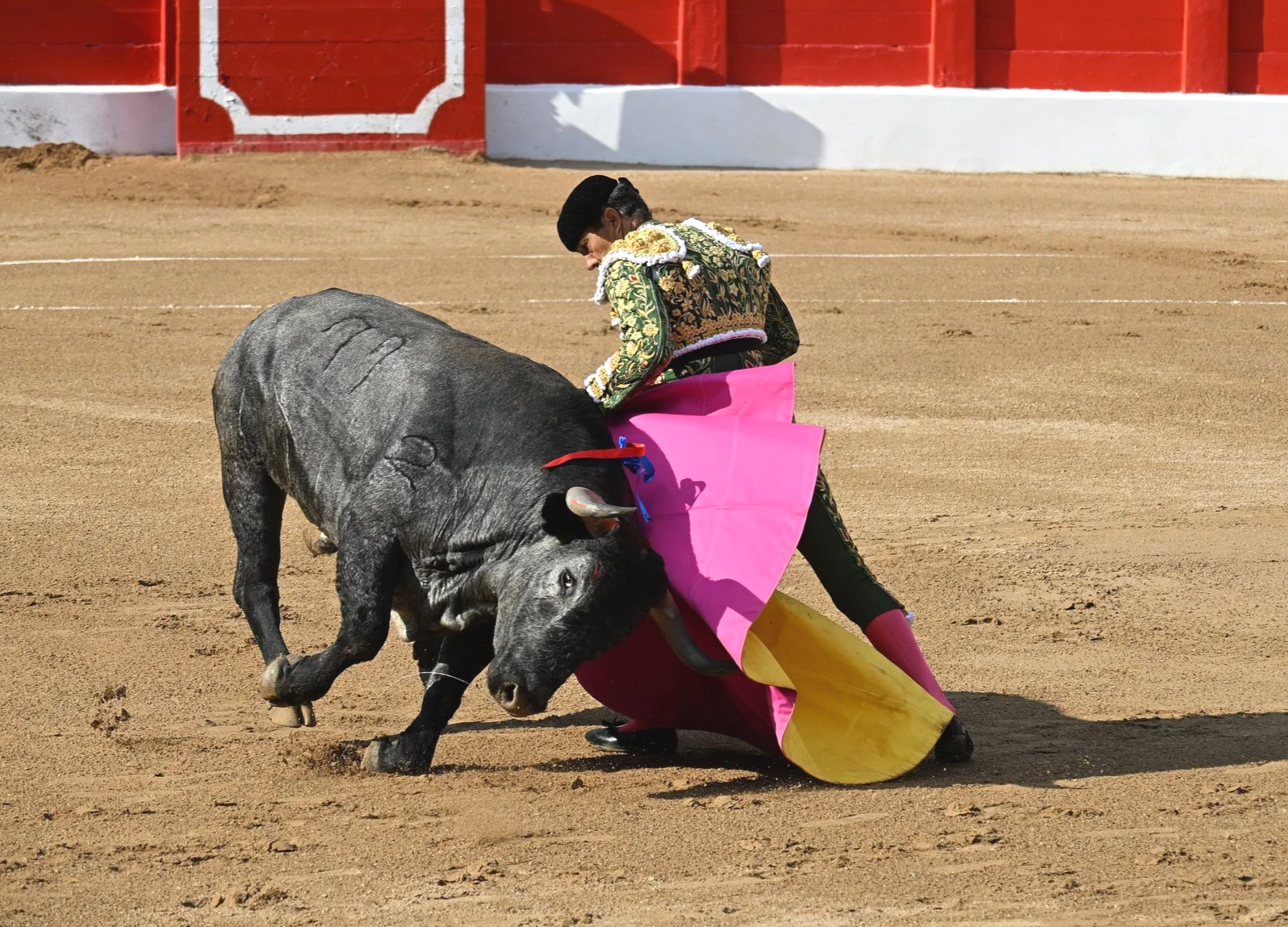
El Cid leaves his first victorino in place for the picador
After the last few days, it was reassuring to see the attractive 593-kilo ‘Madrugador’ emerge from the toriles. Following some testing capotazos from El Cid, the bull was set up to go to the picador twice, the Santander public letting themselves down by protesting the second vara for its existence. ‘Madrugador’ established a noticeable querencia en tablas and El Cid produced a workmanlike faena that included a few decent naturales. After killing with four pinchazos and an estocada, El Cid received silence while his bull was applauded en arrastre by Santander’s critical Tendido 2 but hardly anyone else.
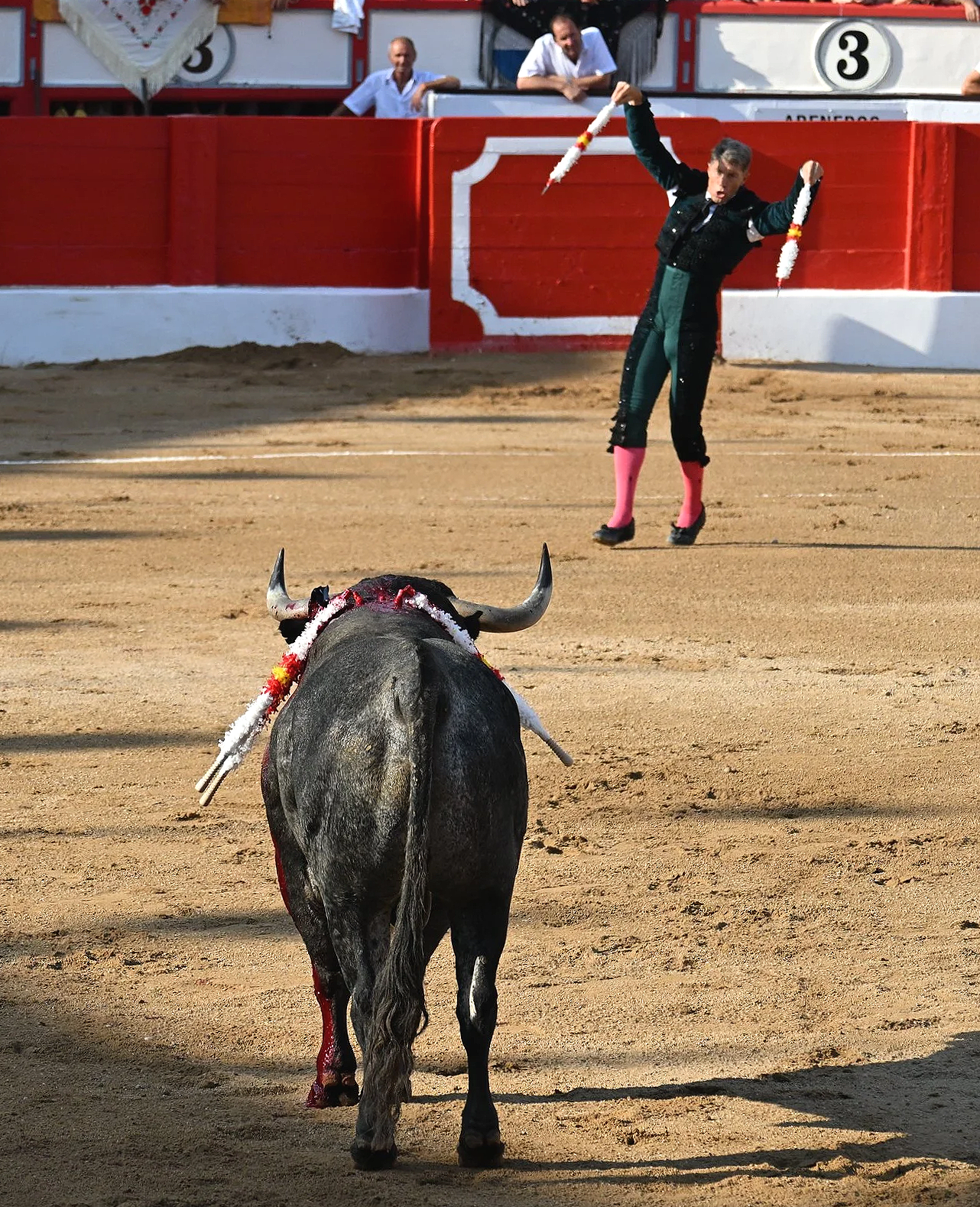
Manuel Escribano beginning a spiralling poder a poder run en banderillas
A festive attitude in the plaza continued today, helped along by the annoying shouting and chanting of Manuel Escribano’s Oviedo peña (which may also explain why Oviedo no longer has a functioning plaza de toros), who loudly proclaimed Manuel as their number one torero. The sevillano met ‘Veronés’ with a larga cambiada de rodillas, one and a half verónicas and a media verónica. The bull fell on its first entry to the picador, the president overruling Escribano’s wish for the tercio to be changed and ordering a second vara. The highlight of Manuel’s tercio de banderillas was the third pair, delivered poder a poder after a spiralling run towards the bull. The president again said no, when Escribano sought to place a fourth pair of sticks. Manuel dedicated to the public and produced a faena of pases con mucho temple on both his right and left hands. His estocada placed in the bull’s side lost him the ear, although a minority in the crowd overlooked this and launched into a petition. There was silence en arrastre before a rather fed-up looking Escribano took saludos.
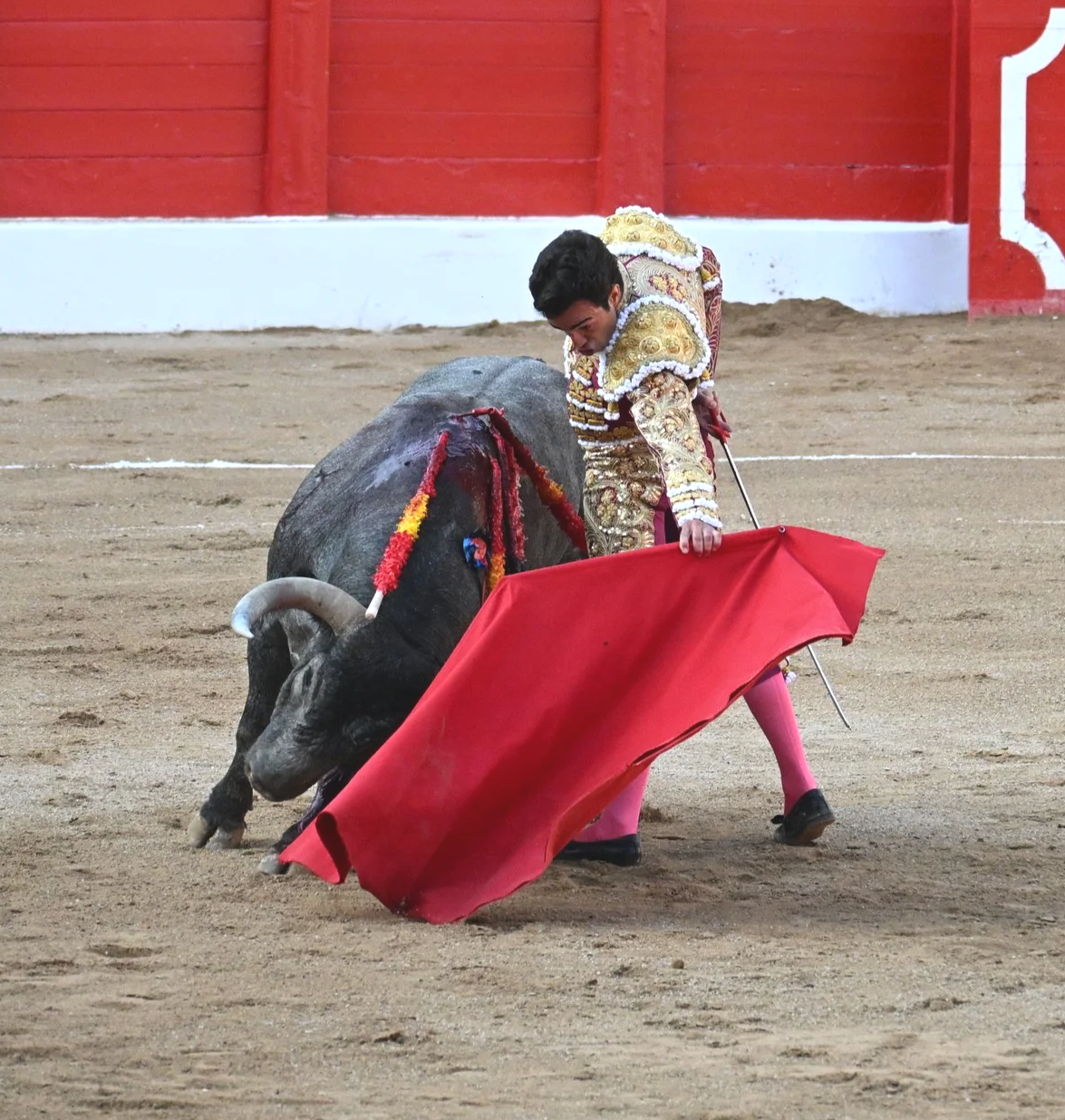
One of many fine naturales in Tomás Rufo’s opening faena
Tomás Rufo had triumphed with a victorino before (see my report of his corrida in Valladolid last September), but not one with the spirit and determination of ‘Melonero’. Rufo met the 518-kilo bull with half-kneeling capotazos before moving on to some lovely verónicas and a half-kneeling media verónica that unfortunately sent the bull into a voltereta. I thought the faena that followed (dedicated to the tendidos) was excellent as Tomás took ‘Melonero’ through series of curving and templados naturales and derechazos, crowned with chest passes, but the crowd was slow to respond to it. A pinchazo and near-vertical estocada ended things and left only a minority petition., while the bull was taken out to merited applause.
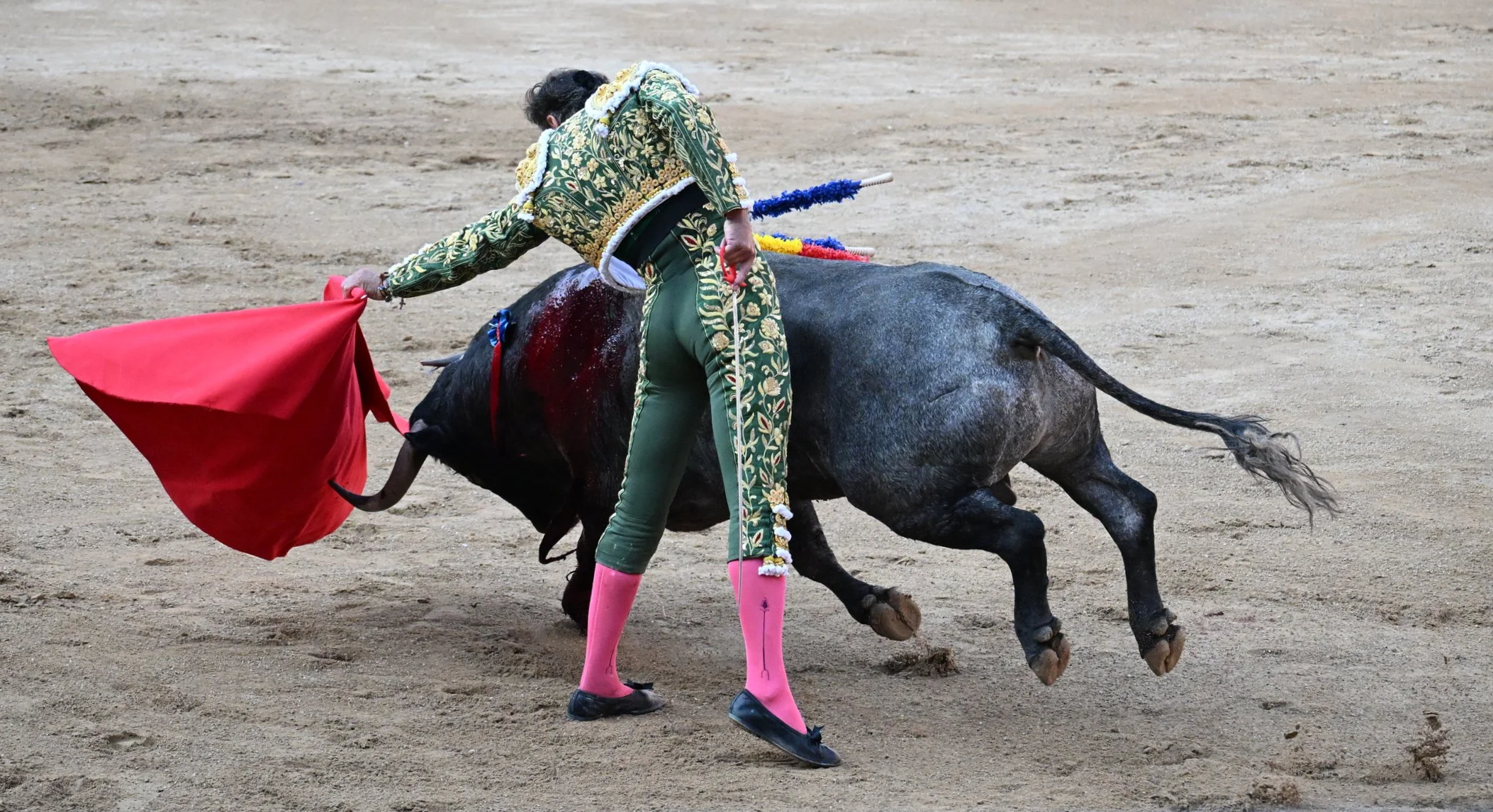
El Cid in a stretched natural: ‘Petrarquisto’ showing its keenness
El Cid greeted his second victorino, the well-armed 521-kilo ‘Petraquisto’, with verónicas, given a compás and con pies juntos before it took two entries to the picador, the second of these unplanned. The bull charged keenly in the faena, Manuel duly delivering series on each hand, better on the left (with which he began) than on the right, although once the muleta was in his right hand, it stayed there. It was a good faena, interspersed as it was with tremendista-type adornos, the matador dispensing with the muleta altogether at one point to literally grab the bull by both horns. For some reason that was beyond me, although perhaps it resides in El Cid’s history in this plaza, the crowd was far more enthusiastic about this faena than Tomás Rufo’s preceding one; they sought, and won, an ear for the sevillano after a pinchazo and estocada.
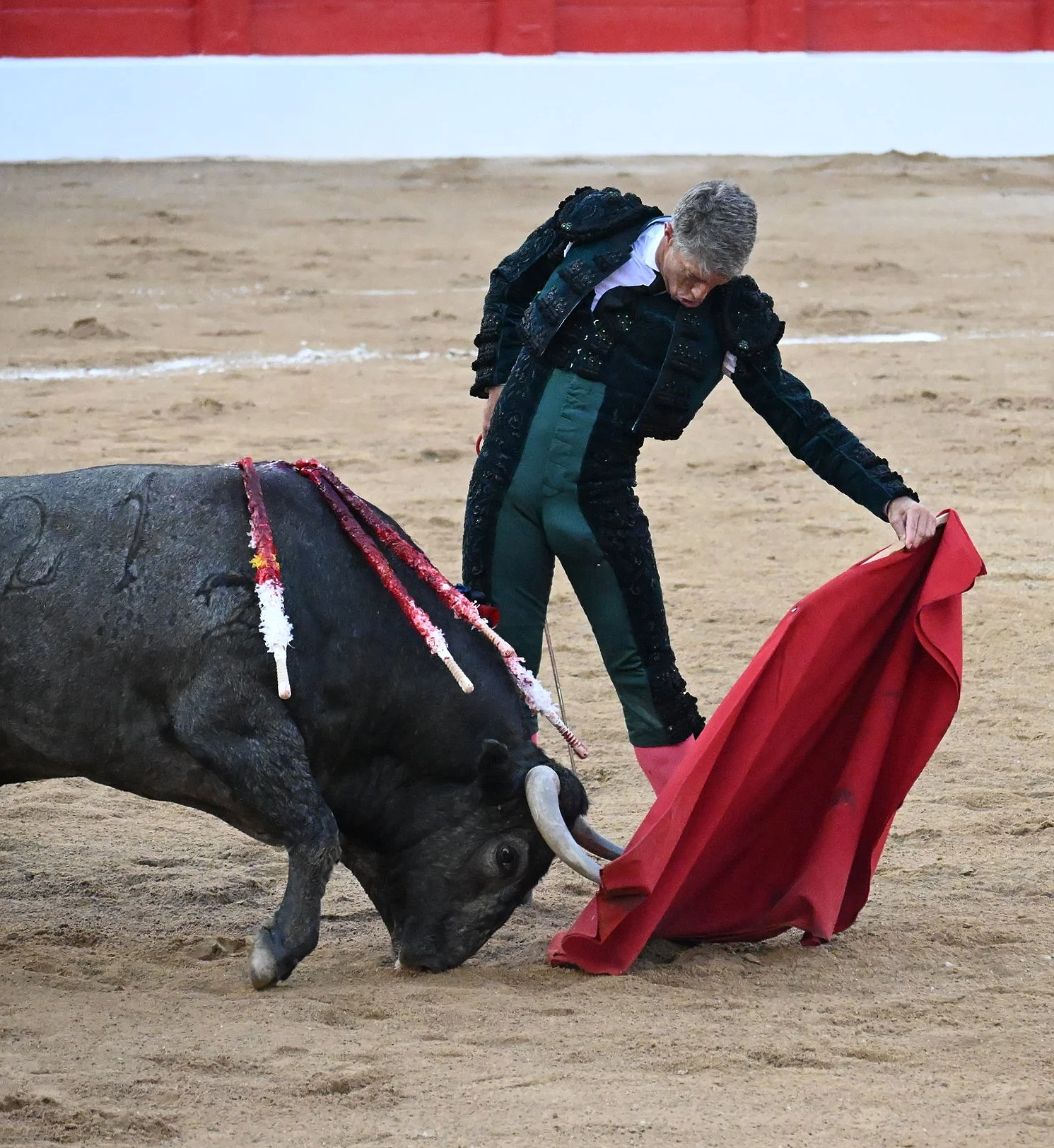
Natural by Manuel Escribano to his second victorino
Taking up an interesting portagayola position that was more in the centre of the arena than near the toriles, Manuel Escribano duly brought off the suerte along with two or three largas cambiadas de rodillas beside the fence, followed by verónicas. There was a brindis al público after Manuel’s customary banderillas and then we had a sober faena comprising clean series of derechazos and naturales, the latter particularly strong, and a first-time kill that delivered Escribano ‘Hebijono’’s ear. Applause was once again given to the victorino en arrastre.
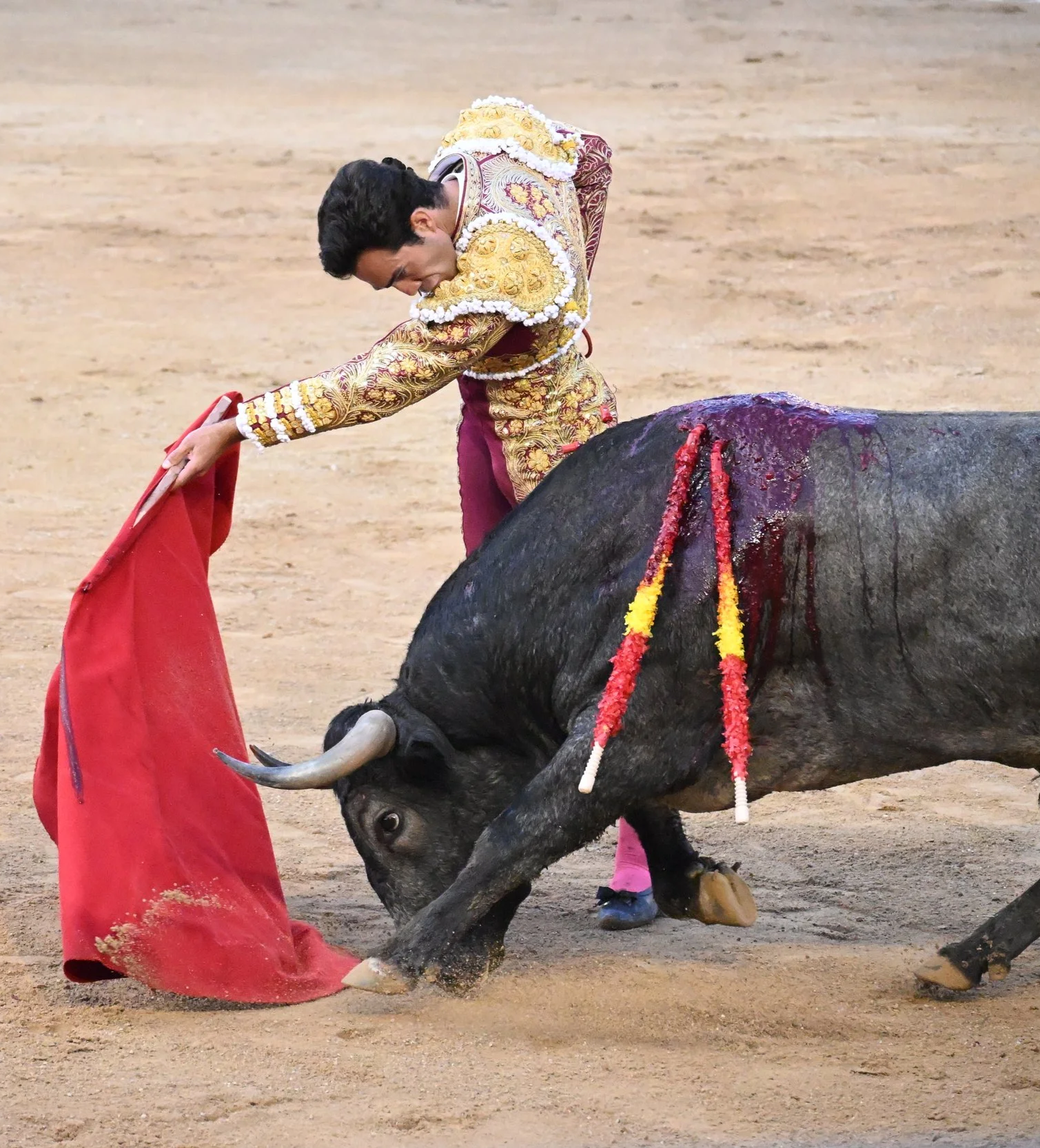
Tomás Rufo gives a pase de pecho to ‘Baratillo’
‘Baratillo’, the final victorino, stuck like glue to Tomás Rufo’s capote once the bull had it in its face. It was given a punishing vara and proved difficult in the faena, exhibiting a short charge. Tomás nevertheless managed to extract tandas of derechazos and naturales from it, the muletazos with the left hand being particularly good, but this was not to be the toledano’s day as he required another two attempts to kill, leading to a second minority petition.
A more sensitive plaza would perhaps have brought the mayoral, or Victorino himself, out to take saludos at the corrida’s end. The ganadería had fielded six bulls that had asked questions of their matadors, and to which the toreros had responded, and had approached Santander with the seriousness its feria deserves.