Sevilla’s 2026 Feria de Abril - Week 2
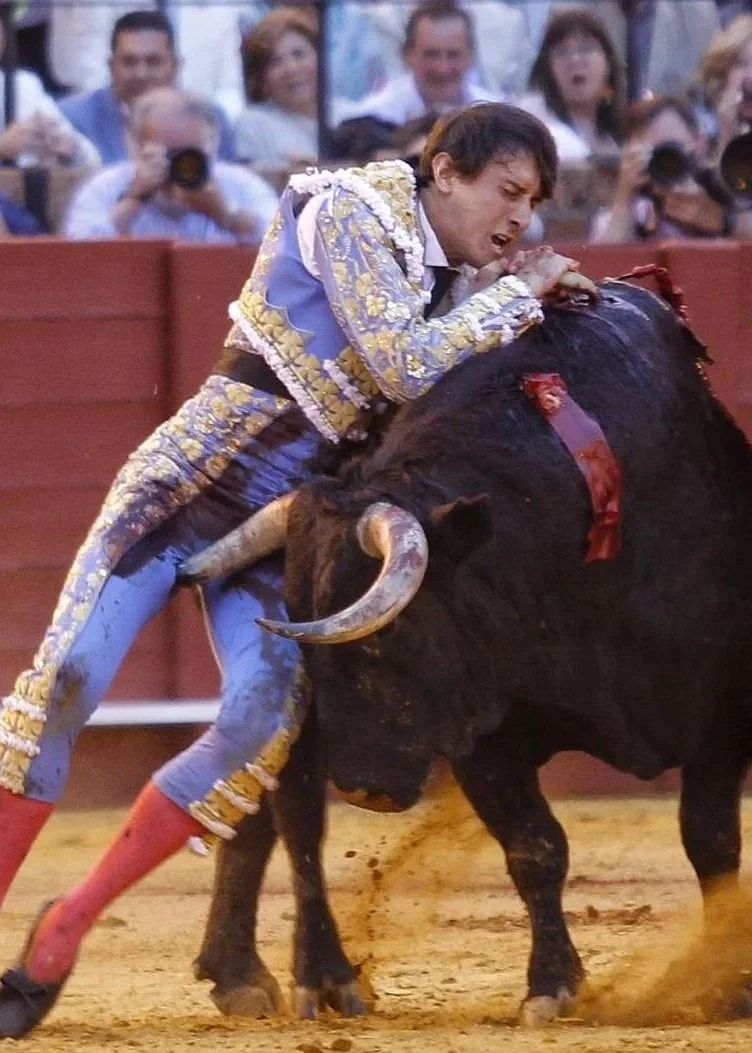
The second week of Sevilla’s feria was notable for two cornadas, the first suffered by Morante de la Puebla on April 20 and the second by Andrés Roca Rey (above) on April 23 (Image from lancesmaestranza.com)
Sunday, April 19
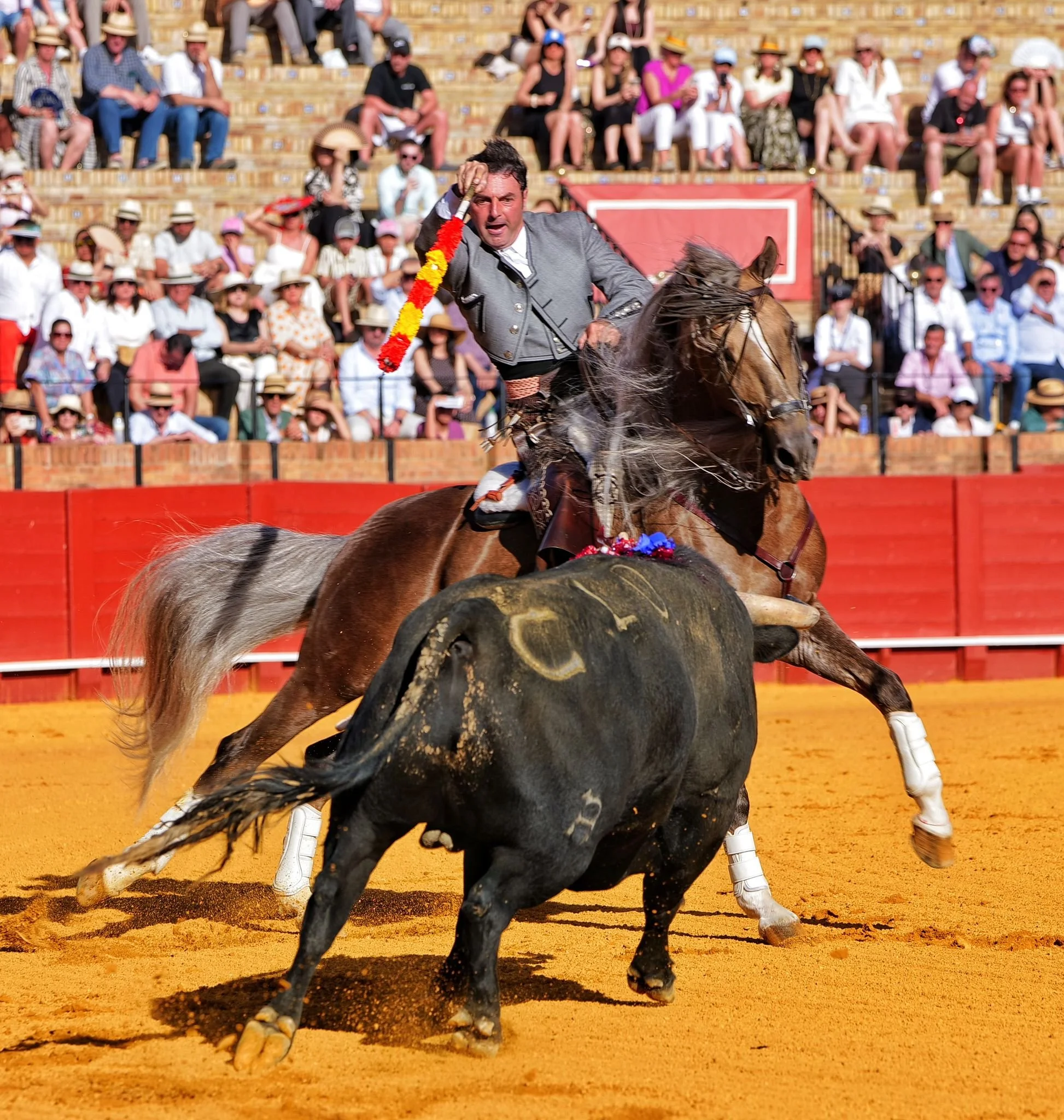
Andy Cartagena obtained his fourth exit through the Puerta del Príncipe in the feria’s rejoneo event (Image from lancesmaestranza.com)
Sevilla’s corrida de rejoneo lacked Diego Ventura this year after the Portuguese rejoneador failed to agree terms with the new empresa. After a 10-year absence from La Maestranza, Andy Cartagena cut one ear from his first bull and two from his second to earn a departure through the Puerta del Príncipe. Guillermo Hermoso de Mendoza also performed well, winning an ear from each of his bulls, while Lea Vicens cut an ear from her first animal and took a vuelta after killing her second. All the santacoloma bulls of El Capea and Carmen Lorenzo gave the rejoneadores chances of success.
Monday, April 20
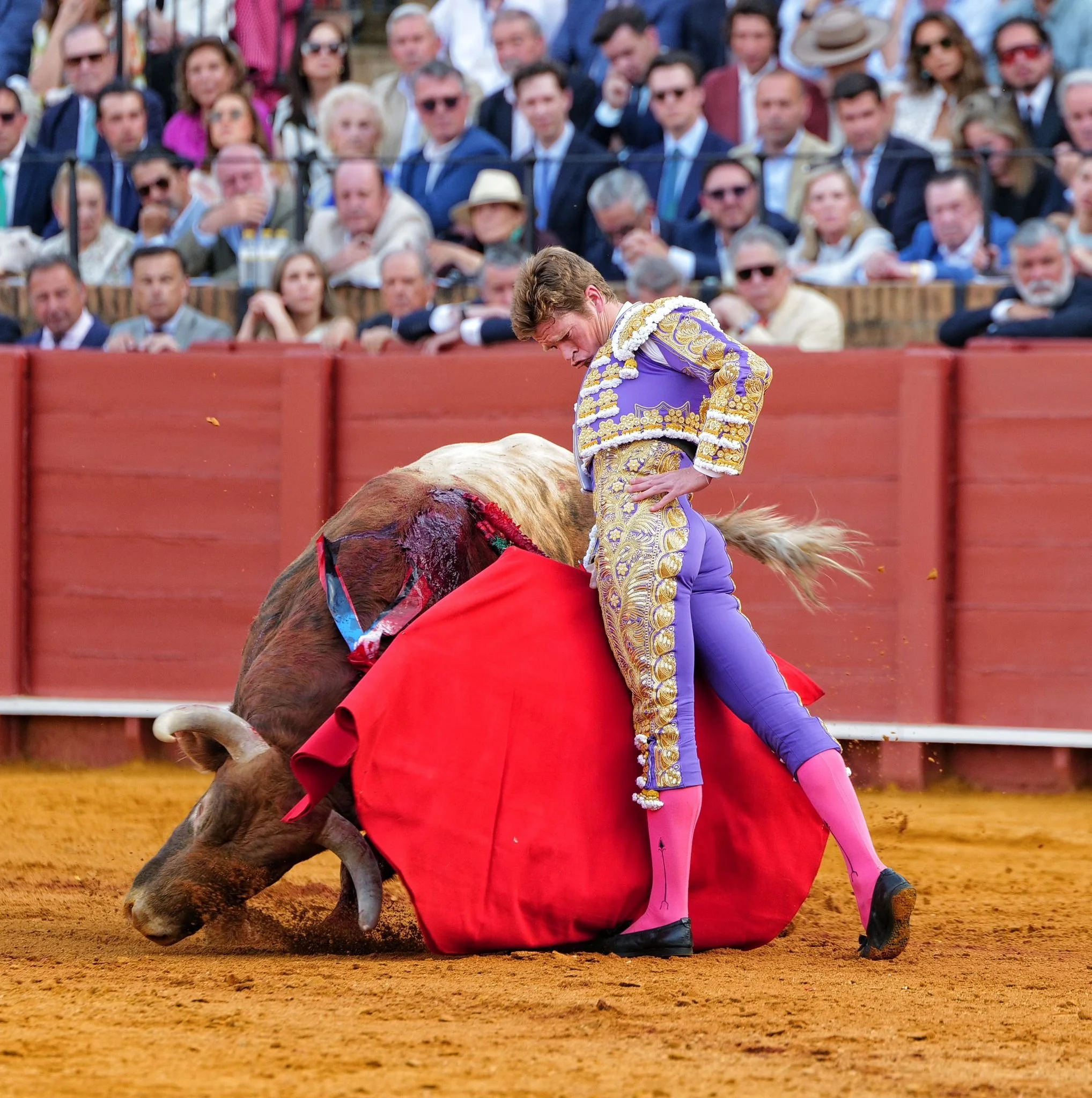
Borja Jiménez (above) was the triunfador of today’s corrida while Morante de la Puebla (below) cut an ear from his first bull, but was gored by his second (Images from lancesmaestranza.com)
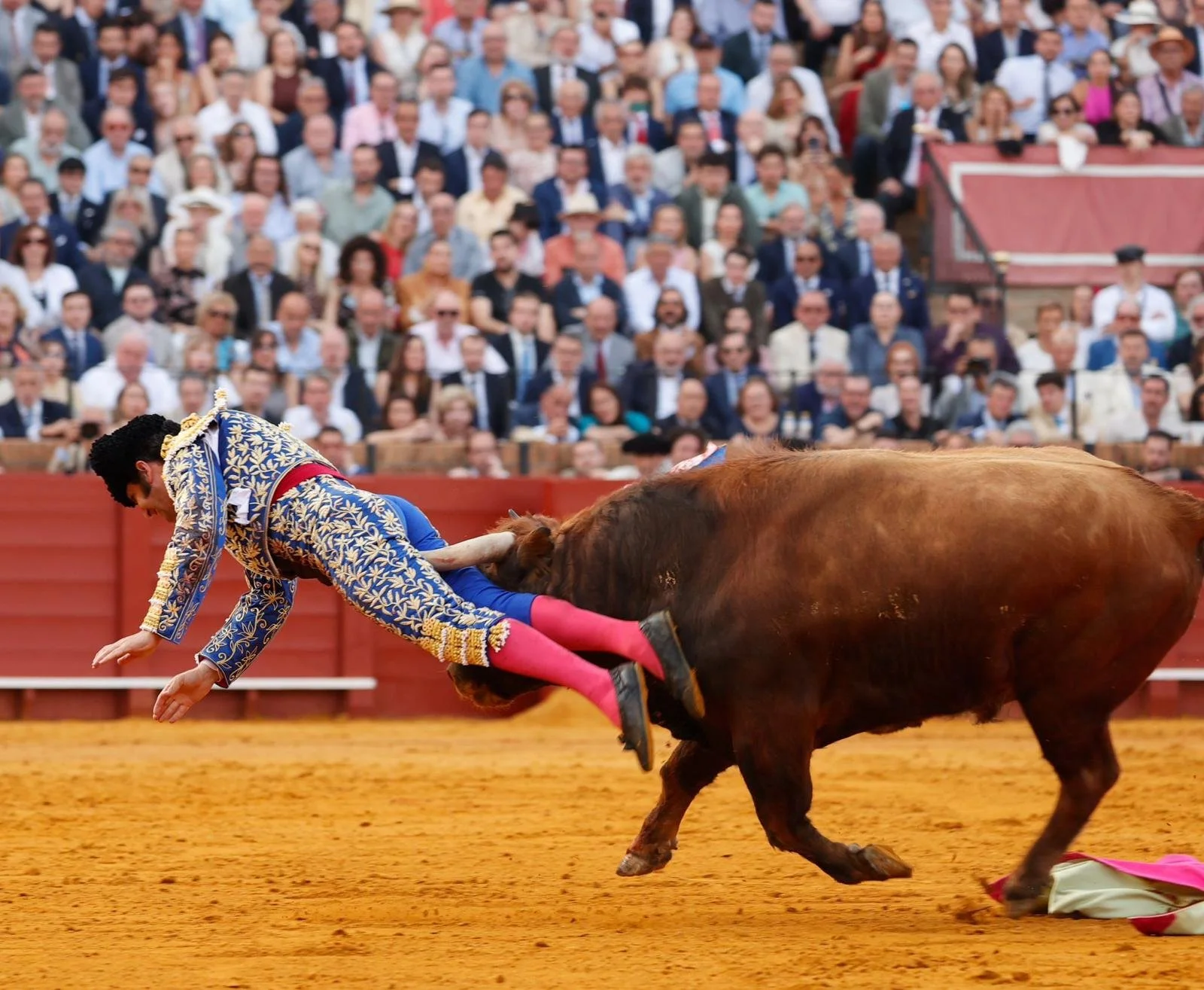
Morante de la Puebla gave another excellent performance with his first Matilla bull, disdainfully relaxed chicuelinas and a quite of gaoneras leading on to a faena of templados derechazos and naturales to a short-charging animal. A strong estocada, Morante’s taleguilla being ripped in the process, was followed by a merited ear. The maestro was still getting to grips in capework with his second bull when it knocked him off balance, and in a split second inflicted a cornada muy grave in the sevillano’s backside. This was probably not a bull for Morante, but it was a bull for Borja Jiménez, who, after leaving his montera by the entrance to the plaza infirmary, coped magnificently with an animal that transmitted its power and danger throughout the faena. Derechazos from on his knees were followed by standing derechazos and naturales, Borja linking the passes and turning the bull closely round his body. This was a two-ear faena - but a couple of pinchazos (on one of which the matador was caught nastily in the stomach) prior to the estocada put paid to that. Borja drew further similar bull fare in his own second animal, greeted a portagayola. The capework was rough, an opening pase de espalda in the faena scarily close, but Borja settled into muletazos on one spot, then produced curving linked derechazos and naturales con verticalidad. A two-thirds estocada and an overlong death brought him an ear. Tomás Rufo was today’s third sword and would have been disappointed by his scrappy performance with his first bull and a terrible estocada to his second, the only poor member of a fine encierro from Casa Matilla.
Tuesday, April 21
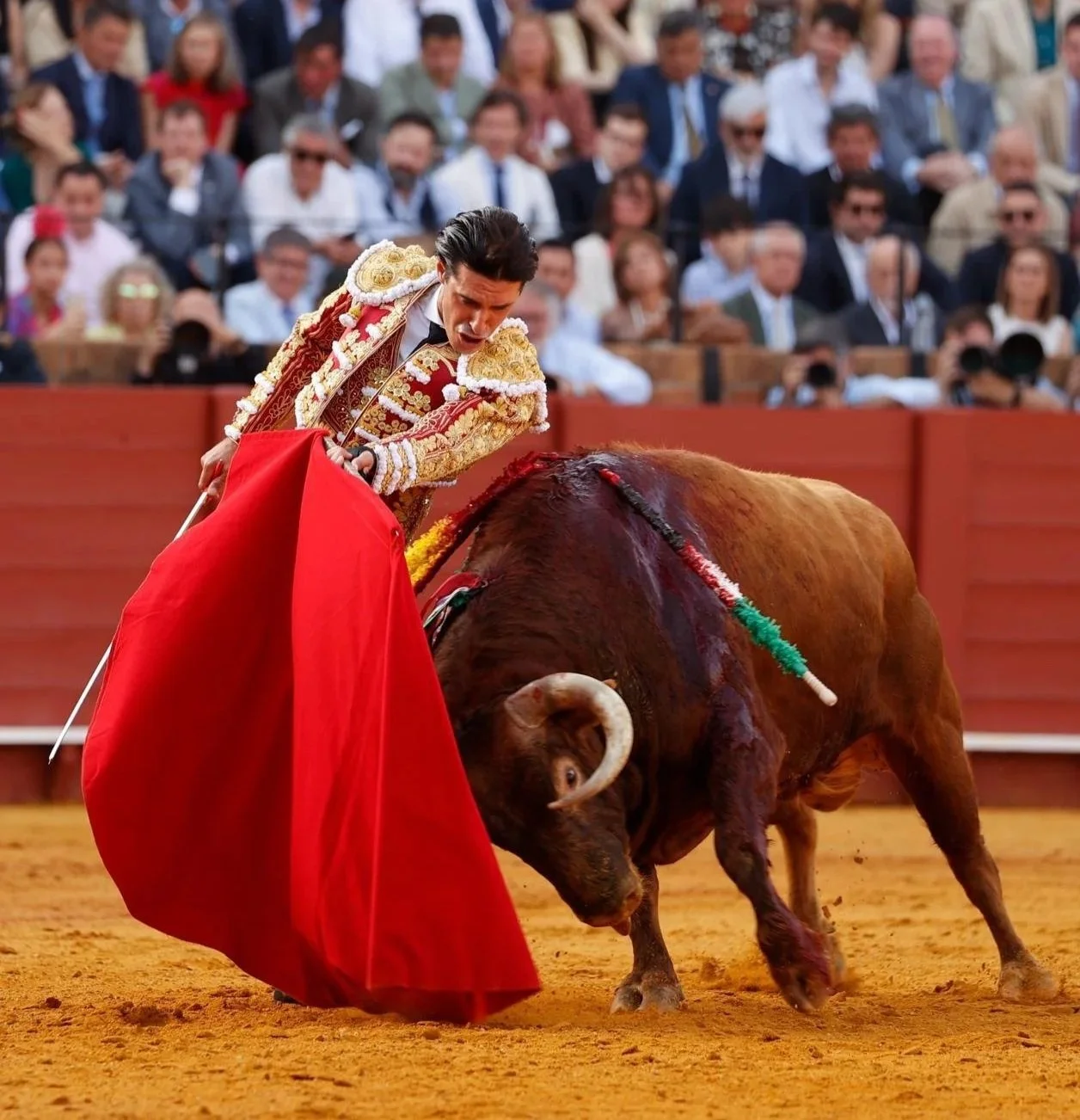
A pase de pecho from Alejandro Talavante (Image from lancesmaestranza.com)
Another windy afternoon in La Maestranza, the challenging conditions and the relatively poor string of Núñez del Cuvillo bulls proving too much for Manzanares. The best bull came out second for Alejandro Talavante, who, after achieving little with the capote, exercised some toreo de poder at the start of the faena before moving on to derechazos and naturales delivered with great temple, one circular pase natural being particularly gorgeous. Alejandro returned to the left hand at the faena’s end, then executed a solid estocada contraria to win an ear. Another ear came Daniel Luque’s way, albeit in different circumstances. His bull arrived at its faena (begun with a superb series of muletazos while the matador stood his ground) pretty much worn out. It had to be coaxed into subsequent passes, but coax it Daniel did to bring off delicate derechazos and naturales. A desplante, the muleta thrown away, and mondeñinas heralded another strong estocada.
Wednesday, April 22
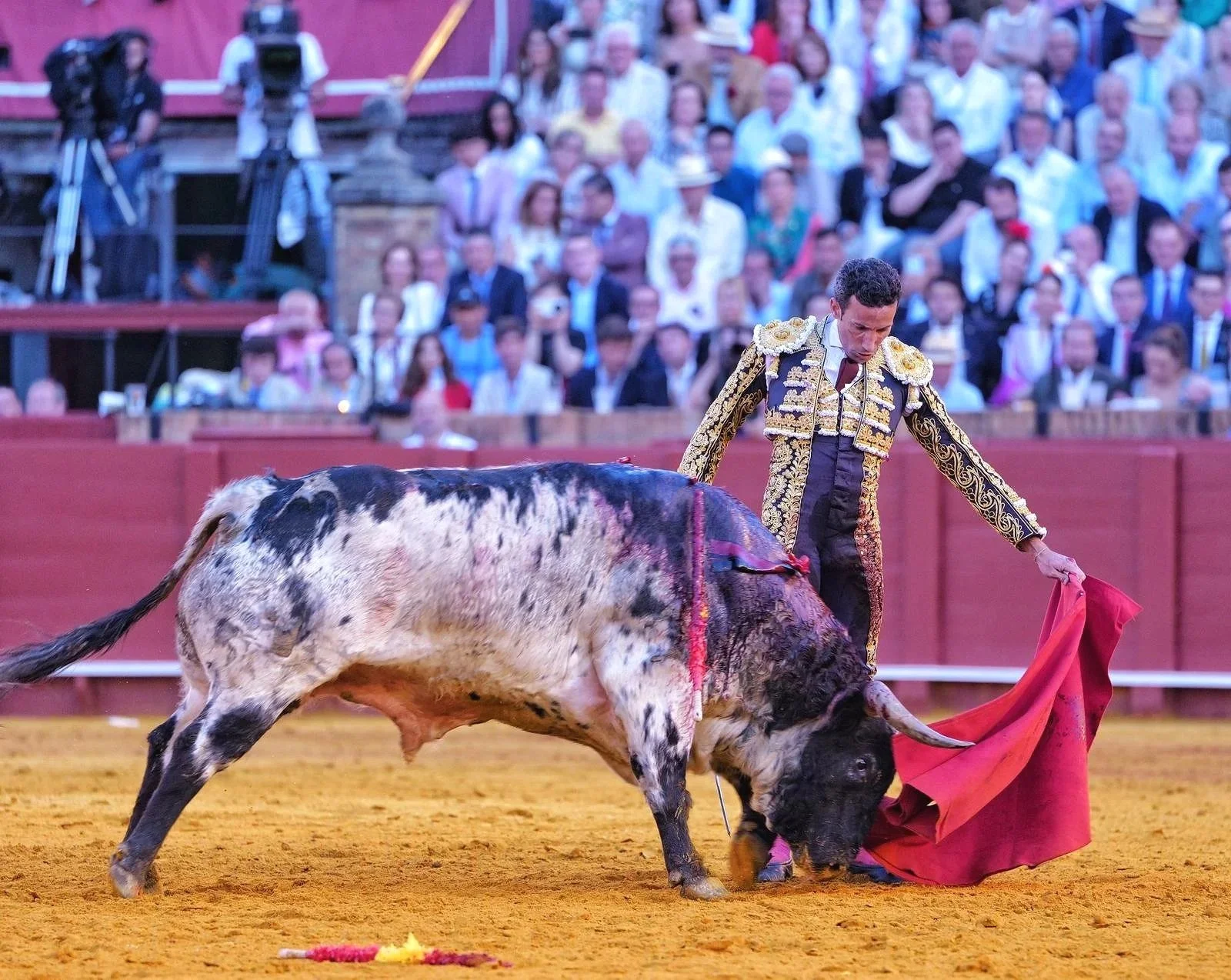
David de Miranda secured an exit through the Maestranza’s Puerta del Príncipe for the second year running (Image from lancesmaestranza.com)
El Parralejo brought a generally good string of bulls to La Maestranza, although Emilio de Justo drew the worst of them and could do little as a result. Diego Urdiales deserved an ear for his work on his second bull, a fast charger that went well to the picador and with which the riojano coped admirably, producing fine series of muletazos on either hand, lovely ayudados at the faena’s start and finish, and a strong estocada. The afternoon’s triunfador (and, indeed, triunfador de la feria, as the only matador to leave through the Puerta del Príncipe) was David de Miranda. The onubense met his first parralejo, ‘Secretario’, with verónicas and delantales. The bull achieved a derribo en varas, the banderillero Fernando Pereira being tossed as he attempted to quitar. After dedicating to the public, de Miranda began the faena down on one knee, linking templados passes, then, standing upright, he kept the muleta low, moving on to series of naturales that brought several in the crowd to their feet. There was a superb cambio de mano before David ended the faena with naturales con pies juntos and a terrific estocada. There was no doubting the two ears, while ‘Secretario’ was justly awarded a vuelta en arrastre. De Miranda’s faena to the last bull of the day started with estatuarios. This was a different bull, not keen to charge or lower its head, but David kept the muleta in its face to secure linked passes, brought off naturales de frente and ended with the closest series of manoletinas one can imagine. A solid estocada brought the matador his third ear and a departure on shoulders via the Puerta del Príncipe.
Thursday, April 23
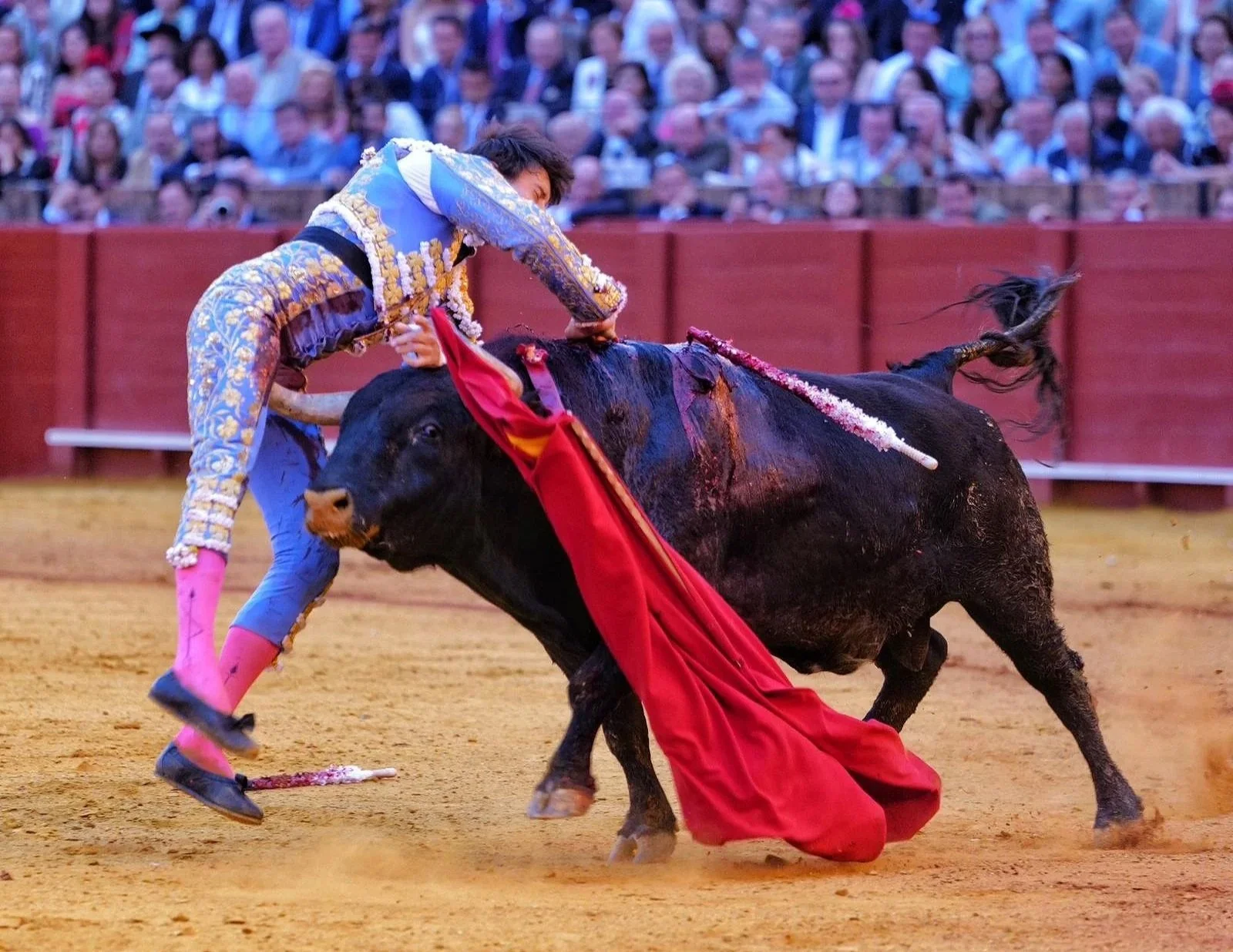
Roca Rey’s cornada muy grave occurred whilst he killed his second bull (Image from lancesmaestranza.com)
For once, the bulls of Victoriano del Río/Toros de Cortés belied their reputation. Far from being compliant, toreable animals, the first four today were too weak for sustained toreo and the last two simply dangerous. It was clear at the start of Andrés Roca Rey’s faena to the fifth (dedicated to El Juli) that the Peruvian was out to triumph nevertheless. He met the bull for series of pases cambios de espalda and derechazos from on his knees. There was one long pause in between, the bull showing the tendency it displayed throughout the faena to stand still and look up at the torero. Close series of standing, linked derechazos followed, Andrés almost tripped twice by a rear leg of his opponent in pases de pecho. The naturales could only be given in single form, but - interrupted by a desarme - were impressive nevertheless. Further derechazos followed, some linked less than others, and a couple of circulares, the matador keeping his cloth moving in between the two suertes to maintain the bull’s wavering focus. Come the kill, the bull started forward as Andrés was citing; the matador hesitated before opting to go ahead with the suerte, then plunged the sword into the animal as the bull’s right horn pierced the matador’s right leg. Roca Rey was on the horn a worryingly long time before man and bull were separated and the torero rushed to the infirmary. The estocada proved fatal; the bull’s two ears were awarded. After a long while, a statement was issued from the infirmary to the effect that Roca Rey had received a muy grave cornada with two trajectories, one of 25 and the other of 10 centimetres, although, fortunately, no main blood vessels had been affected. Manzanares received silence on both his poor bulls, while Javier Zulueta was given a vuelta after the young matador took on the growing challenges posed by the sixth bull before killing with a pinchazo and bajonazo.
Friday, April 24
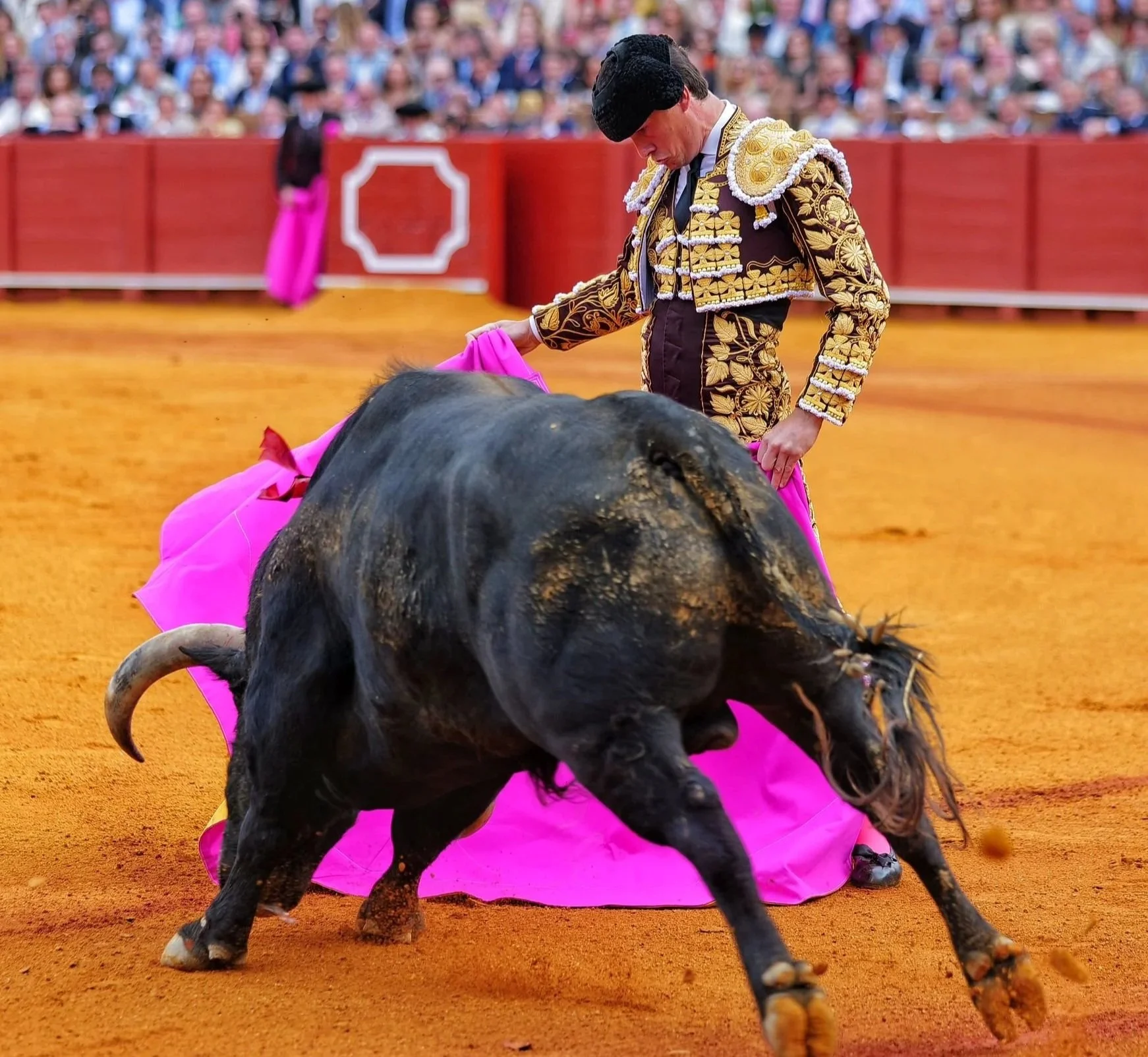
Daniel Luque managed to win an ear from a poor lote of Juan Pedro Domecq (Image from lancesmaestranza.com)
With a disappointingly weak string of bulls from Juan Pedro Domecq, today’s spectators had to be content with one of those performances in which the capabilities of a matador make something out of nothing. The matador in this case was Daniel Luque, Daniel making the most of the fourth bull’s tendency to lower its head by offering it low muletazos. Series of close naturales delighted, and Luque’s careful lidia of the juanpedro meant it still had enough strength to engage in luquesinas and right-handed naturales before an estocada led to an ear. Neither Juan Ortega nor Pablo Aguado had material for a success, although the latter impressed with some verónicas, pases por alto de rodillas and naturales on his first animal.
Saturday, April 25
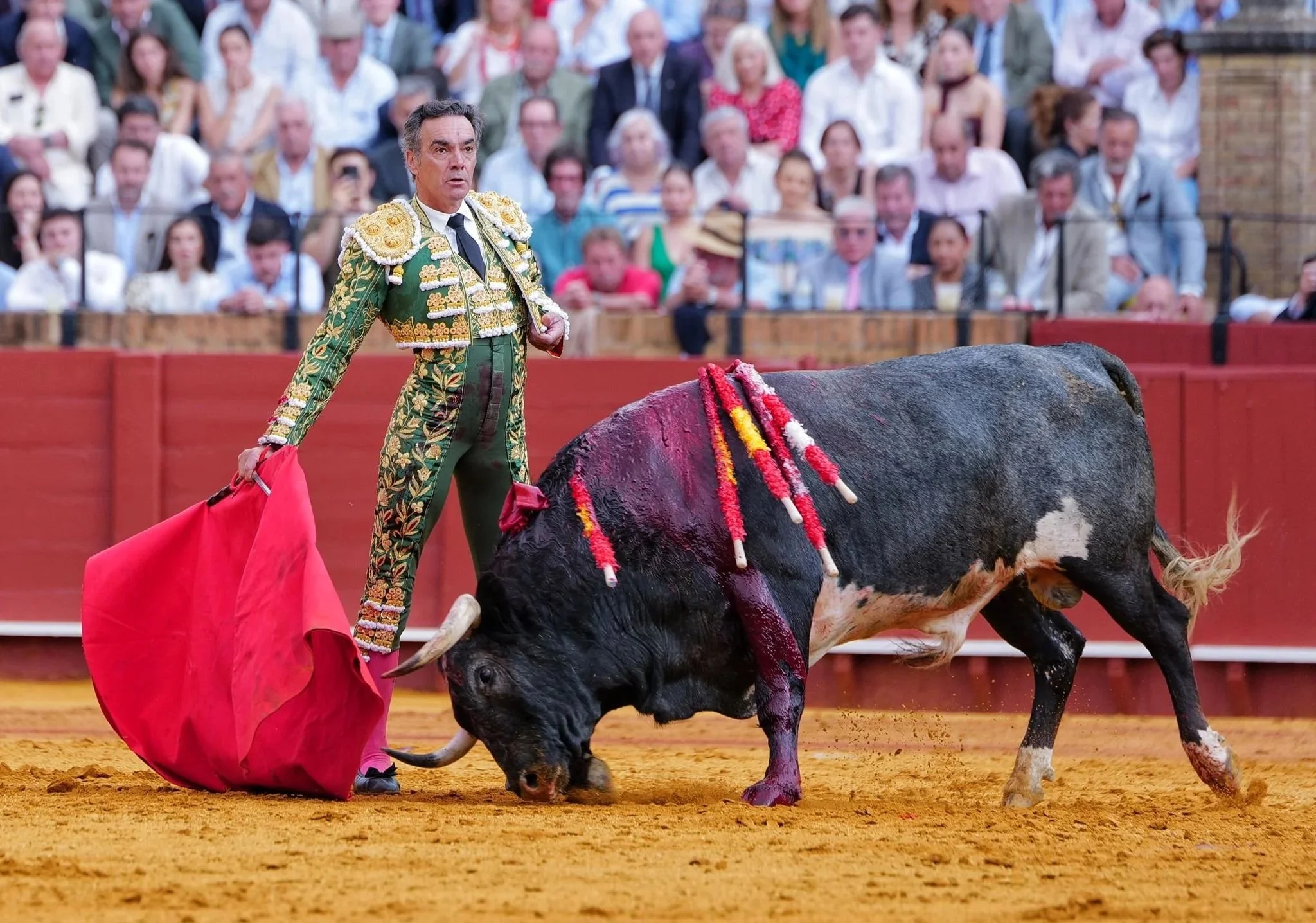
El Cid was on magisterial form in what may prove to be his last Sevilla appearance (Image from lancesmaestranza.com)
Today marked the return of La Quinta bulls to La Maestranza after the Conradi family’s falling out with the previous empresa here last year. Six beautiful-looking bulls were fought, although their performances did not live up to their appearance. The best animal was the fourth, which El Cid greeted with verónicas and later, with muleta in hand, immediately embarked on series of linked derechazos, producing a fine faena almost entirely with his right hand after linked naturales proved more difficult to achieve. His estocada led on to a majority petition for an ear, denied by the president much to the matador’s frustration, El Cid taking a vuelta instead. Another vuelta followed a minority petition for Fortes, who impressed on naturales to his second bull. José Garrido shone in some verónicas, but his stances with the muleta were often ugly and the killing of his best bull was protracted, a much-needed opportunity for him in an important plaza leading only to an ovation and silence.
Sunday, April 26
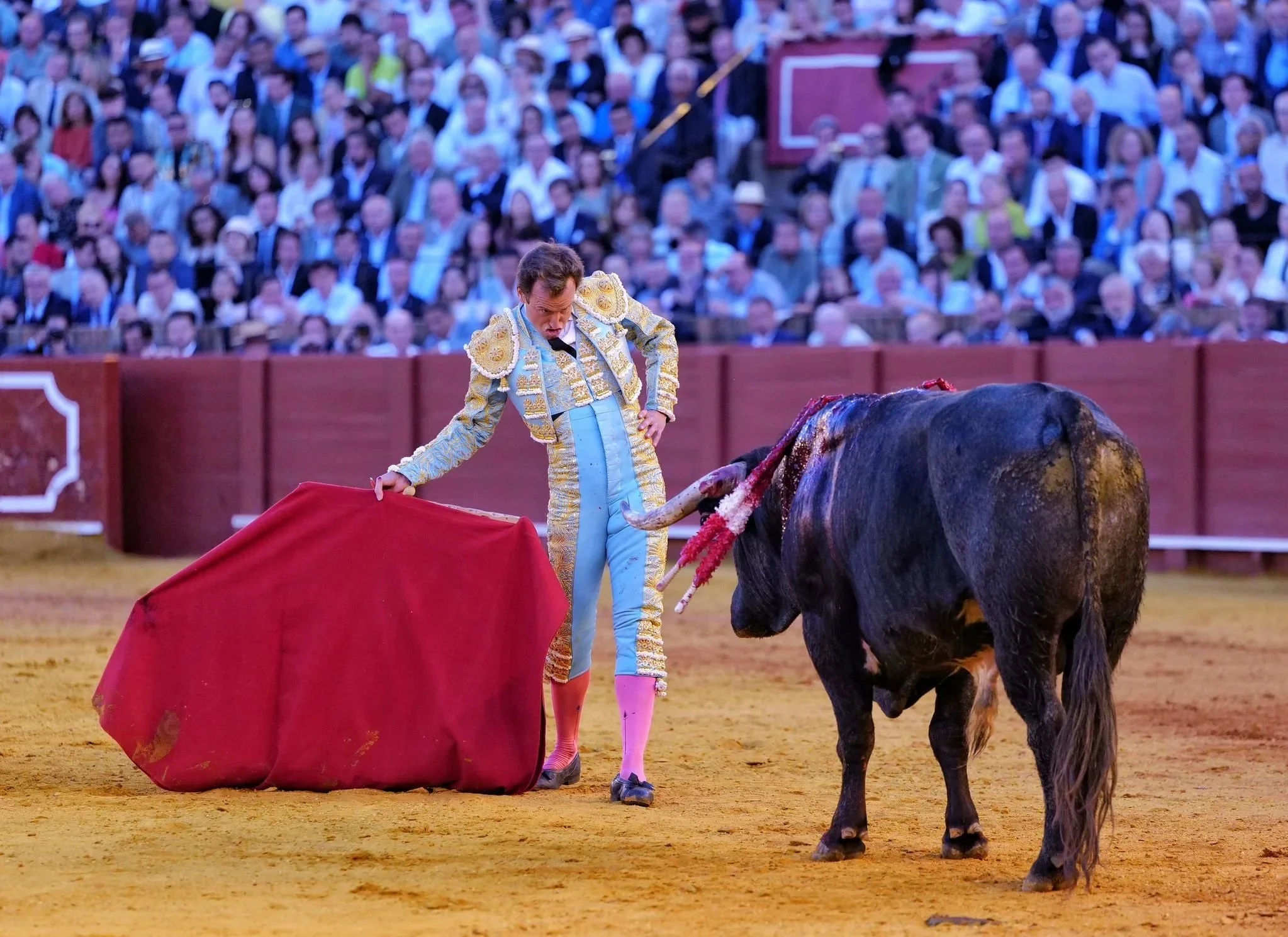
Sevilla’s closing miurada saw an impressive performance from Román, although any trophy was lost with the sword (Image from lancesmaestranza.com)
The miurada that brought Sevilla’s feria to an end featured a number of toreable animals, but also the return of a strong wind that hampered the toreros’ efforts. Manuel Escribano had a successful afternoon nevertheless, coping well with a short-charging first miura (his bajonazo reducing the size of the subsequent petition) and then cutting an ear from his second, killing well at the end of a faena of calmly-delivered, templados passes. Pepe Moral was all at sea with his first bull and the wind, and then drew a second animal that gave him no chance of success. The best faena of the day came from Román on his first miura, the valenciano giving his bull distance in the faena and bringing off marvellously linked series, turning the bull around him. Unfortunately, two pinchazos and a bajonazo kissed goodbye to any award. With his second impressive-looking animal, which overturned picador and horse in its initial vara, Román crossed the safety line several times in his attempts to bring off series with the muleta and killed well, chalking up another of those important afternoons of his in which a triumph is near but eluded.
Postscript
At the start of my piece on the first week of the Feria, I posed a number of questions that the fortnight should answer. Economically, the Feria was an undoubted success; by the time it ended, nine of the 15 espectáculos had displayed ‘No hay billetes’ signage, and only one event (the initial corrida) registered a less than half-full plaza. A significant part of this result was Garzón’s persuasion of Morante de la Puebla to participate in the Feria so soon after his presumed retirement in Madrid last autumn. Morante was perhaps in better form than anyone had predicted, the maestro producing his unique magic in all three of his corridas, the afternoon of April 16 being particularly memorable. He was duly awarded the prizes for best capework and best faena of the Feria. Of the feria debutants, Aarón Palacio and Víctor Hernández both did enough to justify their presence in the carteles and make the case for their inclusion in further ferias this season. Although there was only one exit by a matador via the Puerta del Príncipe - that of David de Miranda, acknowledged later as the feria triunfador - there were sufficient strong performances from the likes of Rafael Serna, Julio Norte, Tomás Bastos, Miguel Ángel Perera, Borja Jiménez, Daniel Luque, Diego Urdiales, Roca Rey, El Cid and Román to classify José María Garzón’s first Feria de Abril as empresa as an artistic success too. It’s ironic that, with both Morante and Roca Rey seriously injured during the course of the Feria, the mundillo now faces an immediate concern as to how to fill seats with both of the main crowdpullers out of action. Finally, despite the concerns voiced about the possible quality of bulls after a wet winter and disappointing showings from Fuente Ymbro, Domingo Hernández, Núñez del Cuvillo, Victoriano del Río/Toros de Cortés and Juan Pedro Domecq, the number of good quality encierros from Alcurrucén, Talavante, Santiago Domecq, Victorino Martín, El Capea/Carmen Lorenzo, Matilla and El Parralejo indicated those fears were overstated. The best ganadería prizes were split between Matilla and El Parralejo, with the latter’s ‘Secretario’ taking the prize for best bull of the Feria.