Tribunal tribulations
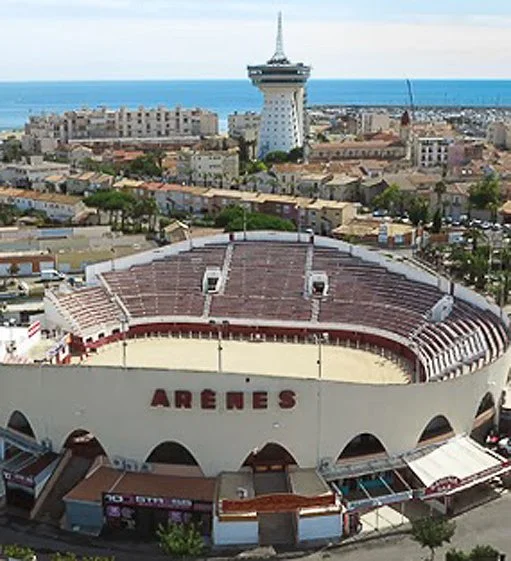
The bullring at Palavas
It’s been quite a year for tribunal decisions on bullfighting matters contributing to uncertainty for aficionados as to what exactly lies ahead for them, if anything at all.
Santander
Back in January, Santander’s ayuntamiento ran into difficulties with its plan to extend its existing contract with the empresa, José María Garzón’s Lances de Futuro, for management of the resort’s Cuatro Caminos bullring. A local empresa, Cántabra de Toros, based in Tudanca and owned by Eduardo José Martínez Obeso, argued that the extension was invalid and the bullring should have been the subject of a new tender instead. After a number of appeals, in June - a fortnight after the July feria’s carteles had been published by Lances de Futuro and aficionados’ plans to attend were well in train - the Tribunal Administrativo Central de Recursos Contractuales (TARC) found in favour of Cántabra de Toros, thereby invalidating the July feria proposals.
As strong supporters of the feria, Santander’s ayuntamiento immediately issued a statement saying they would guarantee that the announced festejos would take place. There was a two-month period in which appeals against the ruling could be made to the Tribunal Superior de Justicia de Cantabria (TSJC), and the council’s board of directors responsible for the feria said they would make use of this and also request the TSJC to adopt precautionary measures that would allow the TARC's resolution to be suspended until there was a final pronouncement. The TSJC adopted a pragmatic approach in the circumstances and the 2026 Feria de Santiago put together by Lances de Futuro was allowed to proceed. It remains to be seen what the TSJC’s final decision on the matter will be, but the announced extension was only for 2026, so presumably a new tender will follow in any case.
Málaga
This is another early contractual dispute that went to tribunals and it too is still ongoing despite Málaga’s August feria having taken place under the new management of Alberto García’s Tauroemoción, who were eventually awarded the ring in May (too late for Tauroemoción’s proposed June mini-feria to celebrate the bullring’s 150th anniversary to take place). The contract is a particularly attractive one for empresas as it involves no payment to the ring’s owners, la Diputación Provincial, who, conscious of the wider economic benefits to Málaga that the corridas bring, have been more concerned to keep seat prices down as much as possible over the next five years and to have high-quality festejos.
The bullring’s previous empresa and runner-up in this year’s tender exercise, José María Garzón, has been disputing the Diputación’s scoring of the tenders received ever since the intention to appoint Tauroemoción as the new empresa became known. In May, the Tribunal Administrativo de Recursos Contractuales de la Diputación de Málaga found partially in Garzón’s favour, ordering a review of the scoring. The contracting committee consequently met again and issued a new technical assessment in which the assigned scores were justified, finally ratifying the concession to Tauroemoción. Garzón remained dissatisfied, however. He has said he didn’t want to jeopardise Málaga’s August feria from taking place, so has waited until earlier this month before approaching the Tribunal Superior de Justicia de Andalucía for resolution of the matter. However, local media say, because of the tribunal’s workload, this court process can take “several years” and, in the meantime, it does not suspend or paralyse the contract awarded to Tauroemoción.
Zaragoza
Readers of my earlier blog article, ‘Zaragoza’s temporada up in the air’ will recall that the taurine empresas’ body, ANOET, had expressed concerns about the Diputación’s proposed contract for La Misericordia, the city’s bullring, from its initial publication in January this year because of its requirement that the individual carteles for its April and October ferias should be specified and guaranteed from mid-February. At the point when tenders were received, it appeared that a combined bid by Casa Matilla and Pagés, the former empresa of Sevilla’s La Maestranza, would win the day, only for the Tribunal Administrativo de Contratos Públicos de Aragón to declare the proposed contract unlawful, the Tribunal’s view being that the contract should have been drawn up as a service, rather than lease, agreement, and new specifications were needed that were legally watertight and which guaranteed free competition and transparency.
The Diputación’s appeal against this ruling was unsuccessful and so, in May, the authority, not regarded as a supporter of bullfighting, issued a new tender in which the only criterion was how much bidders would pay for hire of the ring for a set number of days (61 days for this year, with 214 days available for 2027). The minimum bid amount set by the Diputacion was 2,984.67 euros per day, IVA included. There was no contractual requirement to put on bullfights: simply, to pay the contract fee. ANOET continued to argue for a public service contract with qualitative criteria, and in June the Tribunal again concluded that the Diputación’s proposed contract terms were insufficient, but eventually, on the basis that time was running out for this year’s Feria del Pilar festejos taurinos to take place, the Tribunal Superior de Justicia de Aragón gave the go-ahead for the tender to proceed.
In July, it was announced that nine bids had been received, with the daily bid amounts ranging from 4,273.41 to 7,073.41 euros. The latter bid, from Conphia Urbana SL, and believed to involve the pigmeat businessman Jesús Mena, was duly declared the winner. Indeed, Mena was named as a participant in two of the other bids, and was reckoned to be involved in a fourth, but, despite these apparent irregularities, the bid was allowed to proceed and, in August, Conphia Urbana was confirmed as the new empresa of Zaragoza’s bullring, along with the celebration of corridas as part of this year’s Pilar festivities. The carteles for la Feria del Pilar were announced earlier this month (Morante de la Puebla is set to perform twice, appearing alongside the zaragozanos Aarón Palacio and El Mene, to whom he will give the alternativa) and there are strong rumours that Pagés and la Casa Matilla continue to be involved in the background.
With just over a week to go before the start of El Pilar, it was revealed that the mechanism needed to close the bullring’s roof is in need of repair and won’t be working by the time of the feria, which means some festejos may not happen if the weather is bad. It’s to be hoped that, in these circumstances, the new empresa enjoys some contractual safeguards given that the bullring, owned by the Diputación, is not in full working order and attendances and festejos may be reduced as a consequence.
Palavas
This has been a different tribunal dispute compared to the others above, as, rather than being about the form of contract or its adjudication, it’s been about whether a corrida should take place at all.
Under French legislation, taurine festejos can take place where there is a tradition of holding them, but not in new locations. As a result of legal actions by antitaurine organisations, ‘tradition’ has been defined as involving a continuous, or near-continuous, presence.
Towards the end of August, it was announced that the arenes of Palavas, just south of Montpellier, would host Morante de la Puebla’s only appearance of the year in France - a mano a mano with Clemente on October 10. Although the ring at Palavas, built in the 1960s and named after Manuel Benítez El Cordobés, hosts courses camarguaises and ‘toro piscine’ events, it has not held corridas for 10 years. France’s Alliance Anticorrida, having failed to persuade the local mayor to cancel the corrida, the ring’s management being in private hands, made a submission to the Tribunal Administratif de Montpellier that the event be prohibited on the grounds that the holding of corridas at Palavas has not been sufficiently ‘continuous’.
The tribunal considered the matter on September 23. The organisers of the corrida argued that, although no Spanish-style corrida had taken place in Palavas for a decade, the ring had continued to host taurine events and a corrida was just another example of tauromachy. The judge didn’t buy that argument, however, and on September 24 ordered the local mayor to take steps to ensure the corrida does not take place. At the time of writing, it remains to be seen whether the corrida can continue to be held on the same day at a traditional spot (the nearest would appear to be Vauvert, although the ring capacity there is 1,500 less) or whether it will be postponed to another date and place, or cancelled altogether.
Apparently, France’s Observatoire National des Cultures Taurines advised the corrida’s organisers - Carlos Zúñiga, Joachim Cadenas and the Club Taurin Fourquesien - early on that their chosen venue was a risk. It’s a concern that contractual and legal matters seem to be playing an increasingly frequent part in creating unknowns for aficionados around ferias or individual corridas. Ring owners and empresas need to get their respective acts together to ensure that plans are made and tenders issued and responded to properly, taking into account local conditions.