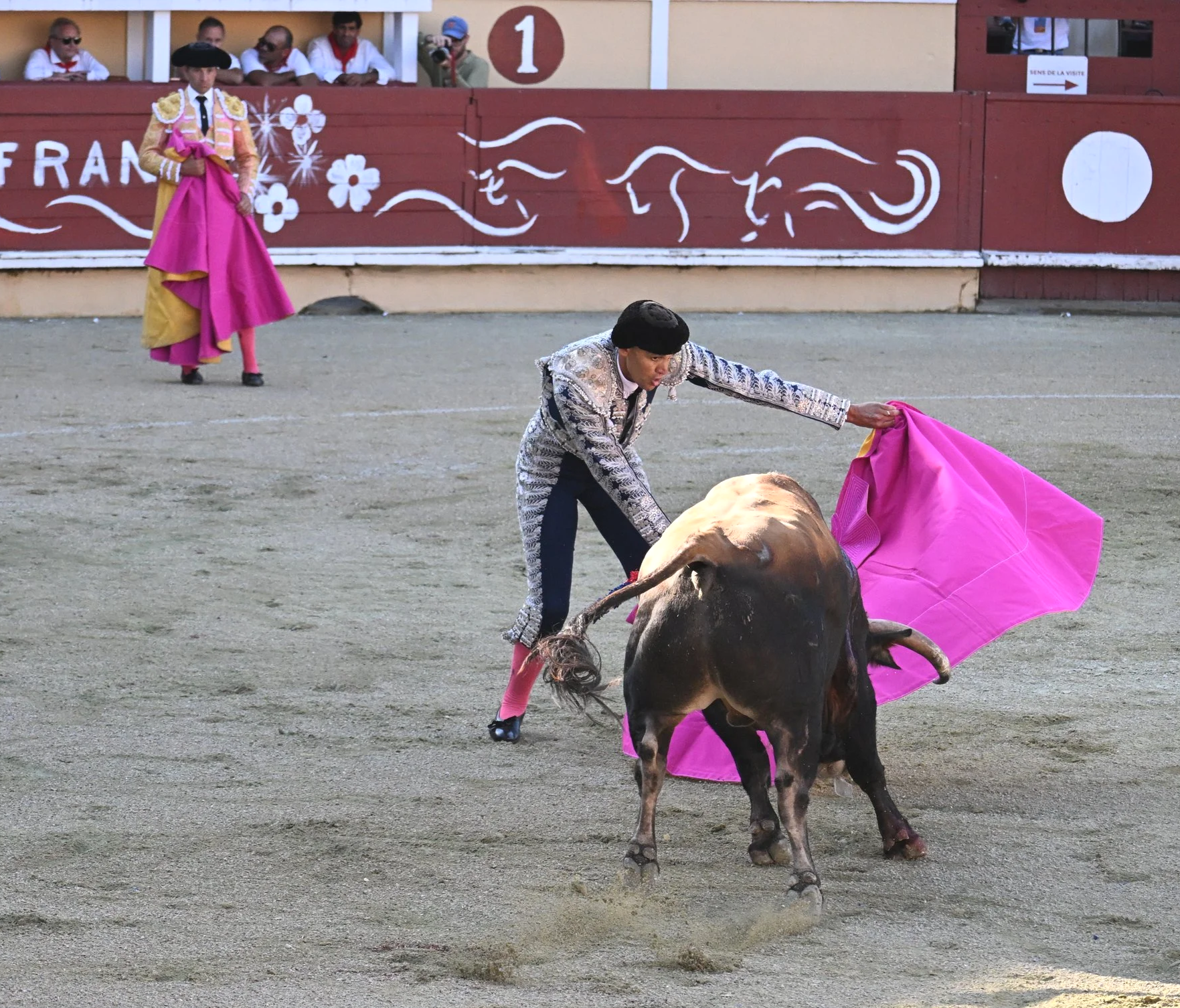
Morenito de Arles bregando. Today’s corrida was marked by a serious wounding of the subalterno, appearing as part of Clemente’s cuadrilla
Today’s corrida in Bayonne, while featuring some fine Spanish bulls of Román Sorando, was marketed under the slogan ‘Toreros de France’ - the barrera painted accordingly in Spanish, French and Basque - as all three selected matadors were French. But who would be a French torero? The temporada in France is of insufficient size to support the livelihood of most such men; breakthrough in Spain is required. Successes in France alone rarely ensure that breakthrough occurs - Nimeño II was perhaps on the verge of obtaining that before his career-ending cogida. Or one can adopt a Spanish name, like Juan Bautista, and use this to push through. Or, as was the case with Sebastián Castella, one can put oneself in the hands of Spanish mentors from the outset, in his case José Antonio Campuzano, and claim entitlement to Spain’s carteles accordingly.
First up was Juan Leal, who has had his time in the hands of Spain’s taurinos and several would argue has subsequently failed to catch the train. Today, in only his second corrida of 2026, his toreo gradually sparked into life on his first bull - no capotazos of note, but a faena that improved in ambition and temple as it went on, with touches of ojedismo. There was Juan’s usual flailing legs kill, a two-thirds sword sufficing, before he took saludos to an ovation.
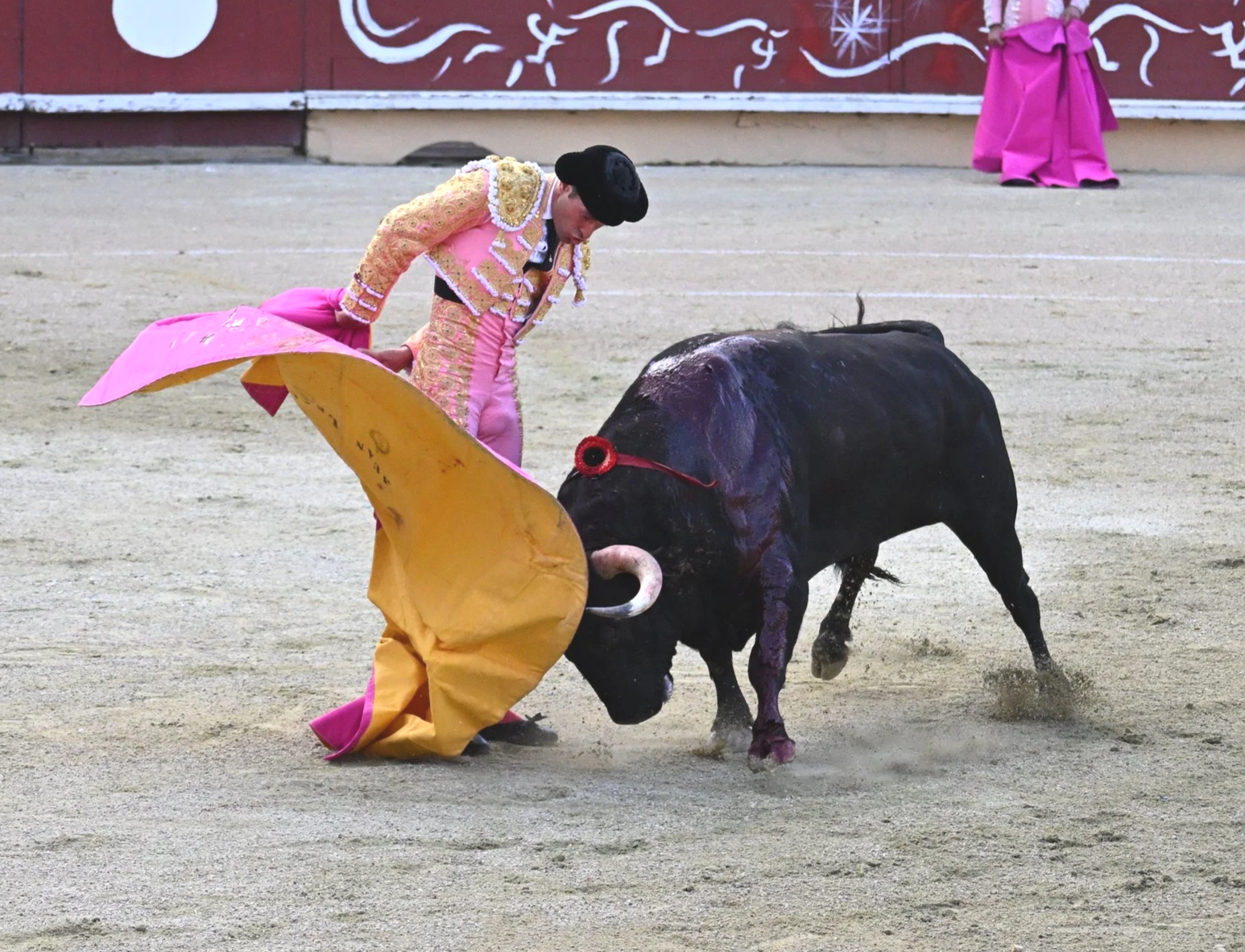
Juan Leal in a revolera (above) and (below) during luquesinas
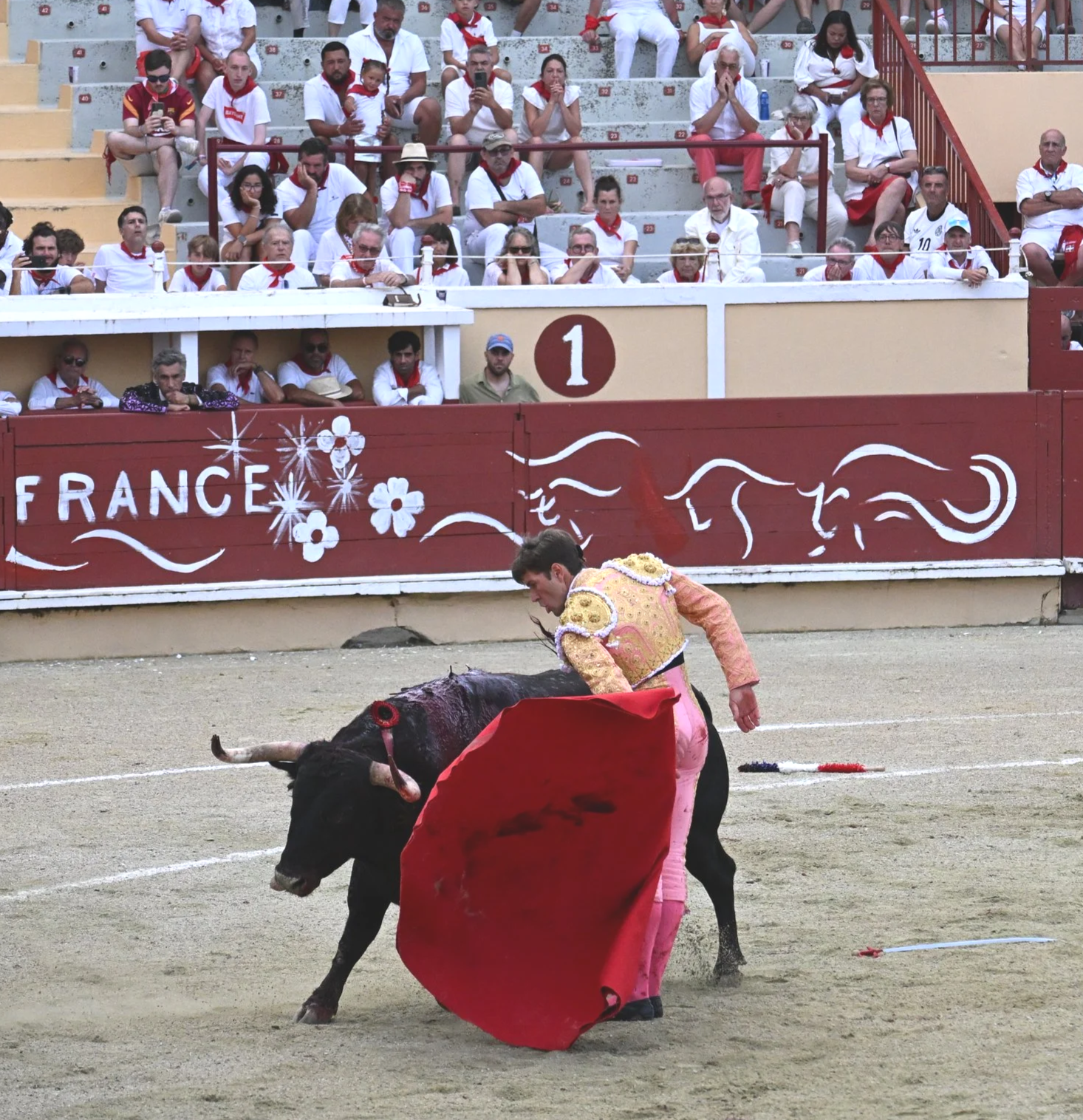
His second bull looked particularly promising on its entry to the arena and very nearly achieved a derribo en varas (two entries to the picador being the norm here). Leal produced a pleasing quite of saltilleras and gaoneras. He cited the bull from a distance at the start of its faena, then moved into linked toreo, his ojedismo rearing its head once more whenever he cited from a compromised position. The estocada that ended things was fully committed and beautifully slow. The bull was given an ovation en arrastre and Juan a merited ear, his two vueltas al ruedo signifying that some (possibly including Juan himself) thought his performance should have received more reward.
Clemente, like Nimeño II before him, has been trying to establish a presence in Spain on the strength of his many French triumphs, although so far he is still at the station as that breakthrough has eluded him. Difficulties also seem to have arisen this year in his securing contracts in France, this being only his third corrida of the temporada. He ended today with two ears to his name, but his afternoon was not one of great triumphs: more one of exhilarating moments. He began with a lovely quite of chicuelinas and larga to Leal’s first bull, and followed with derechazos and naturales to his own first animal that grew in closeness and artistry as the faena went on. It ended with one-handed pases por alto given manoletina-style, a pinchazo and estocada. He’d won his first ear.
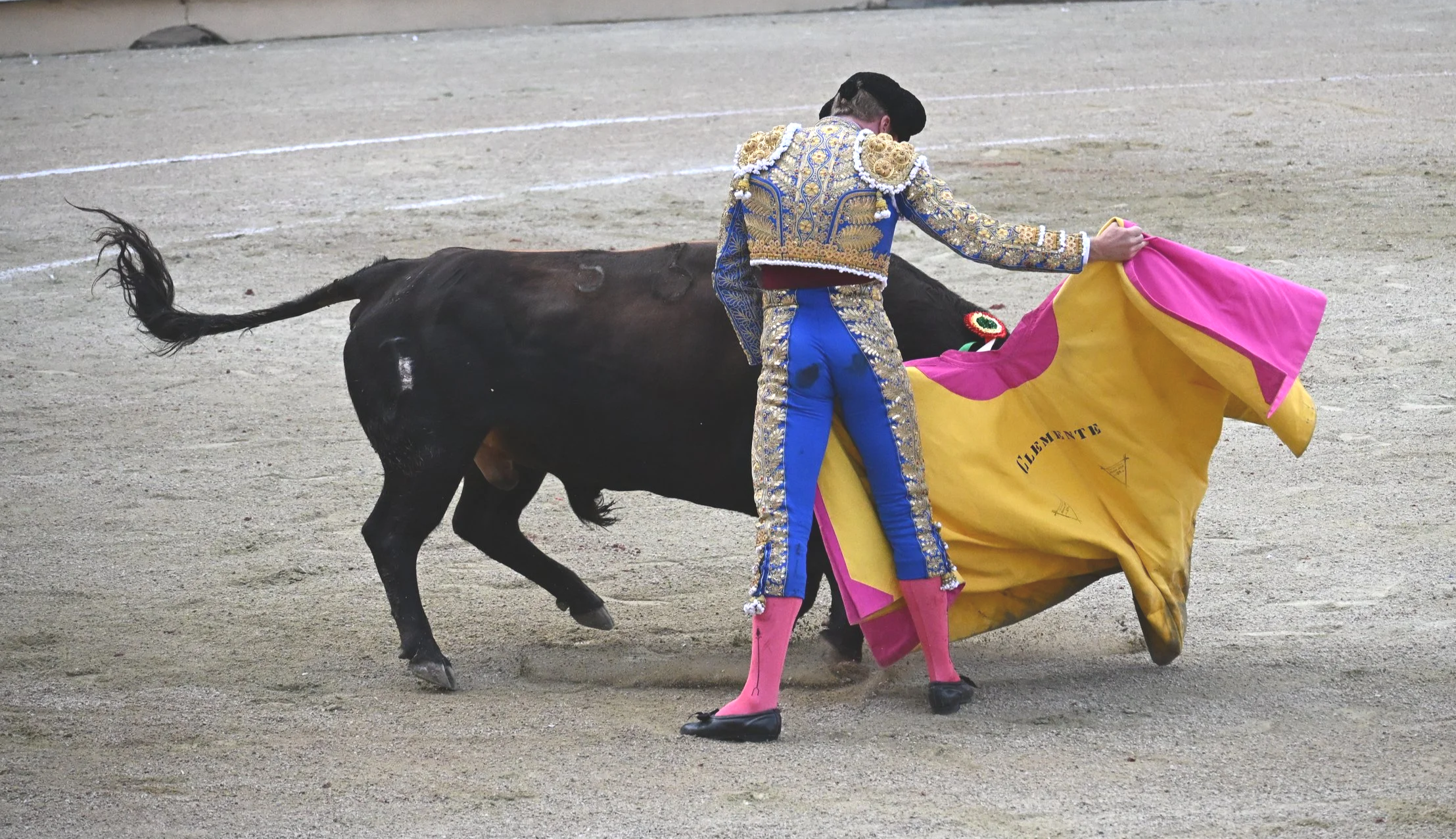
Clemente’s performances today contained moments of his characteristic artistry
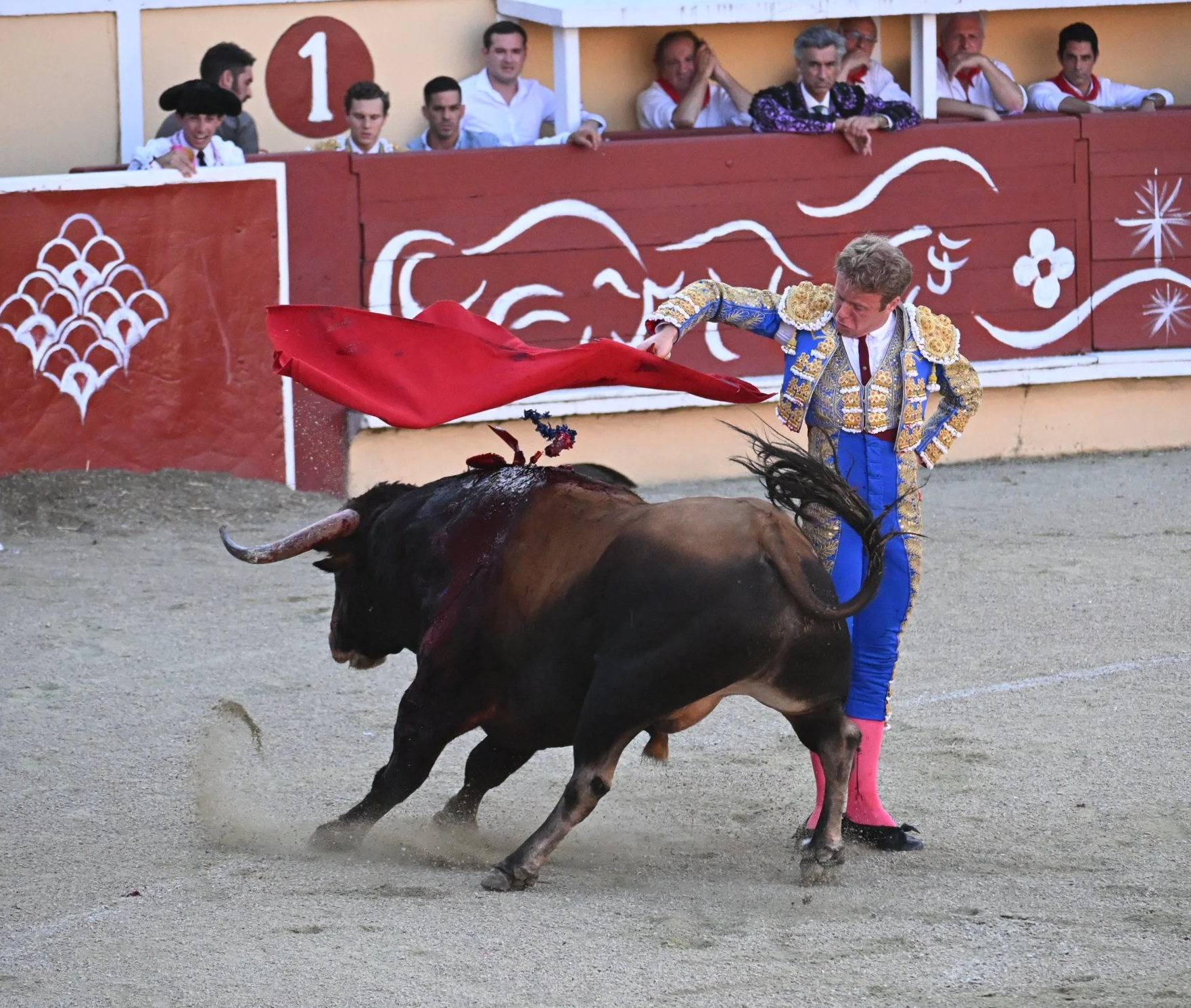
There were lovely verónicas to his second bull. However, the faena - also closed with a pinchazo and estocada - was more sober in form, but also in atmosphere, as his banderillero, Morenito de Arles, had been gravely injured in the tercio that preceded it. Morenito had already excelled in the brega to his matador’s first bull, while his initial pair of banderillas to this animal had been strong but risky. The wounding happened in a flash. The bull caught him as he left his second pair, lifting the torero, then inflicting a couple more cornadas as he lay on the ground. Fortunately, the goring occurred near a burladero and Morenito was quickly gathered up and rushed along the callejón to the infirmary. The worst injury was a 40cm goring that dissected his left leg: he also had two 10cm trajectories from a horn wound to his right leg and a minor injury to his testicles. Never mind the difficulties in breaking through, things can go really wrong for French toreros too. Clemente, who’d dedicated his second ear-winning faena to his injured compatriot, left the arena on foot rather than be carried out on shoulders.
In 1919, Bayonne’s bullring was burnt down by spectators angered by the non-arrival of half the bulls collected at the Spanish border for that day’s corrida. Fortunately, today’s spectators are more patient as we had a wait of more than 40 minutes between the fifth and sixth bulls as Morenito was operated on and the doctor involved would not countenance the possibility of the corrida continuing and another injured torero entering the infirmary as well.
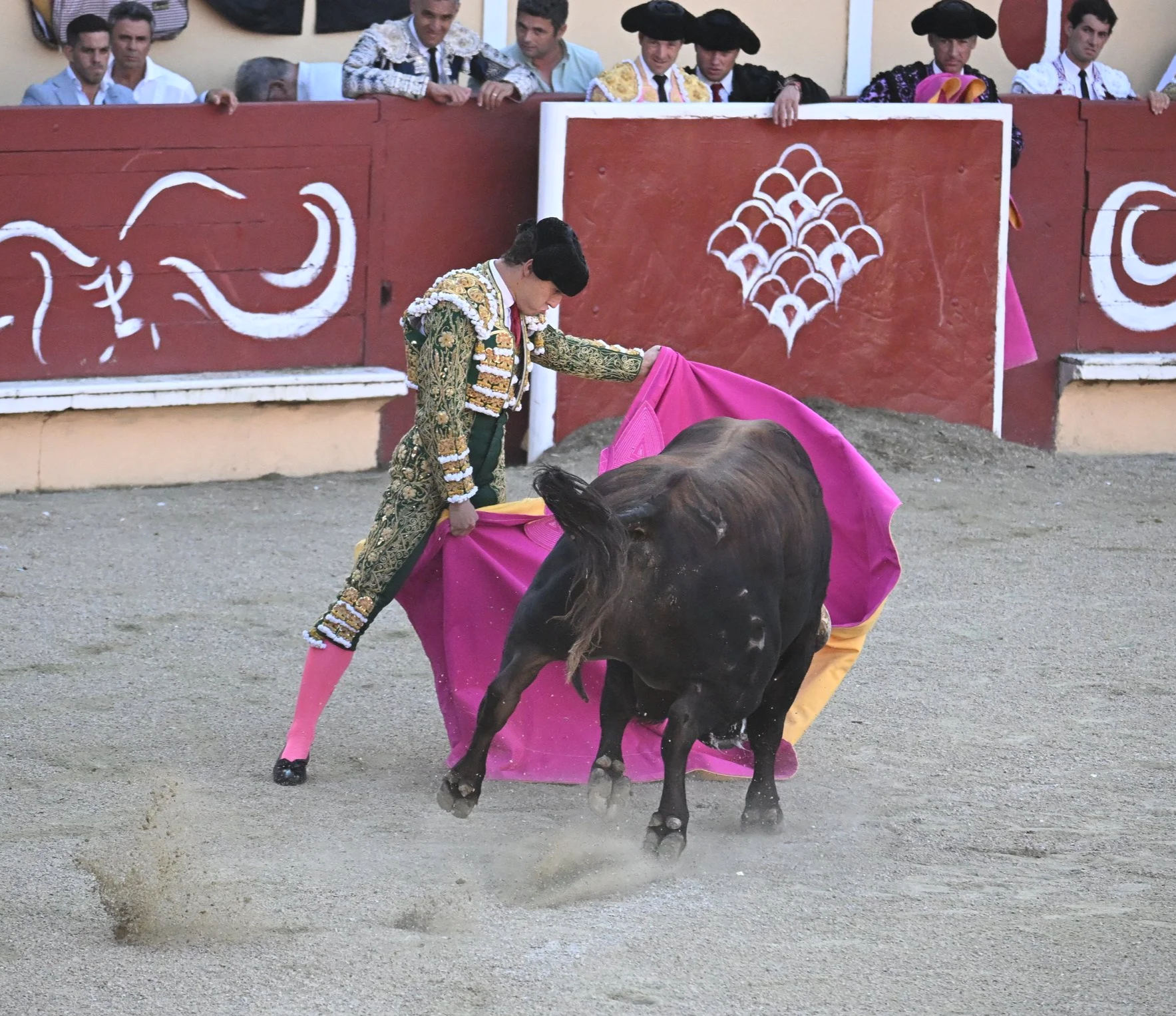
Adriano - here in a verónica (above) and natural (below) - also showed strongly
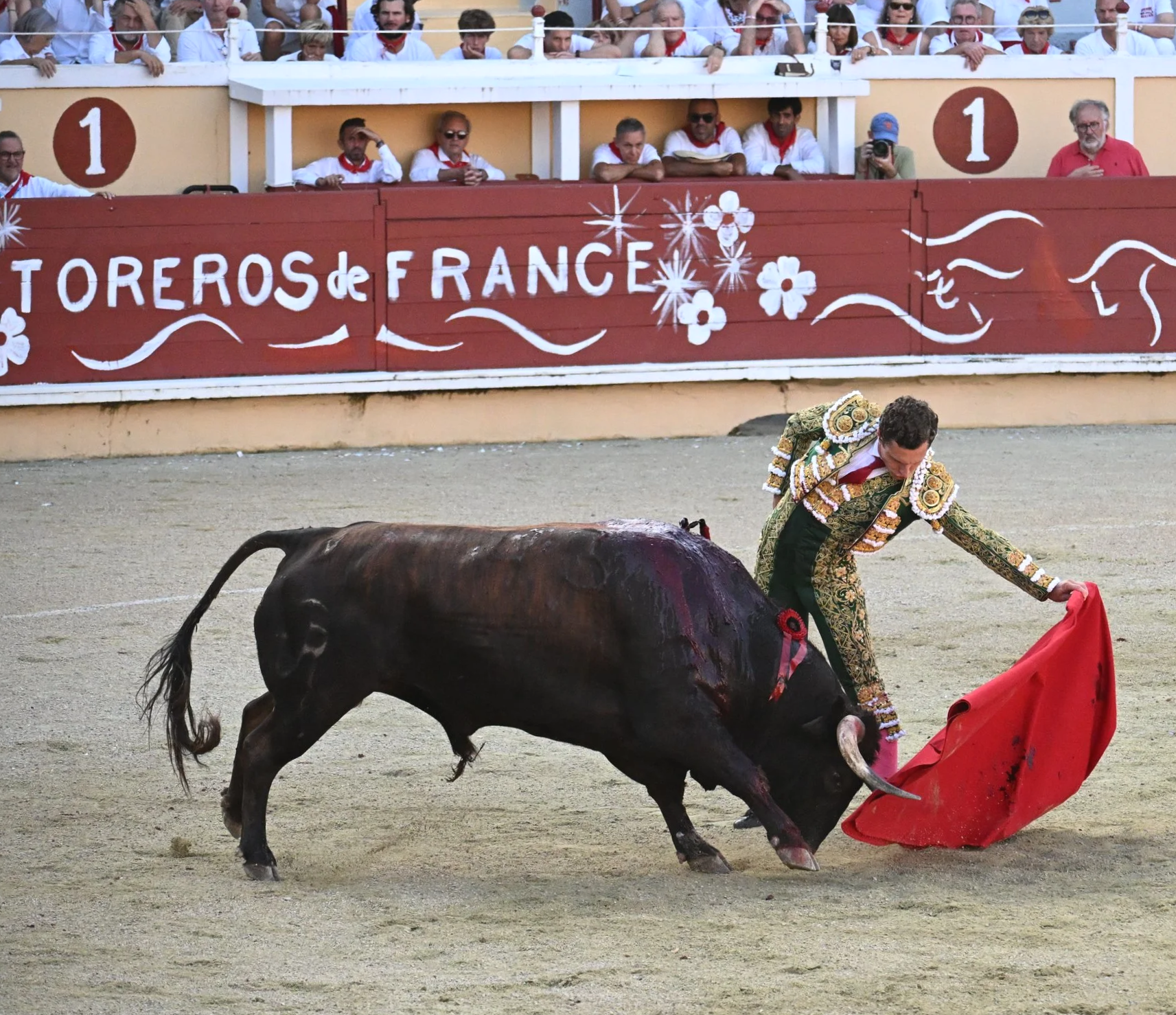
The third espada, Adrien Salenc, was a highly promising novillero in France and has since added the Spanish apodo Adriano, but today was only his third European corrida this year, all of them in his home country. Here is a young torero still looking to locate where the station is, but he is one of those several French toreros who bring a solemnity to the basics of toreo, a real sense of occasion in contrast to the frequent everydayness of Spanish toreo. He produced the best templados and sustained linked series of muletazos of the day, but went on too long with his first bull before killing with a bajonazo. With his second, the sword entered in the spot but almost vertically. The president, generous all afternoon, sided with the knowing minority in the plaza and awarded Salenc an ear.
All today’s matadors had brought something of themselves to the corrida. The toreros of France may be ignored by the mundillo in general, but they are certainly worth seeing.