Las rayas
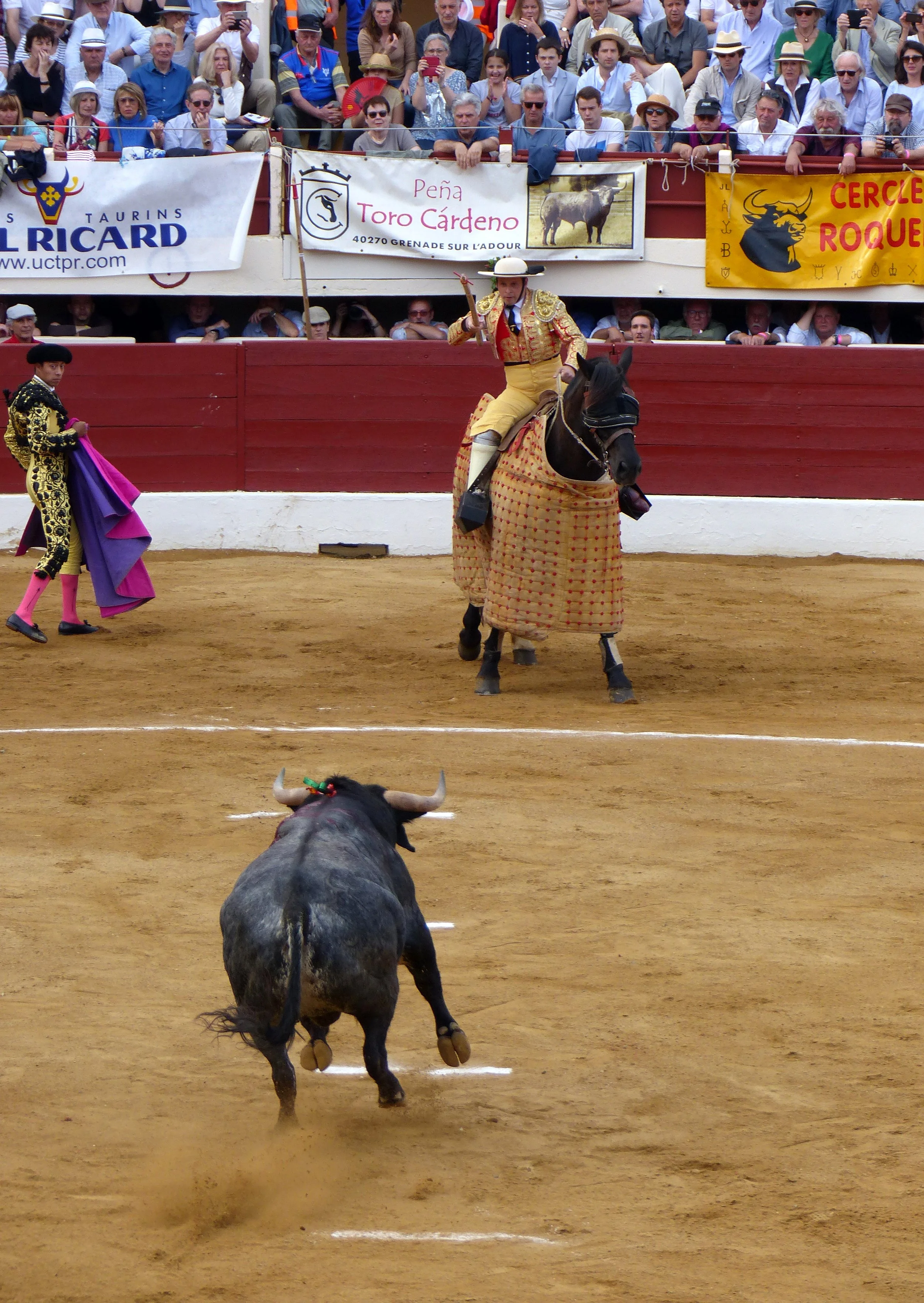
The Associacion de Aficionados Ceretans (ADAC), who each year organise Céret’s feria torista, decided this year to do away with las rayas, the two rings (normally marked in white) that are intended to define terrains in the tercio de varas.
Las rayas in history
There are different claims as to when a raya was first marked out in a bullring. In his book ‘Introducción a la verdad del toreo’, I. Mulas Pérez says one was marked out with green sawdust in Sevilla on October 11, 1908. However, according to the website toreoenredhondo, the first time a raya appeared was at Zaragoza on October 16 that same year, when Rafael González Madrid Machaquito and Emilio Torres Reina Bombita faced bulls of Pablo Romero. In both cases, the corridas took place in the midst of a dispute between ganaderos and picadors. The latter wanted to pic with their usual puyas, while the ranchers wanted a less harmful spike, which they called 'la puya corta', to be used. Before Zaragoza’s Feria del Pilar began, the picadors said they would not perform unless their conditions were adhered to, and that they were all willing to go to jail rather than comply with the ganaderos’ wishes.
The first two corridas of the Zaragoza feria took place with the picadors using their usual implements. However, before the third corrida was held, the horsemen agreed to use the puya corta provided a ring was added to the arena indicating the limits of their terrain. The picadors’ revised stance was made at a time when, it’s alleged, ganaderos would pay them extra under the table to take their horses out towards the middle of the ring to provoke bulls’ charges, with the result that their animals looked braver than they actually were and a greater number of horses were killed, all adding to a rancher’s prestige. Some regulations also threatened to fine or imprison picadors who did not pic beyond las tablas. The terrain the raya marked out alongside the barrera was picadors’ preferred area for picing in those pre-peto days when horses were often deliberately sacrificed, for, when derribos occurred in that area, picadors could either fall into the callejón or en las tablas where help was near at hand. The new raya placed limitations on the area for picing and helped safeguard picadors, but also damaged ganaderos’ reputations in the process.
The Zaragoza corrida proved a disappointment, with poorly-presented bulls and no horses killed during the first three lidias; some of the spectators then invaded the ring in protest and the corrida was temporarily halted while the authorities decided whether or not to continue the festejo.
“From this point on,” says a contemporary report, “everything was upheaval - the public behaving badly; the picadors executing varas all over the place and least of all in their area; the banderilleros uncertain with both cape and banderillas; and the espadas looking for ways with which to bring the corrida to a rapid end.”
Despite this inauspicious debut, 15 years later in 1923, the single raya was made obligatory by new taurine regulations.
In 1959, following some experimental uses in the three years previous and lobbying by Domingo Ortega, a second raya was made a requirement, effectively delineating the minimum distance by which a bull should charge to the horse. Ortega argued that the suerte had become devalued by the common practice of toreros leading the bull right up to the single raya and the picador, thereby leaving no possibility of a charge to the horse. Bulls now had to be placed at least three times inside the second (inner) raya and not charge to the horse before the picador could ignore the first (outer) raya and move his horse beyond it to pic a bull.
In today’s toreo, the picador’s proximity to the barrera also lends itself to la carioca, the practice of prolonging picing by turning the horse whilst the bull is in the peto, so that the bull becomes positioned between the barrera and the horse and its natural exit from the suerte is effectively blocked.
Céret’s rationale and results
The move in Céret was made as an experimental departure from the French regulations in agreement with the Union de Villes Taurines de France and the cuadrillas taking part in the feria. ADAC described the reasons for dispensing with las rayas as follows: “Modernity and interest in this phase of the corrida lies in the return of a mobile team of horses that can engage any kind of bull without limits or hindrances. From this perspective, our Founder-President Jean-Louis Fourquet and Alain Bonijol [the horse supplier and trainer] have always been fervent supporters of doing away with the rings marked on the sand that limit the positioning of horse and bull. They have always considered them to be obstacles to picadors’ free expression and bravery and as curbs on the assessment of the bull.”
Apparently, one of the wishes was to do away with lengthy non-productive citing of bulls from a distance, the absence of rayas permitting a picador to come forward and cite at a shorter distance to enable the bull to charge. However, from this aficionado’s perspective, the eagerness of a bull’s charge, the length of time it takes to encourage a bull to come forward to the picador, is part and parcel an ingredient of the evaluation of a bull’s quality, and shortening the charge would appear to dilute this. Also, without rayas, while the braver picador is given the opportunity to perform away from las tablas, there is nothing to prevent the picador riding his mount on to the bull or a return to the old abuse of toreros caping the bull right up to the horse.
So, how did things go in Céret? Interestingly, the reports on the main taurine websites make no mention of the lack of rayas and its effects. The British taurine photographer Andrew Moore was present and tells me, “I heard no objections to the removal of las rayas […] A couple of friends have mentioned the obvious point that we now don’t have to put up with the pedants who start to shout and complain when a picador oversteps the raya by one or two centimetres. But most seem to agree that the rayas themselves are far from being the main problem facing today’s suerte de varas: the location of the puya and the execution of the puyazo are far, far more serious and pressing issues.”
‘Rafa’, of toreoenredhondo, another Céret spectator, commented, “Well, the first tercio definitely became more agile, especially with bulls that were slow [to come towards the horse], because the picadors took those extra steps toward the animal that ultimately provoked the charge. Even [Damian Castaño’s picador Javier] Martín was brave enough to go all the way to las medias, which we didn’t expect from almost anyone. I thought the decision [not to have las rayas] was fine.”
It remains to be seen whether a raya-less arena will become a permanent feature of the Céret plaza. There are other French plazas with ring markings of their own. At Vic-Fezensac, for instance, there’s a line to mark the picing area set out opposite the toril and then four short lines further into the arena that suggest where the bull should be placed for each of four puyazos, the concept being that the distance between picador and bull should be increased for each subsequent entry to the horse.
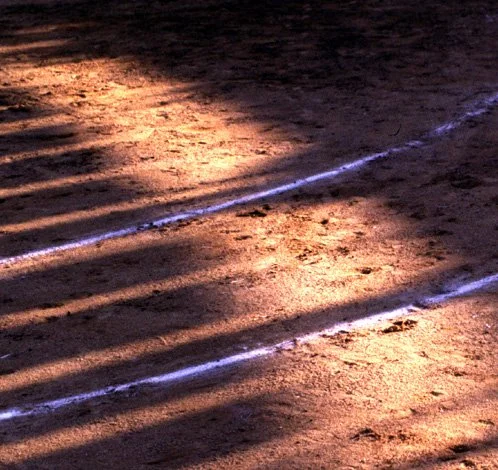
The ring markings at Vic-Fezensac