Bullfighting Roman-style
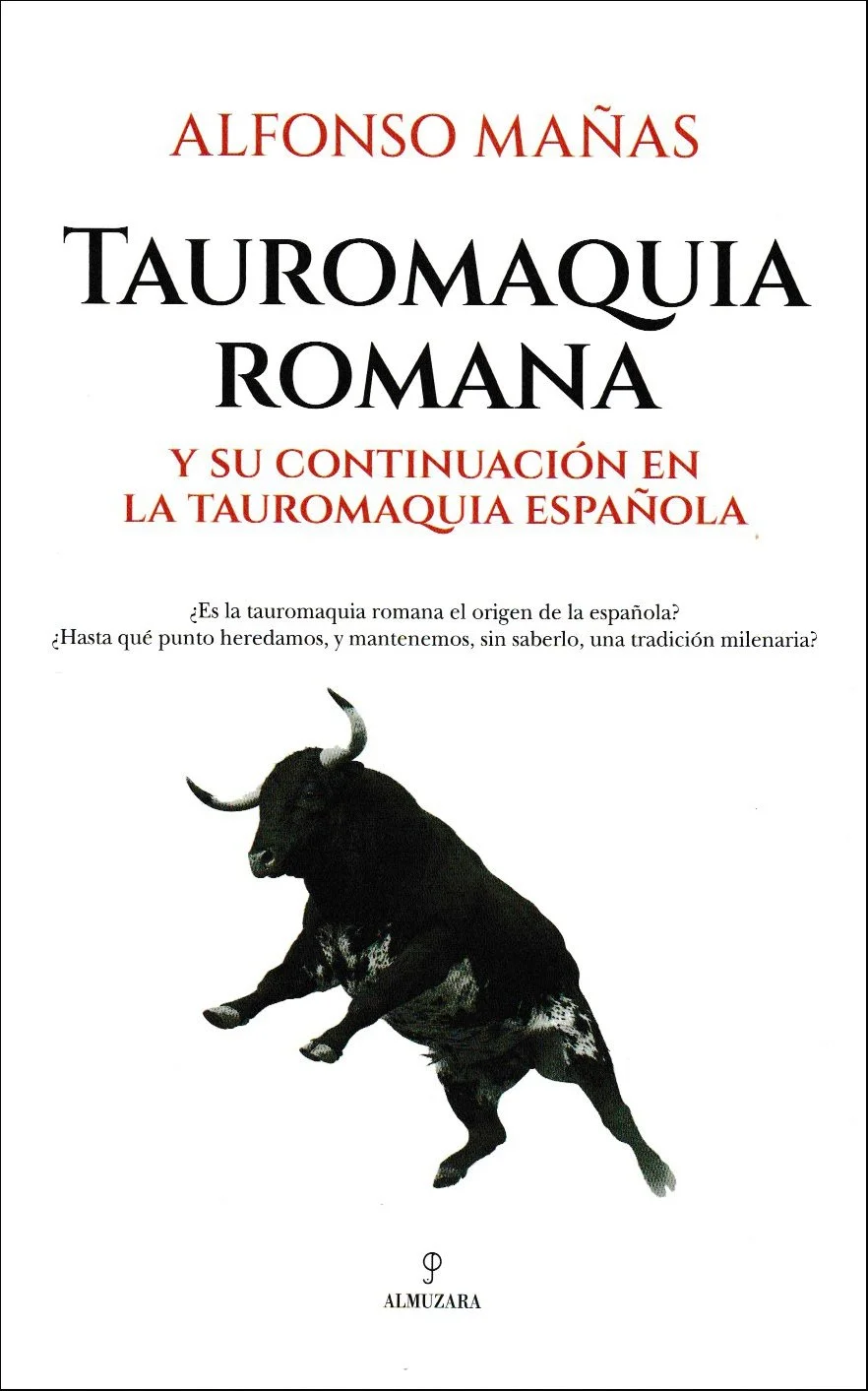
In 1899, Juan López-Valdemoro y de Quesada, el Conde de las Navas, published ‘El espectáculo más nacional’ in which he said, “For me, it is almost certain that the espectáculo taurino originated in Spain and that the Romans and Arabs learned to torear in our peninsula.” But, in his new book on tauromachy in Roman times, today’s acknowledged expert on events in Roman amphitheatres, the Spaniard Alfonso Mañas, reaches a different conclusion - that the corrida is descended from the gladiator and animal combats that so enthralled the Romans.
To further his argument, Mañas (with the help of many illustrations) sets out the various suertes that were performed with bulls in Roman arenas and pursues these through to their presence in Spanish toreo, some of which continue to the present day. He identifies 13 suertes that were performed in Roman times - caping bulls, killing them with lances or swords, cutting their hamstrings with a half-moon blade, placing darts into the bulls, leaping over bulls (sometimes with the help of a long pole), climbing on top of them, grappling with their horns in order to immobilise them, performing from inside large baskets or jars, putting bulls in with dummy humans, and leaping onto bulls from on horseback (this last suerte believed to be of Greek invention).
Mañas expresses the view that, in today’s corrida, only the suerte de picar is of Spanish origin, the remaining actions - capeando, banderilleando, muleteando, estoqueando and apuntillando - all being practised by the Romans. He points out that, in the 17th and 18th centuries, in discussions in Spain on the origins of the corrida, the prevailing view favoured the Roman venatio (the part of the Roman games that featured fights between animals and between animals and people), and it was not until 1777 that Nicolás Fernández de Moratín argued that, because of the abundance of bulls on the peninsula and the natural bravery of its inhabitants, the Fiesta was born independently in Spain - the view that el Conde de las Navas later subscribed to. Since then, different arguments have been made for a time - that toreo actually originated in Crete; that it was introduced to Spain by the Moors; that it is a vestige of bull worship in Visigoth Spain; etc.; although the view that the corrida is a descendant of the Roman games has never completely gone away.
The book begins strongly. Bulls were the most frequent animals seen in the Roman arenas. The Romans caped bulls for entertainment and believed that they were attracted by the colour red. The highest form of death - whether for an animal or a human - was considered to be to die fighting, which was one explanation for the amount of mortal combat the Roman arenas featured. The first record of a contest between a bull and a man involved a spectacle at Pompei between 20 and 2BCE, whereas the first allusion to caping a bull for pleasure in Spain does not occur until some 675 years later and no definitive mention is made until around 1260CE (the killing of a bull as part of coronation celebrations is mentioned earlier, in 1135).
However, this reader is not wholly convinced by the author’s claims. While Mañas considers the existence of 12 suertes in both Roman and Spanish toreo to be too many to be coincidental, it seems to me there are only certain things one can do with bulls, whether it be managing them, killing them or using them for entertainment. So it is unsurprising that the suertes of Roman tauromachy correspond so closely with past or present activities in Spain with toros bravos. Given the prevalence of bulls in Iberia, interactions between these animals and local inhabitants will have occurred from pre-Roman times, while today’s formal corrida is a Spanish invention of the 18th century - over 1300 years after Spain was last controlled by the Romans.
In pursuing his argument, however, Mañas usefully covers the history of the debate over the corrida’s origins and also the subsequent development in Spanish tauromachy of the various suertes he’s identified as being of Roman origin, which makes for an interesting book for today’s aficionado. And there is no denying his closing comments, that attending a corrida, particularly if one is sitting in one of the Roman arenas of Nîmes or Arles, is the nearest one can get these days to experiencing the Roman venatio.