Different views on Álvaro Núñez bulls at El Puerto
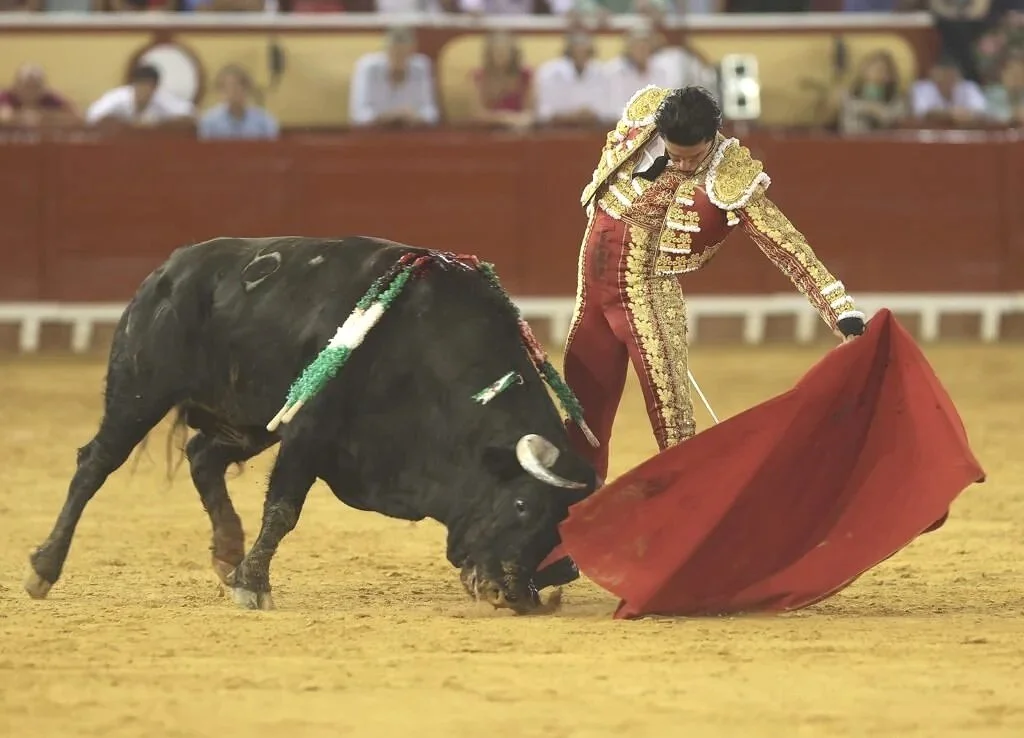
Alejandro Talavant with ‘Ponderoso’ (Image from entretoros.com)
The August 1 corrida at El Puerto de Santa María with Álvaro Núñez bulls saw two ears won by Morante de la Puebla (one from each of his bulls) and another two cut from a bull by Alejandro Talavante. Mundotoro.com described it as ‘la tarde del verano’. But critics’ reactions to the corrida have varied. This article contrasts the views of José Carlos Arévalo and Antonio Lorca, interspersed by the ganadero himself speaking generally on what he is trying to achieve in breeding toros bravos.
José Carlos Arévalo (from entretoros.com)
“The corrida of Álvaro Núñez Benjumea held on August 1 in El Puerto de Santa María featured two standout bulls: ‘Rescoldito’, the fourth of the afternoon, which hinted at a devilish stamina, and the fifth, ‘Ponderoso’, which charged with a saintly aura. They were the two stars of a line-up that, except for the third — a rough, shabby brown bull with unacceptable conformation — posed a question: what caused the mismatch between the bulls’ eagerness to charge and their physical inability to do so with the proper strength and the solid steadiness of a bull with good internal finishing? Could it be an imbalance between physical vigour and a bull’s physical conditioning? Only the breeders know how to handle that, and Álvaro comes from the Núñez breeding line, with more than two centuries of bravery behind it. He will know, because there were two bulls—the ones mentioned—unaffected by this comment.”
Álvaro Núñez (from an interview in the July edition of Aplausos magazine)
“I look for bulls that have very strong virtues and excellence in them, but that maybe aren’t flashy (vistosas) for the general public. The bull I’m seeking isn’t meant to be one for people to watch it charge; it’s meant for people to see good toreo, and then for the aficionado not even to wonder what the bull was like. My stance on bullfighting is clear: I look for animals that generate great triumphs and whose role is secondary for the audience. If people talk more about the bull than the performance, something has gone wrong: either the animal had complications, or the torero didn’t bring it out fully. When a bull really comes together, the talk is about the bullfighter. That’s my absolute priority. I’m not going to bring people to the arena for the bull, I know that; my idea is for the torero to give their best and for people to leave happy and moved.
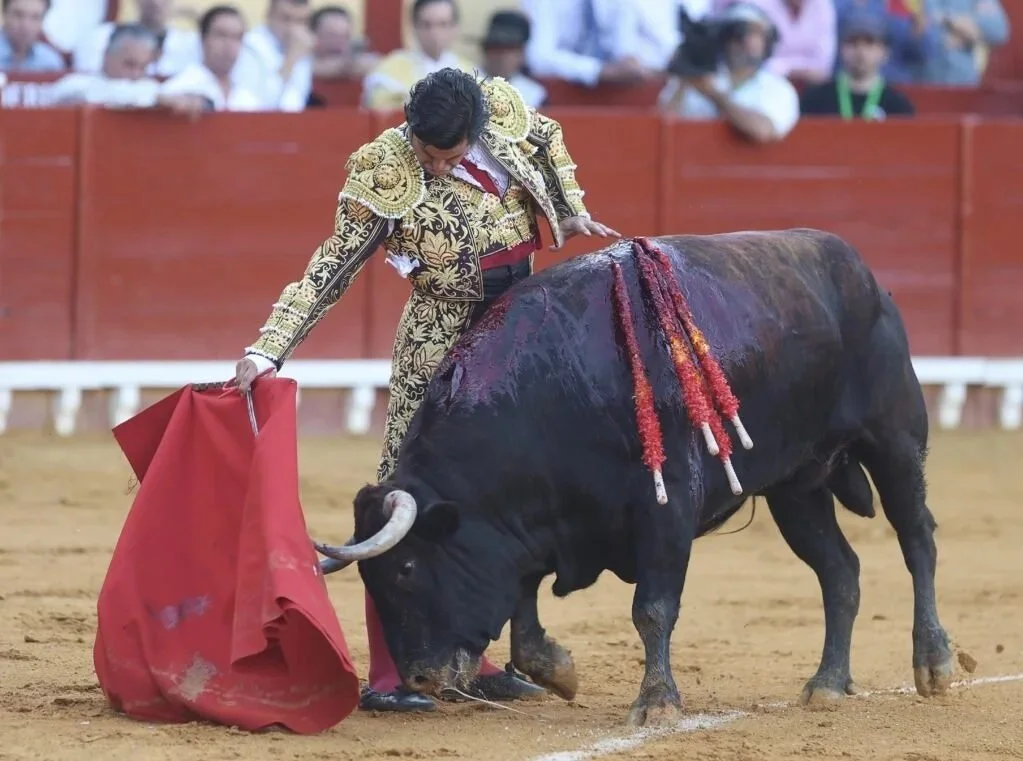
Morante de la Puebla with ‘Rescoldito’ (Image from entretoros.com)
“I’m looking for a bull that never charges recklessly and that, at the same time, looks to vanquish what’s in front of it (empujar). Combining both qualities is a very fine line. At the tentaderos at my place, I was always struck by how cows that seemed normal to visitors looked exceptional to me because of their stance, their build, their rhythm, and their coordination. And the opposite too — very flashy cows didn’t mean anything to me. I select with that perspective: that of creating the bull that allows the torero to shine from within and give the best of himself. Bullfighters who fight very slowly and purely are not called brave, they are called artists, even though it takes enormous courage to torear at that speed. It's the same with the bull: for me, true bravura involves becoming diminished without things worsening - slowing down the charge, but never reducing the commitment.”
Antonio Lorca (from the website of El País)
“Certainly, Morante, Talavante and [Juan] Ortega, with the priceless collaboration of Álvaro Núñez’s bulls, participated in a very special afternoon […] Alongside the three toreros, there were six bulls from Álvaro Núñez, carefully chosen, which were more friendly companions than opponents; the only thing missing was for them to carry out the toreros on their shoulders instead of the usual capitalistas. The breeder’s father, Joaquín Núñez del Cuvillo, once said that he raised toros for the toreros to triumph, and his son has learned the lesson. His bulls are selected, raised, and chosen so that Morante, who is his close friend, and anyone lucky enough to accompany the Sevillian, can triumph. In other words, the fiesta de los toros has today become more a fiesta de los toreros.
“The [fourth] bull stopped charging in the capote and displayed an uncertain character that invited a loss of confidence […. but Morante] dominated the situation and this enabled him to construct muletazos of unexpected quality […] The enthusiastic audience of El Puerto asked for the indulto of the fifth bull, ‘Ponderoso’, weighing 485 kilos, which tiptoed and showed no interest with the picador, and charged genuinely and tirelessly at the muleta of a confident Talavante […] who passed it at leisure and elegantly to general jubilation. A blessed bull, fit to place on top of an old TV and enjoy for a lifetime - a saint born to let others triumph at its expense without any trouble. Talavante made it look beautiful, but so much sweetness often lacks emotion.”