The Chopera dynasty - not what it used to be
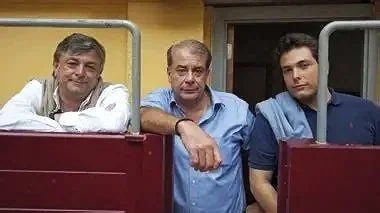
(L-r) Pablo and Óscar Martínez Labiano and Manuel Martínez Azcárate (Image from aplausos.es)
The Chopera family’s long association with bullfighting began in the early 20th century when Severino Martínez Chopera started supplying horses to San Sebastián’s El Chofre bullring. When the peto was adopted and bullfighting’s demand for horses decreased, Severino’s son, Pablo Martínez Elizondo, turned his attention to organising corridas, starting in Pamplona in 1933. Over the next 30 years, Pablo Chopera became the leading European taurine empresario, running the bullrings of San Sebastián, Bilbao, Logroño, Salamanca and Badajoz in Spain; and Mont de Marsan, Eauze, Bayonne, Hagetmau and Toulouse in France. The empresario had also moved into the management of toreros, taking on Paco Camino and Manuel Benítez El Cordobés.
By the time of Pablo’s death in 1968, the business was in the hands of his son, Manuel Martínez Flamarique, who expanded it further, not only in Spain, but moving into Latin America and running bullrings in Mexico, Venezuela, Colombia, Peru and Ecuador. The family also promoted and funded the construction of bullrings, for instance the current bullring at Badajoz, inaugurated in 1967. In 1981, the empresa Chopera S.A. won the contract to manage Madrid’s Las Ventas bullring, which it did very successfully for the next eight years before opting not to continue due to changing contract conditions. Many aficionados look back on that period as a golden age for toreo in Madrid; the numbers of abonados of Las Ventas rose from 4,000-22,000 and the Feria de Otoño was created.
Manolo died in 2002, leaving his sons Pablo and Óscar Martínez Labiano running the business (they have since added Pablo’s son, Manuel Martínez Azcárate, to the team) . By this time, the Choperas had realised their long dreamed-of return to San Sebastián - without toros since the sudden closure of El Chofre in 1973 - by being instrumental in constructing the covered ring of Illumbe (inaugurated in 1998) just outside the city. The exact same design was also used to replace Logroño’s ageing bullring, while new rings were also built at Vitoria (short-lived as a taurine venue) and Alcalá de Henares. The Choperas were ready to invest in bullrings, but wanted long-term agreements in return, the most recent of which was a 15-year contract, signed in 2019, to run Bilbao’s Vista Alegre bullring under the new name of BIVA. In 2017, the Choperas joined forces with the Mexican muti-millionaire Alberto Baillères’ Grupo BAL to form the cross-Atlantic partnership Toreo, Arte y Cultura BMF S.L. (commonly referred to as BMF).
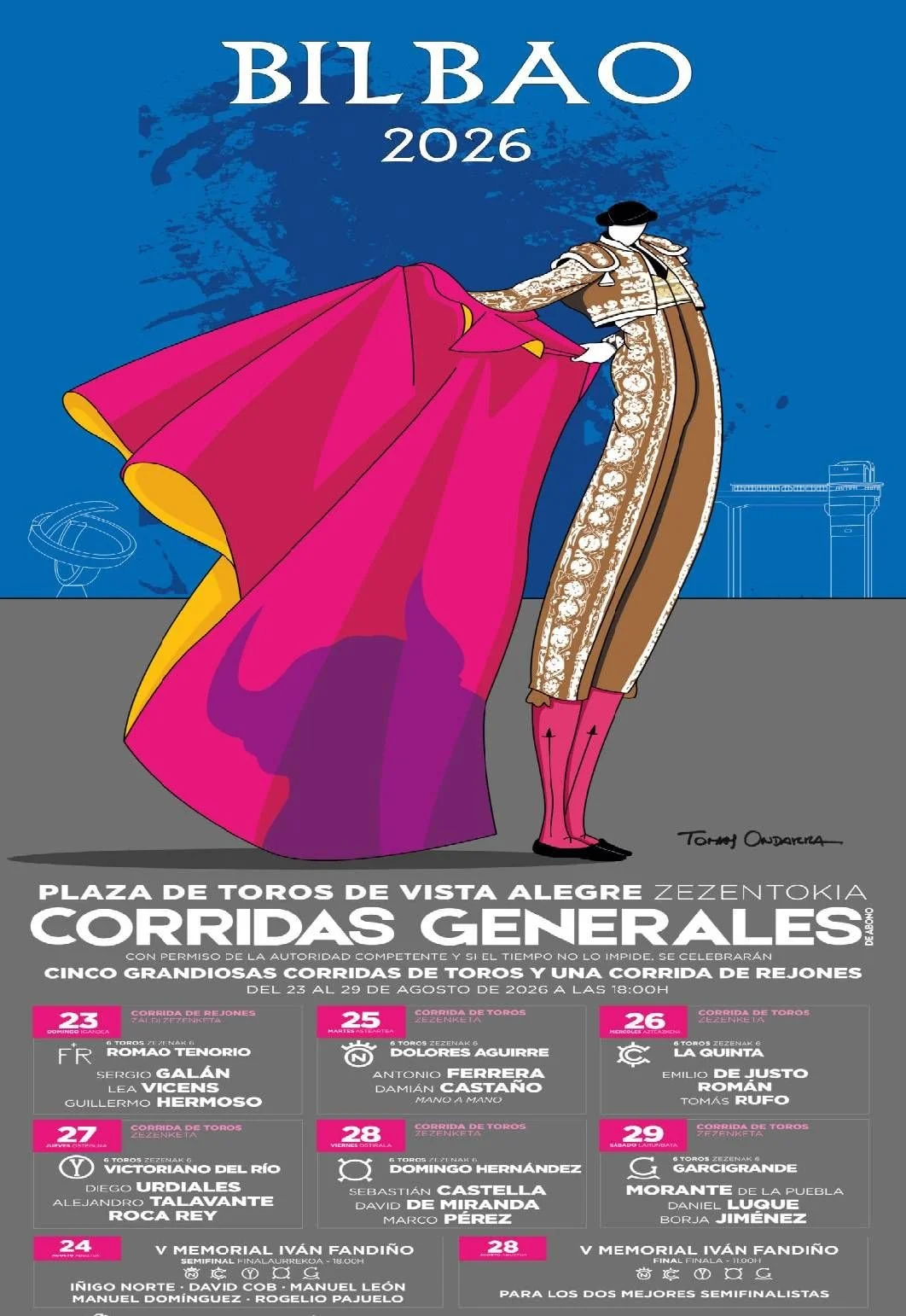
The cartel for this year’s Bilbao feria
Nowadays, however, the Chopera empire is a shadow of its former self and the family operate in traditional ways that no longer sit comfortably with the modern corrida. The Choperas now run just four bullrings in Spain - San Sebastián (where, despite initial expectations, there is no long-term contract in place), Bilbao, Logroño and Salamanca. San Sebastián’s Illumbe, launched as a first-class plaza, has now settled into being the venue for an annual feria of just three corridas (one of them a mixta). The Choperas’ other first-class feria at Bilbao has been in decline for several years (not helped by the ayuntamiento’s antipathy towards taurine matters). The programme for this month’s feria, although a day longer than last year’s, adds a corrida de rejoneo but does away with a novillada con picadores in favour of a second sin picadores event, while aficionados’ view is that, despite the return of Dolores Aguirre, the ‘toro de Bilbao’ is not what it used to be.
At a time when ferias are increasingly being announced months in advance, assisting aficionados’ planning and bringing money into the empresas’ bank accounts at an early stage, the Choperas still announce their ferias as if only a local audience may be interested. This year, San Sebastián’s August carteles were published on July 6; Bilbao’s on July 8; those for Salamanca’s September feria (now spread over two weekends) on July 29; while, at the time of writing, Logroño’s have still to be announced.
In a temporada when a number of young toreros are breaking through, the Choperas’ carteles tend to be conservative as well. The empresa currently favours the contracting of Morante de la Puebla, Roca Rey, Talavante, Diego Urdiales, Borja Jiménez and Daniel Luque, who appear in all three ferias announced to date, while Sebastián Castella and Manzanares perform in two of them. There is no room for any of this year’s newcomers at San Sebastián, nor at Bilbao, although Salamanca does include the local young matadors Ismael Martín and Julio Norte in a cartel headed by Morante.
Nor are the Choperas proving successful in acquiring new plazas. They finished third and last in the most recent tender they took part in for Málaga’s bullring and were also unsuccessful in their bid for Madrid’s Las Ventas in 2022. One wonders whether we are witnessing the final stages in the decline of the Chopera dynasty as taurine empresarios.