Guadarrama, October 4: A disappointing novillada
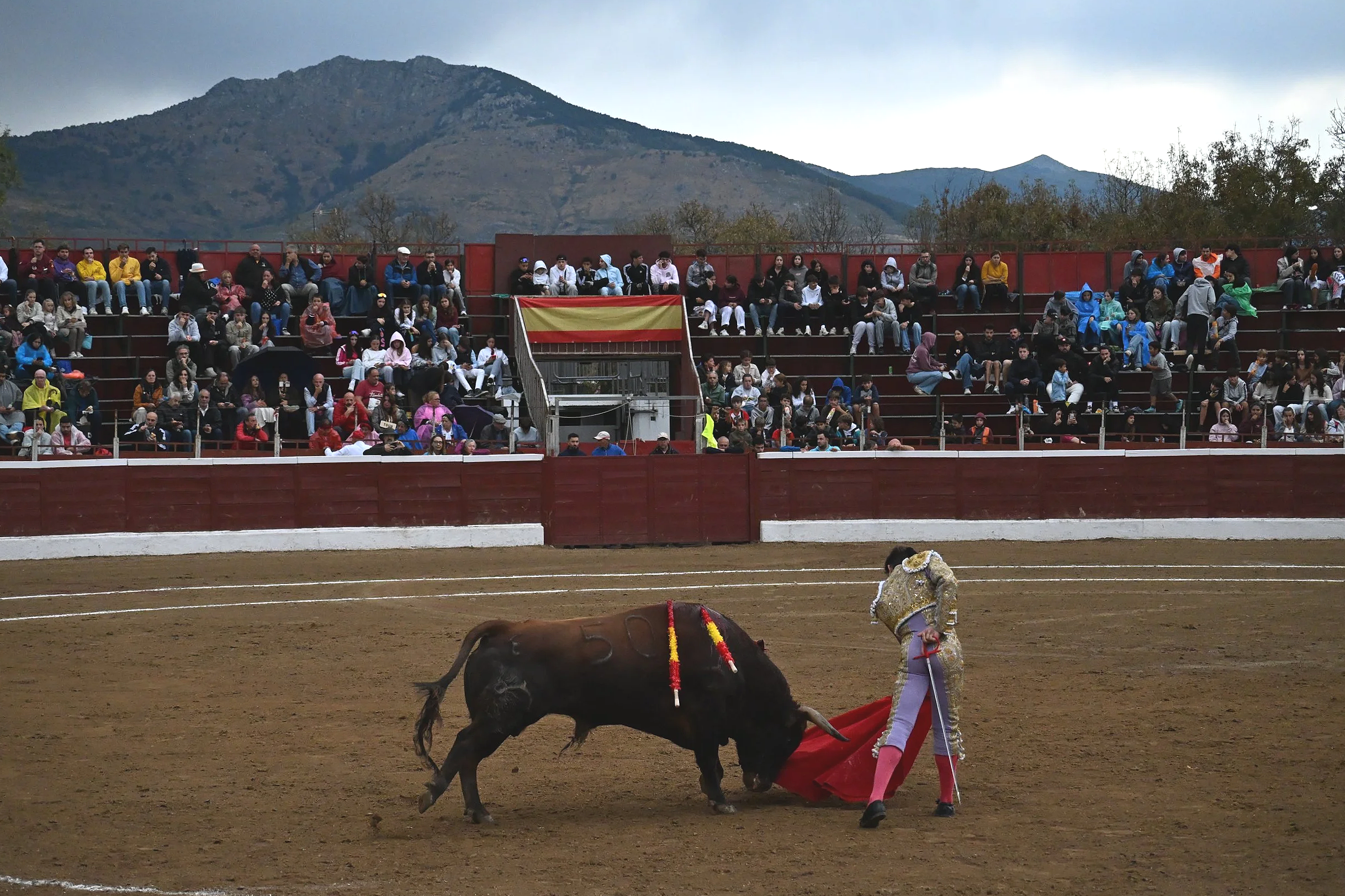
The Guadarrama feria’s closing novillada took place under glowering skies
Guadarrama’s autumn feria de novilladas is unusual these days in that it is put together not by an empresa but directly by the ayuntamiento, currently in the hands of a Partido Popular/Vox coalition. Nuria del Río Muñoz, the ayuntamiento’s concejala de Festejos, recently told cultoro, “It involves a lot of work and takes a lot of time, many hours of travelling… But at present we’ve no plans to outsource it and have someone else take care of things, not because we think this would be worse, but because we enjoy working on it directly, making choices and seeing what we bring to Guadarrama.”
Unfortunately, the fourth and final novillada in the series, held over two weekends, was a disappointment, not so much on the choice of El Retamar as the ganadería, but rather in the toreros who finally took part (the original cartel featured Osornio, Joel Ramírez and Mario Vilau).
The first disappointment occurred on September 27, when the Catalán Mario Vilau, the escalafón leader and experiencing a sequence of triumphant afternoons, was seriously gored at El Hoyo de Pinares, an injury that would see him miss Madrid’s Feria de Otoño as well as this Guadarrama afternoon. The second occurred when I arrived at the town’s bullring (a permanent plaza in terms of the arena, barrera and burladeros, although the seating and exterior are that of a portátil) to see an aviso stating that the Mexican Emiliano Osornio, managed by former matador Curro Vázquez, had also had to pull out. Ms del Río Muñoz had described the feria’s aim as providing a showcase for novilleros de nombre as well as those that were looking to take off, but now the October 4 cartel had lost two of the former and, although Sergio Rollón had been brought in to replace Osornio, Vilau’s replacement, Salvador Herrero, in his second season con picadores and lying 29th in the escalafón, was hardly a substitute of the same status.
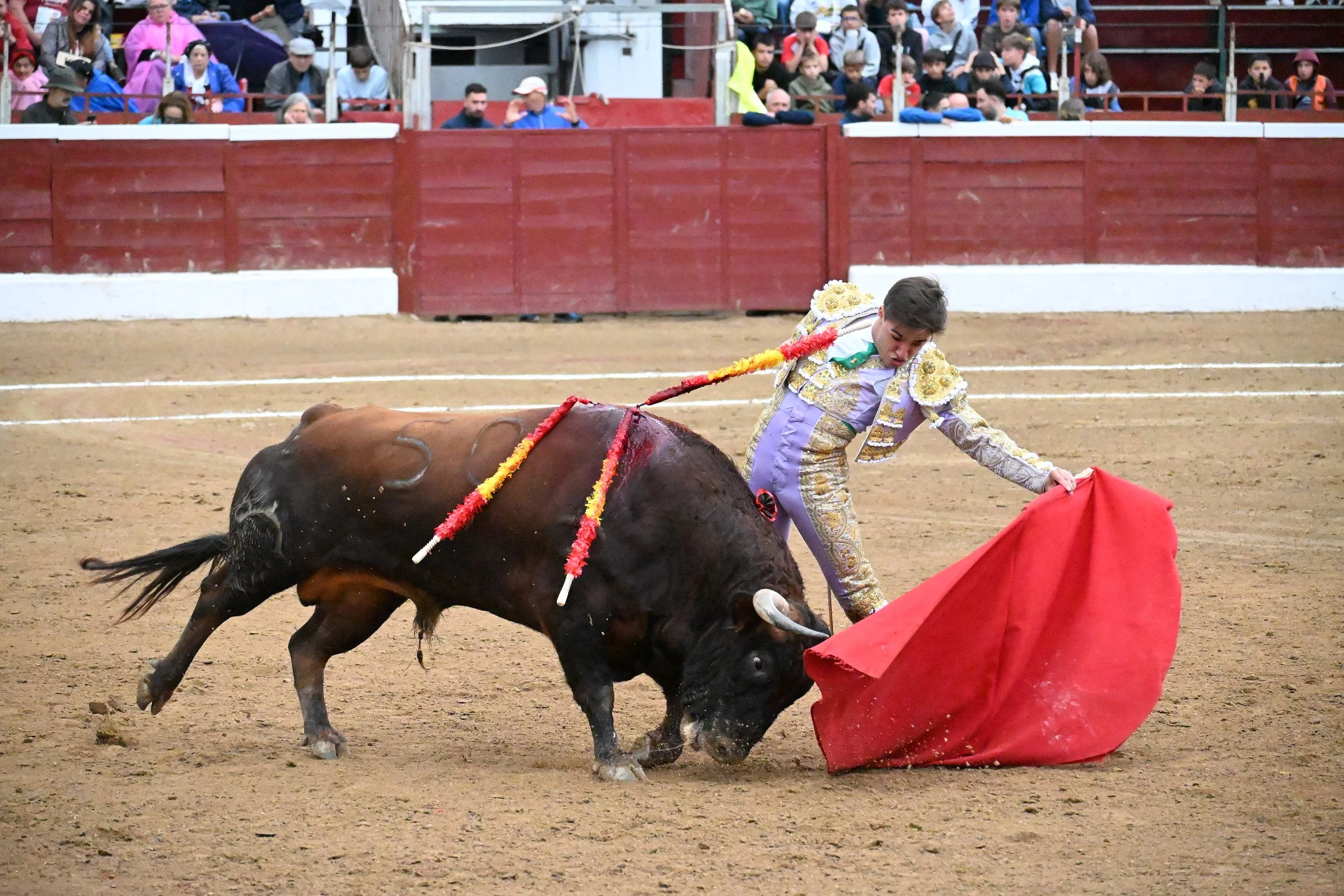
The novillada began and ended with thunderstorms sounding round about Guadarrama’s mountainous setting, but the three-quarter entrada only suffered light rain in part of the spectacle. The president’s party, including the mayor, Ms del Río Muñoz, two priests and assorted militia walked along the callejón before taking their places under the canopy that demarcated the presidential palco - a touch of 1940s Spain.
The 20-year-old madrileño Joel Ramírez, sole remaining member of the original cartel, kicked off with an El Retamar animal that was whistled for its appearance and fortunately proved to be a one-off, the remaining animals being bulkier and of more impressive appearance. A former finalist of the certamen ‘Camino hacia Las Ventas’ and in his third season con picadores, Ramírez impressed with his capework and temple on both his bulls, but could not kill. There was a desarme in his first faena and he went on too long before needing four attempts with the estoque, the novillero receiving silence. With his second novillo, awarded a vuelta en arrastre, he showed particularly strongly with the muleta, but once more lost a likely ear with three pinchazos and a media estocada and heard palmas instead.
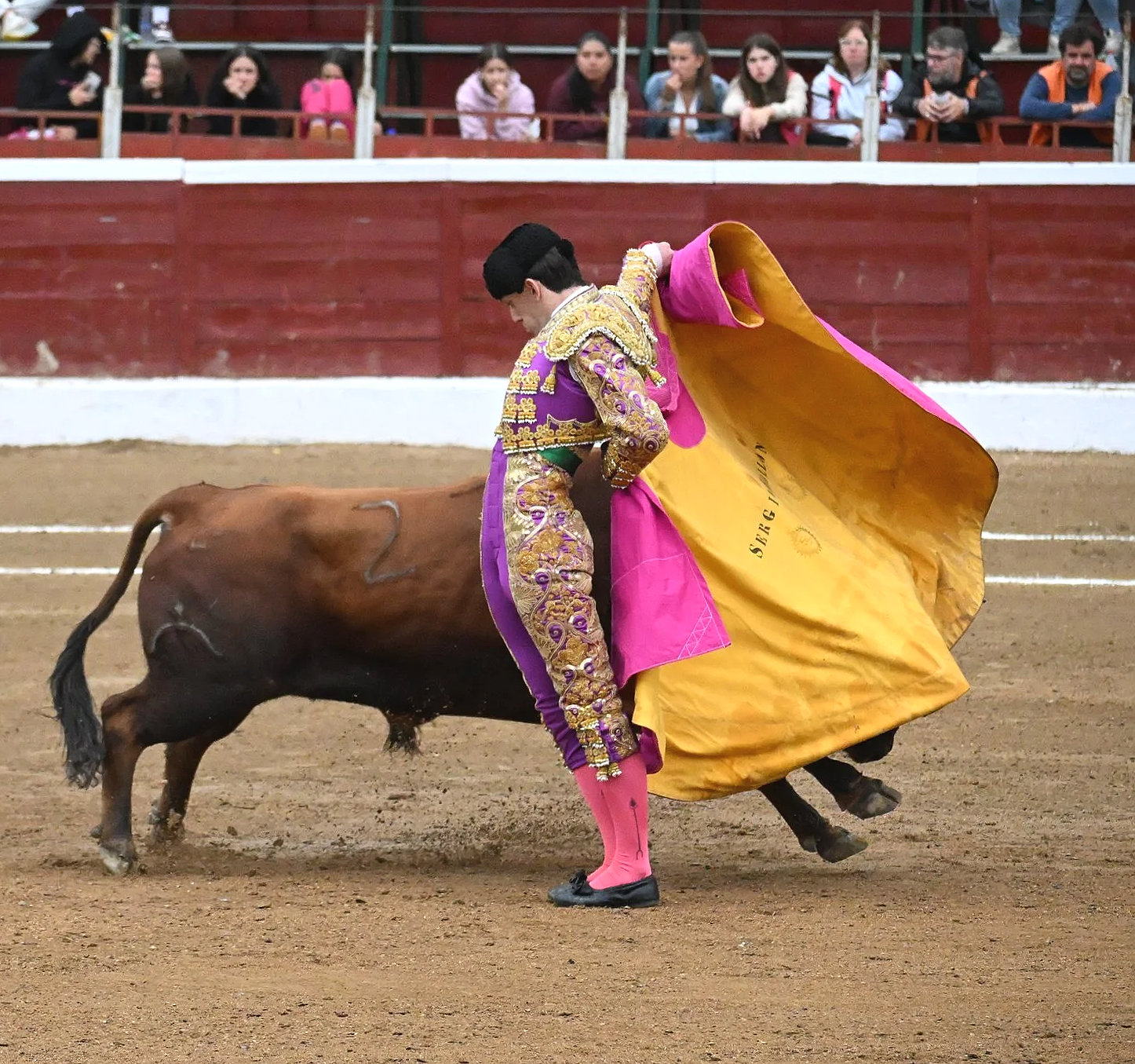
Sergio Rollón in a saltillera to his first novillo (above) and (below) giving a pase de pecho to his second
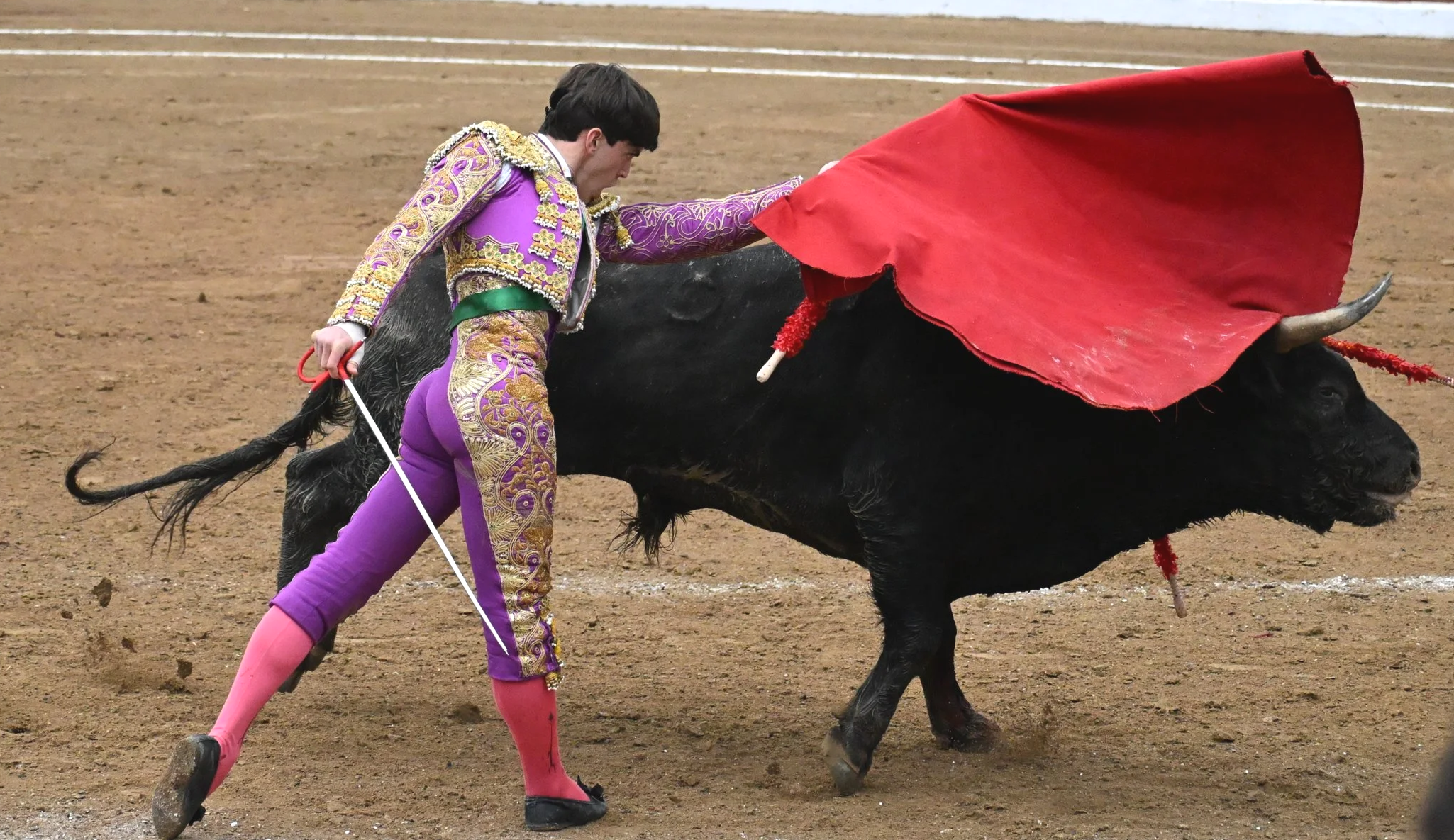
Sergio Rollón, mostly well-known as the victim of one of last year’s worse gorings, which took him out of bullfighting for seven months, was third in the escalafón de novilleros behind Vilau and Osornio and had substituted for Vilau three days previously at Madrid’s Las Ventas. Having taken advantage of the entrada general to secure a barrera seat, Rollón’s first faena was spoilt for me by having his manager, the ganadero Luis González, in front of me shouting advice and exclaiming throughout. Rollón’s capework was good, but his muletazos were rough in comparison with Ramírez’s. A decent estocada, but two descabellos, led to a minority petition and saludos.
His second lidia was much better and Sñr. González was further away from me. Rollón produced some decent verónicas to another strong-charging novillo and a quite of chicuelinas and tafalleras. Soon after dedicating to the public, Sergio had the muleta snatched from him, but he returned to perform stretching doblones followed by derechazos, pases de pecho and naturales before returning to the right hand for derechazos and bernadinas. After a pinchazo and strong, leaping, estocada, he was awarded the afternoon’s only ear.
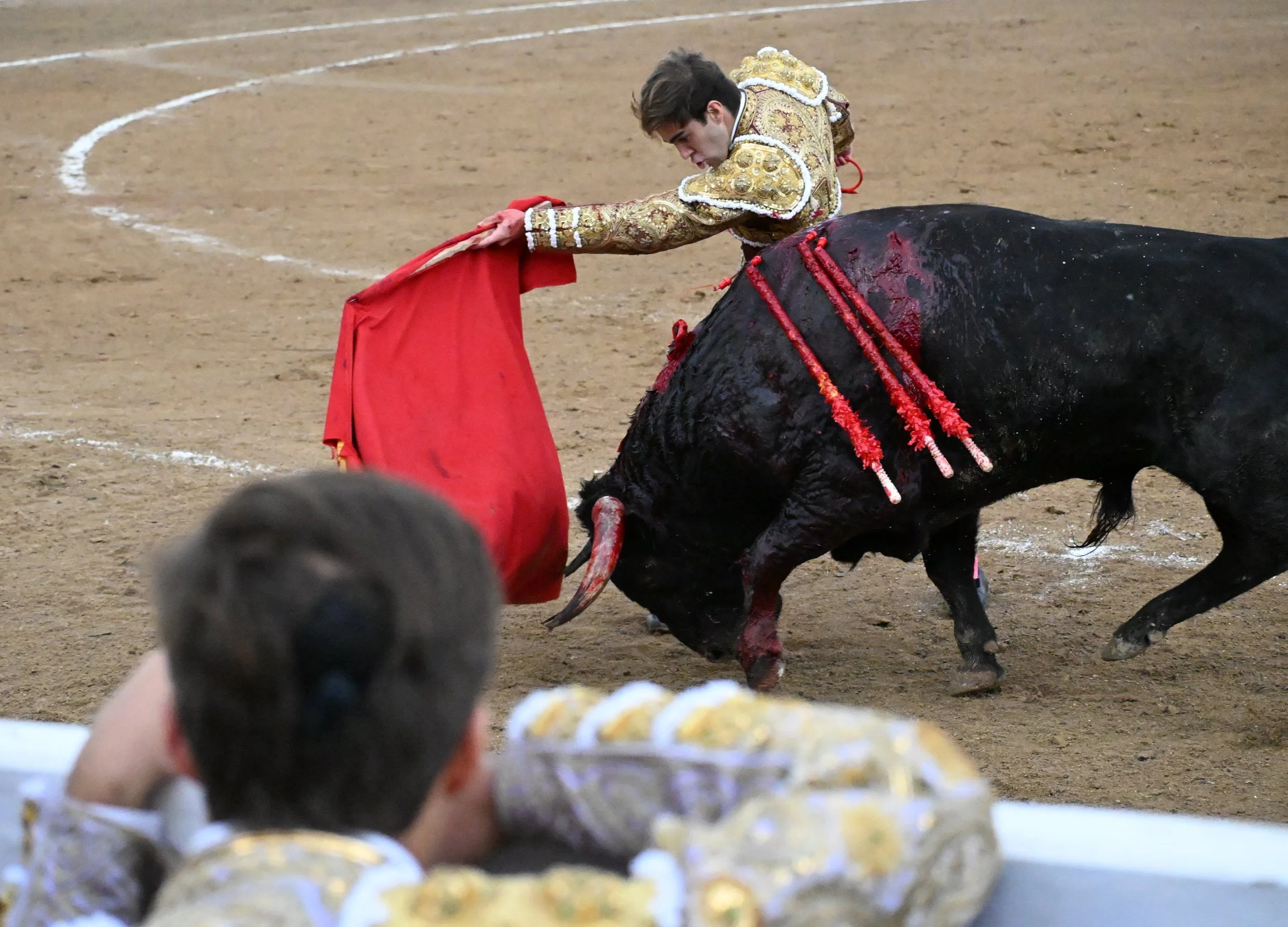
Salvador Herrero was clearly the greenest of the three novilleros. His capework on both his bulls, which included largas cambiadas de rodillas, was rapid. He found his first novillo hard to bring on on its left horn and he incurred several pases enganchados before prolonged killing (a pinchazo, a sword through the novillo’s shoulder, a transverse estocada, another pinchazo, a media estocada and descabello) that ended to whistles. His other faena was better, with some decent naturales and a finale of manoletinas while his estocada was well-placed and hasta la bola, Herrera putting his head in his hands as if he could hardly believe it! Trouble to descabellar, however, meant it all ended with palmas.
Apart from the disappointments of the changes in cartel, the novillada was also disappointing for the lack of competition in quites, each bull being given just one vara, and the lack of variety in muletazos. I have my doubts that any of today’s novilleros, Rollón included, will have much of a taurine future.