José Carlos Arévalo
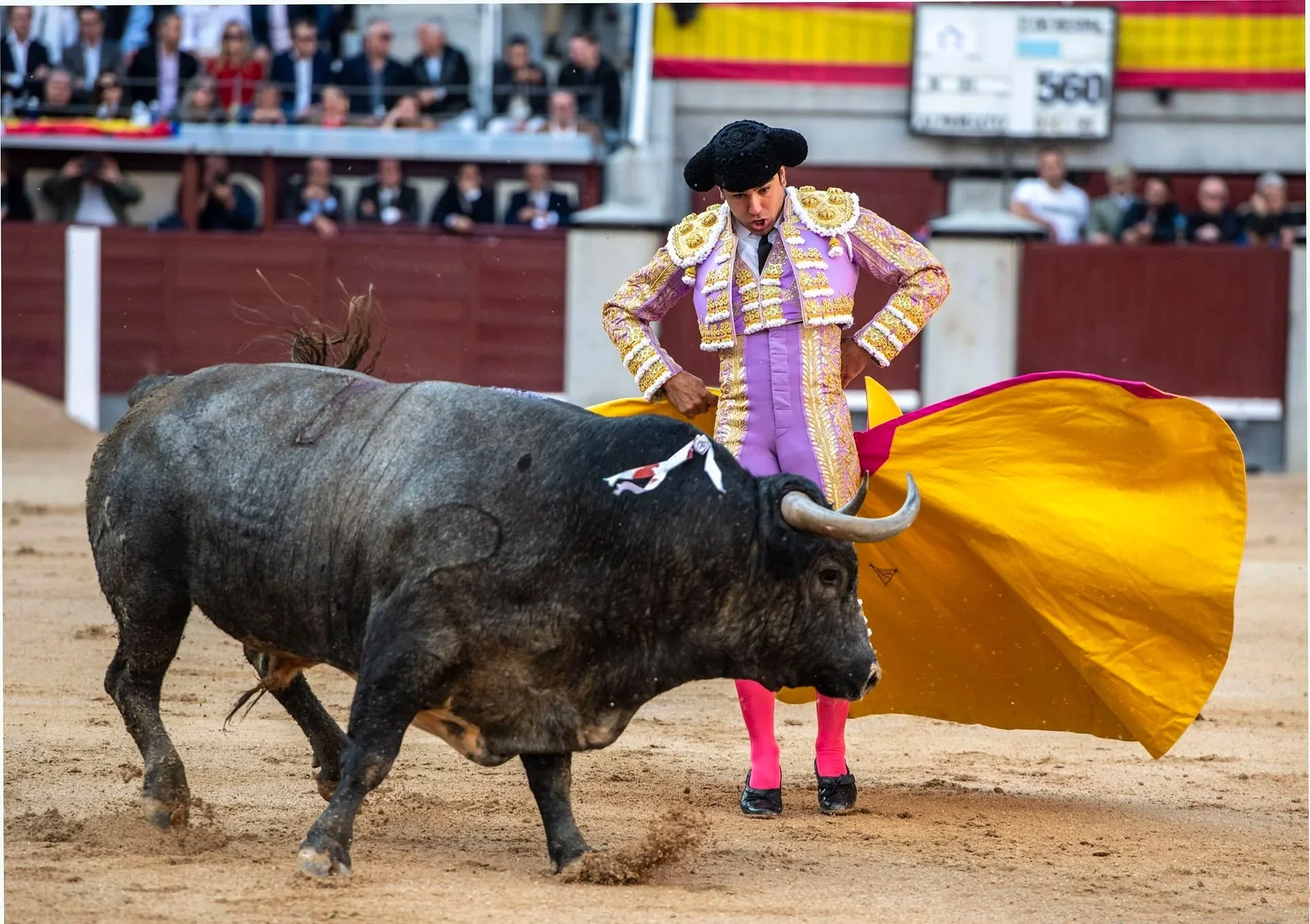
The Venezuelan Jesús Enrique Colombo was put on with bulls of Partido de Resina in this year’s San Isidro feria (Image from Plaza1)
Once the regulatory norms that govern bullfighting are met, the empresario’s freedom to organize bullfights is absolute, other than in the case of a very popular bullfighter appearing on the cartel. In ferias with many abonados, this freedom is extreme, sometimes for good, and most often, for bad. In recent days, there have been two examples in Madrid, both for bad.
Are foreign bullfighters superfluous on the San Isidro carteles? Because Madrid is the world capital of bullfighting, given the major expansion of its audience through digital media, its high number of events and the longest season of any bullfighting city with an important schedule, and even more, for its having become the first world forum of bullfighting, San Isidro should be consistent and reserve a slightly less stingy number of spots for the participation of representative bullfighters from various bullfighting countries. It is not suggested that the numbers should be overwhelming, but it would bring new added value, both inside and outside of Spain, to the Feria’s carteles. This is even more the case if one takes into account the situation of global harassment that la Fiesta suffers in the American bullfighting countries. The so-called planet of the bulls is limited to eight nations that, unfortunately, are isolated “islands” and do not take advantage of the strength that bullfighting could have if the empresarios understood them as a single market, the great archipelago of bullfighting, the eight nations that make up the country of the bull.
As far as I know, the first visionary of bullfighting as a global market was Domingo Dominguín, who came to co-manage the Plaza El Toreo de la Condesa in Mexico City, and the first entrepreneur who conceived of and approached bullfighting as a global market was Manolo Chopera - the last empresario who negotiated the Fiesta with the now-defunct Spanish-American apoderados. The Basque empresario managed to operateas a business leader in Spain, France, Mexico, and South America. It could not have been otherwise.
To conceive of bullfighting as a single market, a sectorial organization of bullfighting in Spain would be necessary, and it is already known what happened when Manolo Chopera and the Lozanos, maintainers of “La mesa del toro,” a replica of a true Spanish bullfighting federation, did not withstand the first challenge by the Association of Picadores and Banderilleros (the threat of a strike at the Feria de Fallas). At this point, one must also recall Don Pedro Balañá, a non-secessionist empresario, albeit an independent one, who brought (and launched) the entire world of toreo - including Spanish bullfighters - through Barcelona’s La Monumental, and made that arena the most universal of bullfighting.
The response of non-Spanish bullfighters to their marginalization due to their birth certificate has been threefold. First, become a Spanish bullfighter without losing their nationality (Sebastián Castella, Andrés Roca Rey). Second, give a playful response to a taurine problem. In this regard, there is the curious marginal adventure of a Mexican bullfighter, El Payo, who did not want to keep swallowing in Madrid the dirty tricks of Uncle Rascal and go home mortified with embarrassment. Instead, Octavio García El Payo puts on an antisistema corrida for a day, enjoys himself, cuts off the ears and leaves on the next plane. I went to see him last year in Villanueva de los Barros, because this guy passes bulls like an angel and here not even the mozos de espadas, who know everything, notice.
And then there is the reverse of this. How is the scheduling understood, in the current Feria de San Isidro of the Mexican Calita and the Venezuelan Colombo in a corrida like that of Partido de Resina? Or that of the Frenchman Juan Leal, who risked his life in an alarming way in his last performance at Las Ventas, or that of the Colombian Juan de Castilla, a good torero who has always been thrown to the dogs? To deter them and make sure they never come back? All of them, those who faced the “pablos” as well as the “saltillos,” were defendants that were sentenced before being judged.
If the San Isidro Feria, the most important bullfighting forum of the year, wants to persevere and strengthen itself as the central hub of bullfighting, it must abandon the outdated programming vices of the old taurinos and deliver a programme for the new management of Las Ventas that is as effective as it is ethical. When a bullring has so much influence, it can afford the luxury of doing things correctly.
[This is a translation of a recent piece from José Carlos’s blogsite entretoros.com - TW]