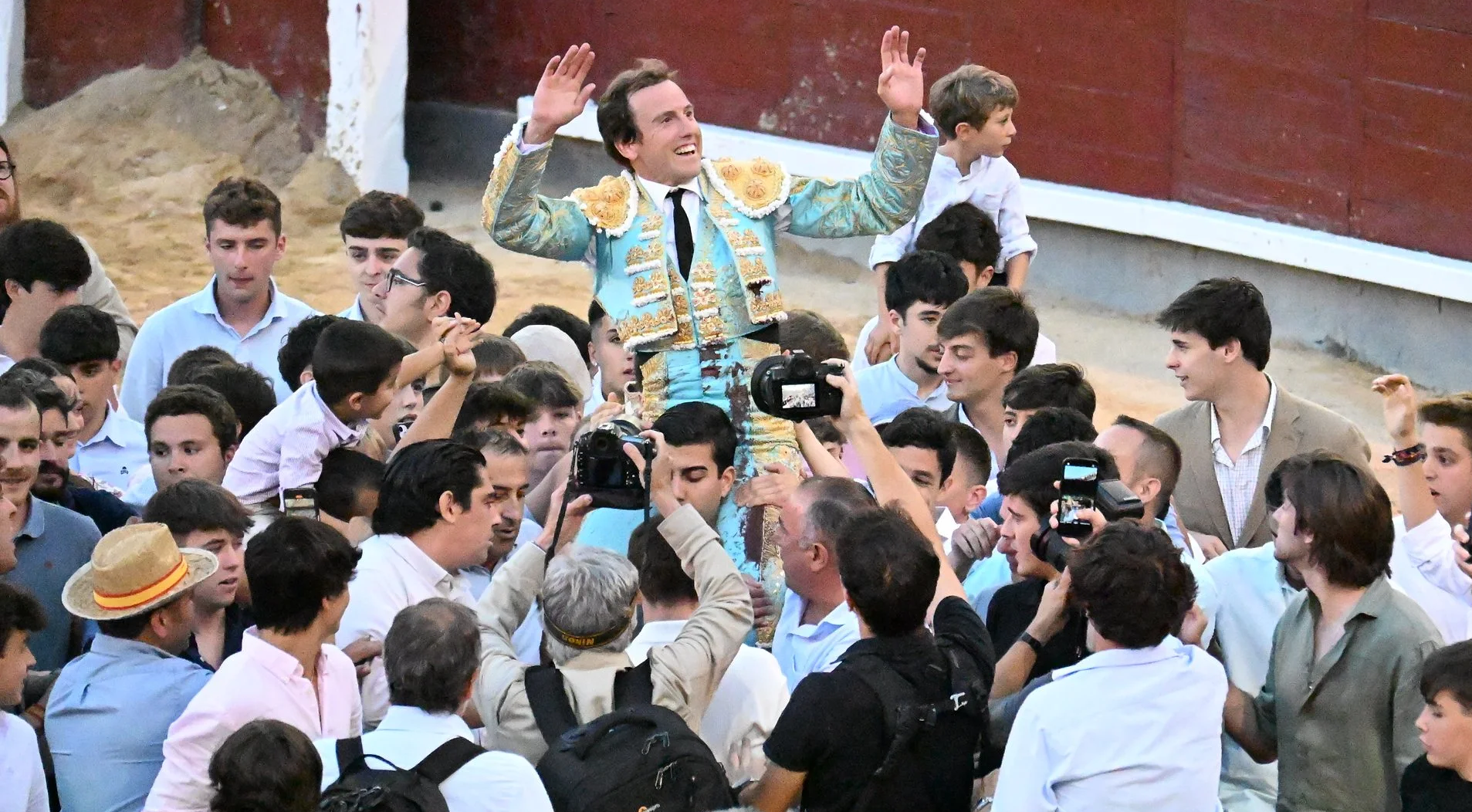
Román’s was one of two departures through the Puerta Grande in the Feria’s closing week.
It was good, after three weeks of watching the Feria’s corridas on Telemadrid, to finally get to Madrid and be able to view the last week’s festejos in person. This was my first sighting of the statue of Antoñete, commissioned by Morante de la Puebla, which now stands outside Las Ventas, and I have to say I was disappointed with it, particularly as, facially, there seemed to be more of a likeness to Paco Ojeda! Vox had set up their stall beside the statue - something that would have dismayed the bohemian Left-wing torero were he still alive.
May 31
With Morante appearing not so far away today at Aranjuez, I had some doubts that today’s cartel would attract reasonable attendance, but the plaza was full apart from the andanadas. The afternoon was to prove a triumph for the veteran Antonio Ferrera, and a predictably controversial one at that, Ferrera, with his romantic and iconoclastic ways, being a torero who gives rise to very different opinions. Today’s first two bulls from Adolfo Martín went by with little to note - the first exhibited a short charge and proved impossible on its left horn, while the second, for Manuel Escribano, had nothing to offer on either horn.
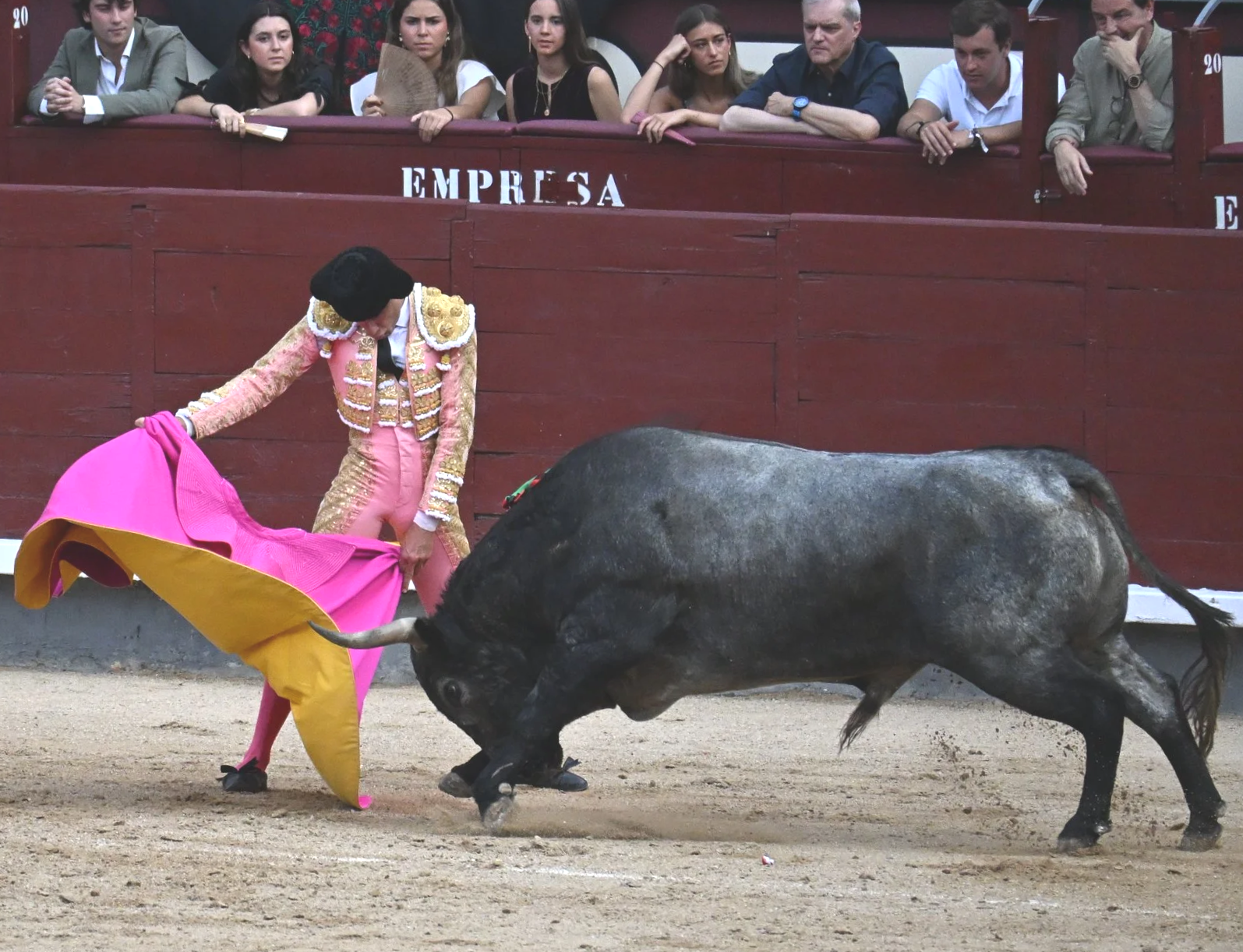
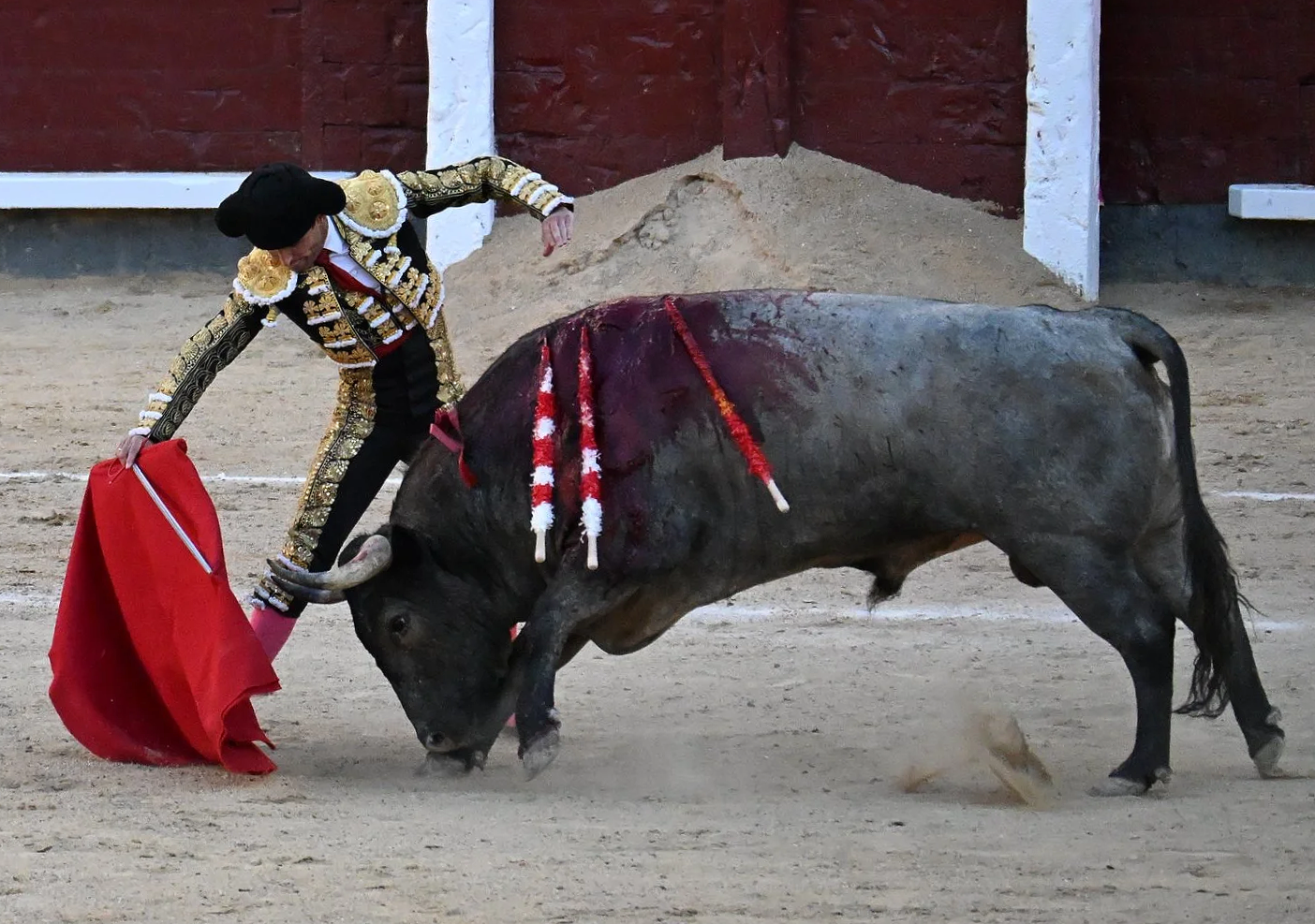
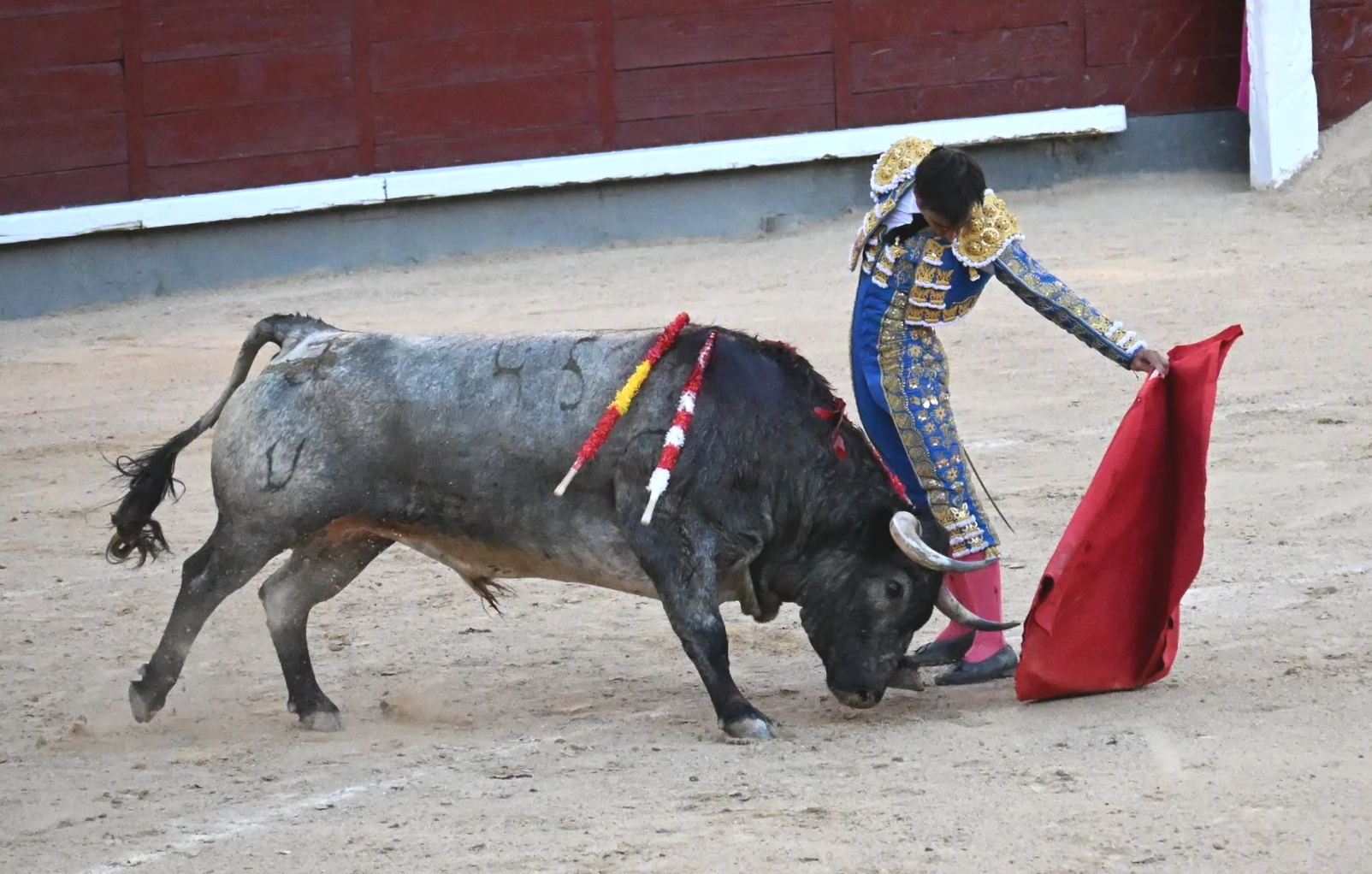
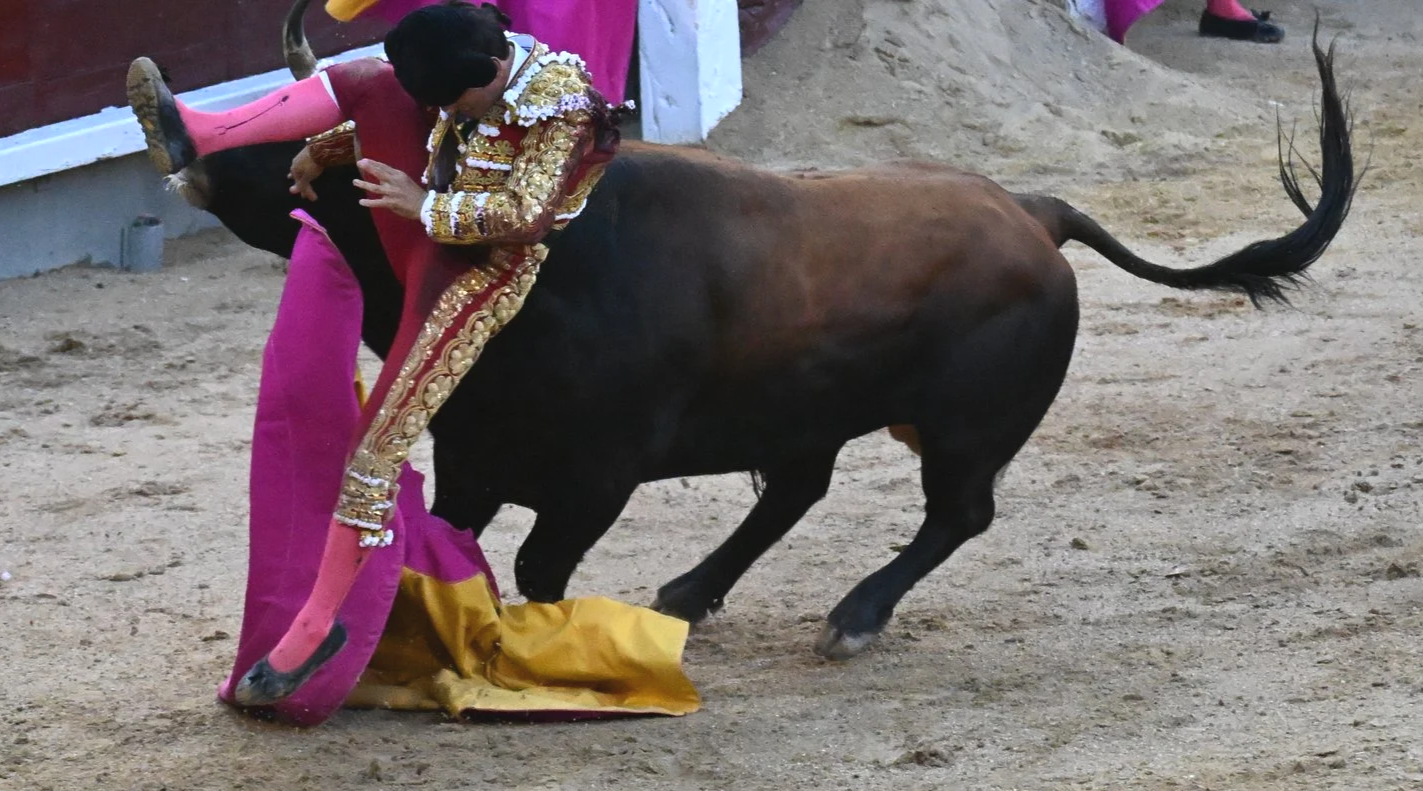
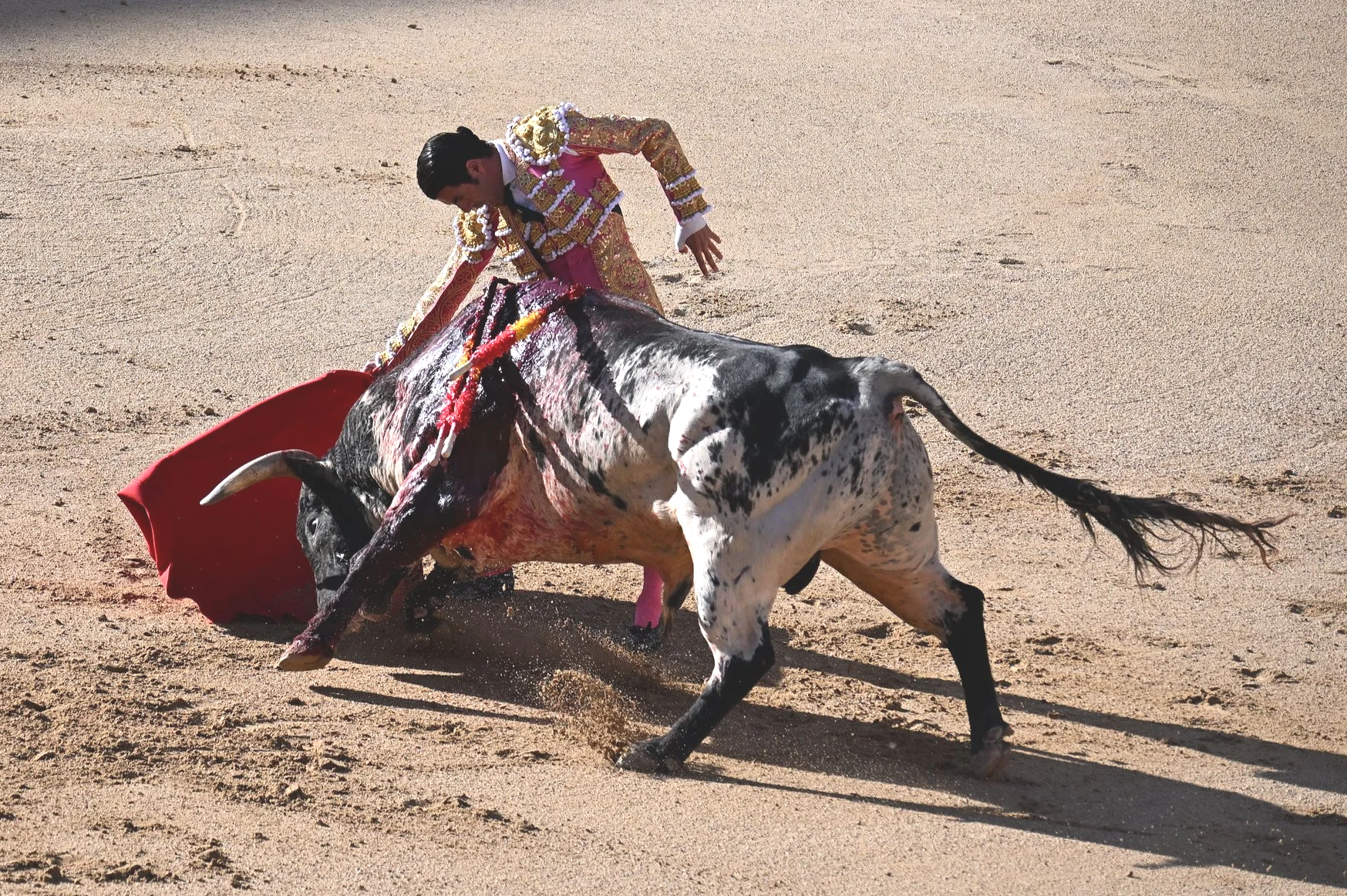
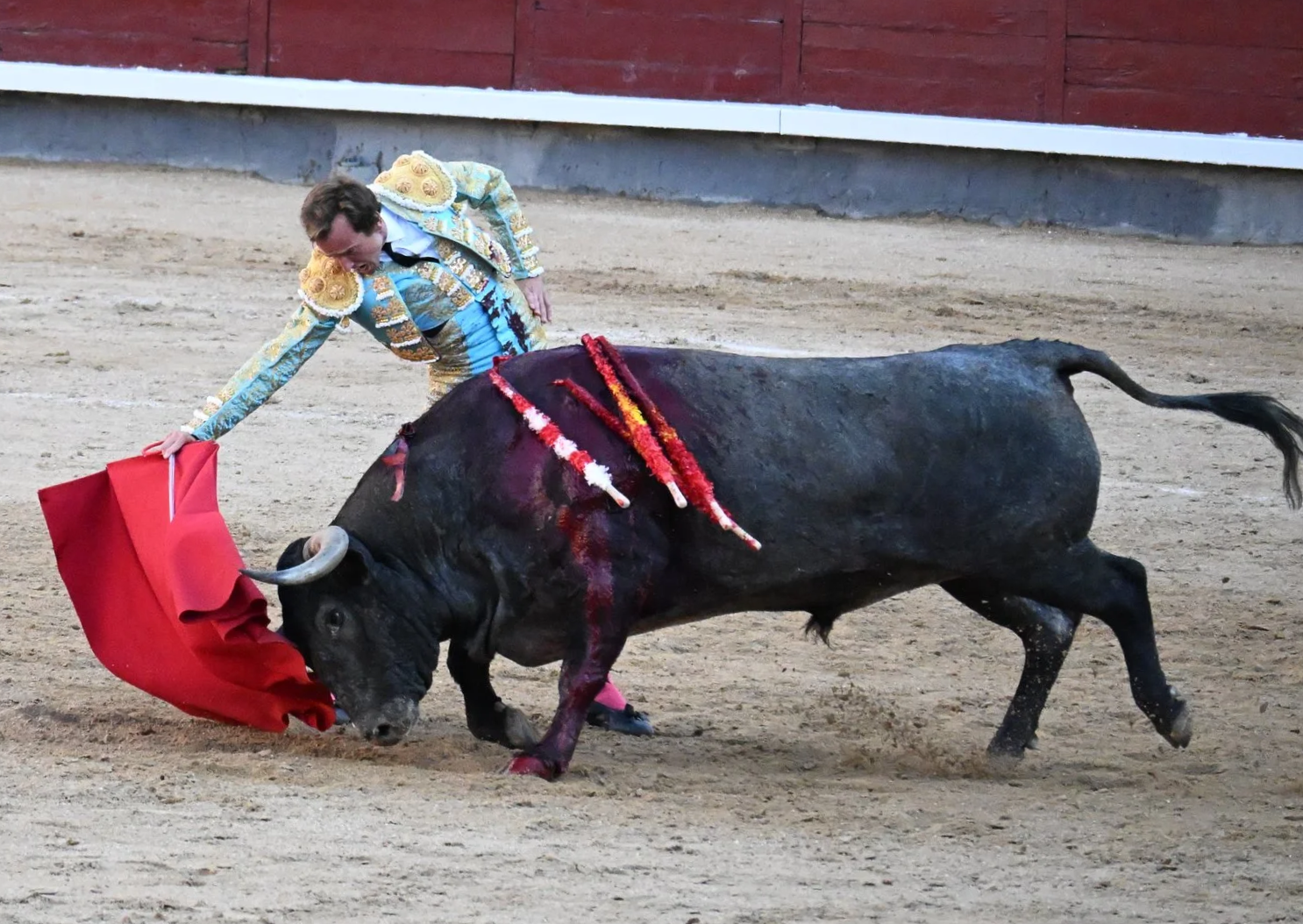
Paco Ureña began the lidia of his first adolfo strongly with verónicas (above), but soon suffered a cogida and cornada in the faena (below).
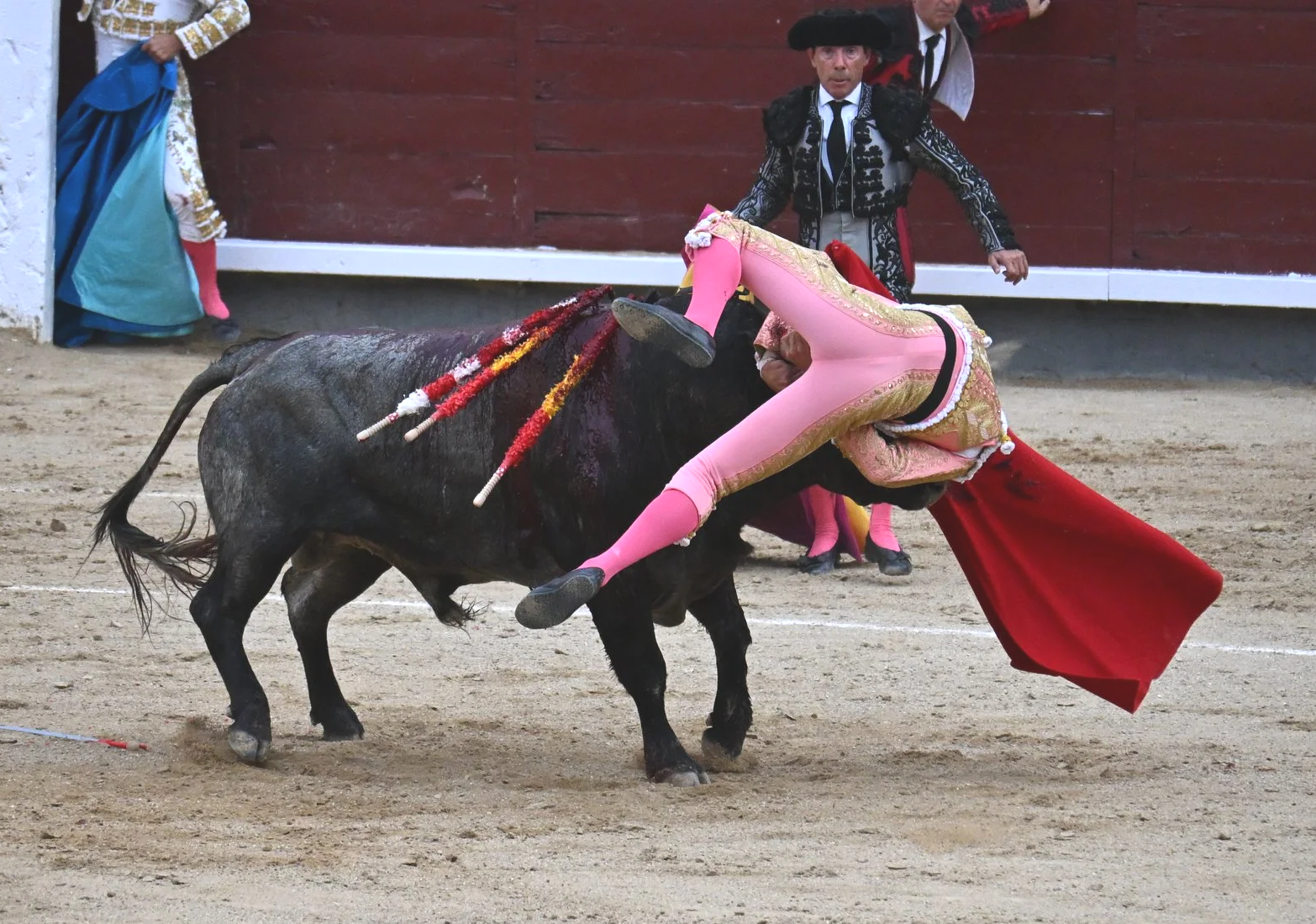
The third espada, Paco Ureña, however, impressed with some formidable opening verónicas and a media verónica, although his cuadrilla left a lot to be desired in their execution of the tercio de banderillas. In the faena, Paco set out to give linked derechazos to his adolfo, only for the bull to catch him in one of its rapid turns, inflicting a cornada grave in the murciano’s left leg that turned out to have trajectories of 10 and 20 cms. Ureña stayed in the ring, producing muletazos (and very nearly being caught again), then killing with a half-sword and a descabello, waving goodbye to the applauding tendidos as he walked away to the infirmary.
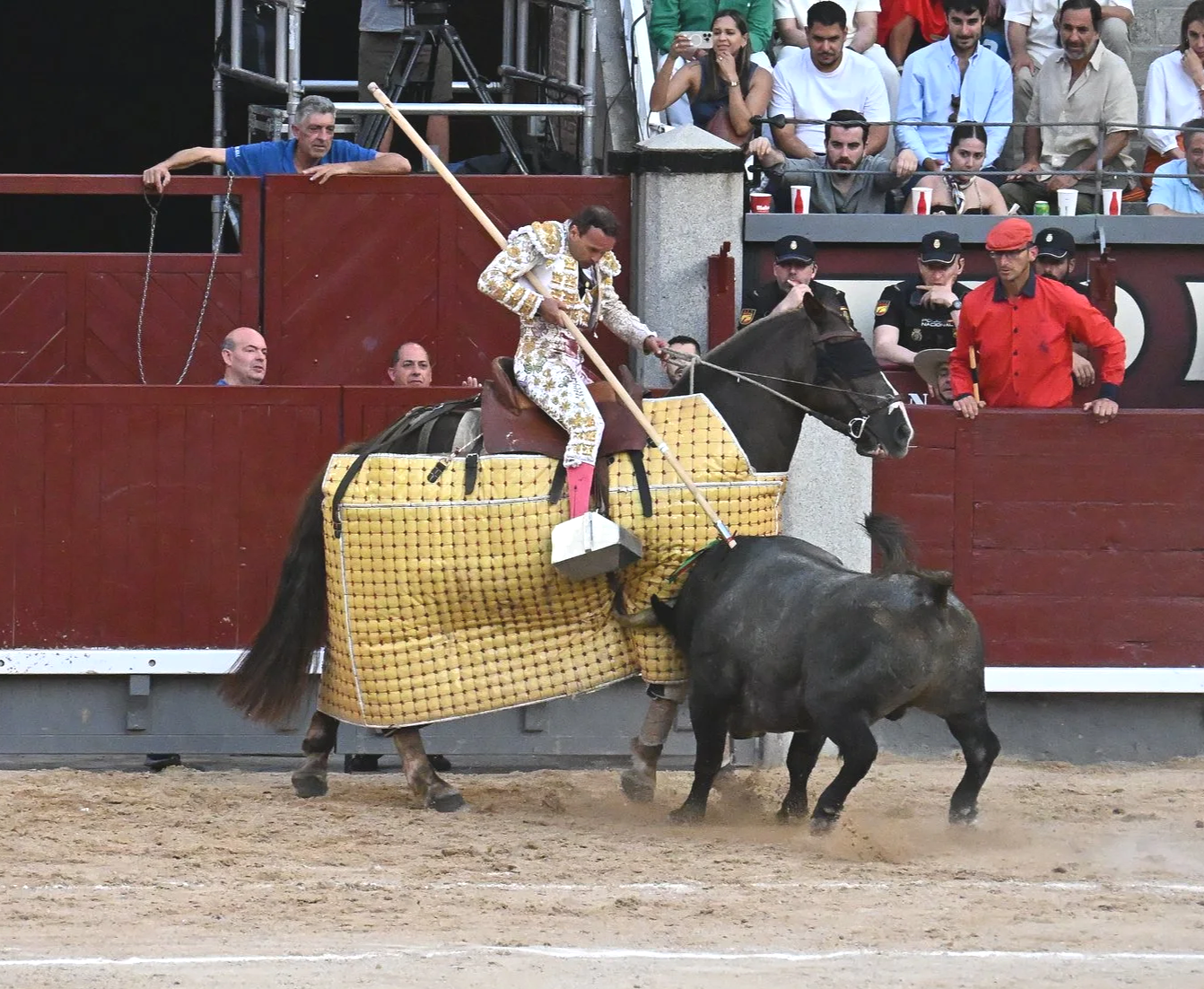
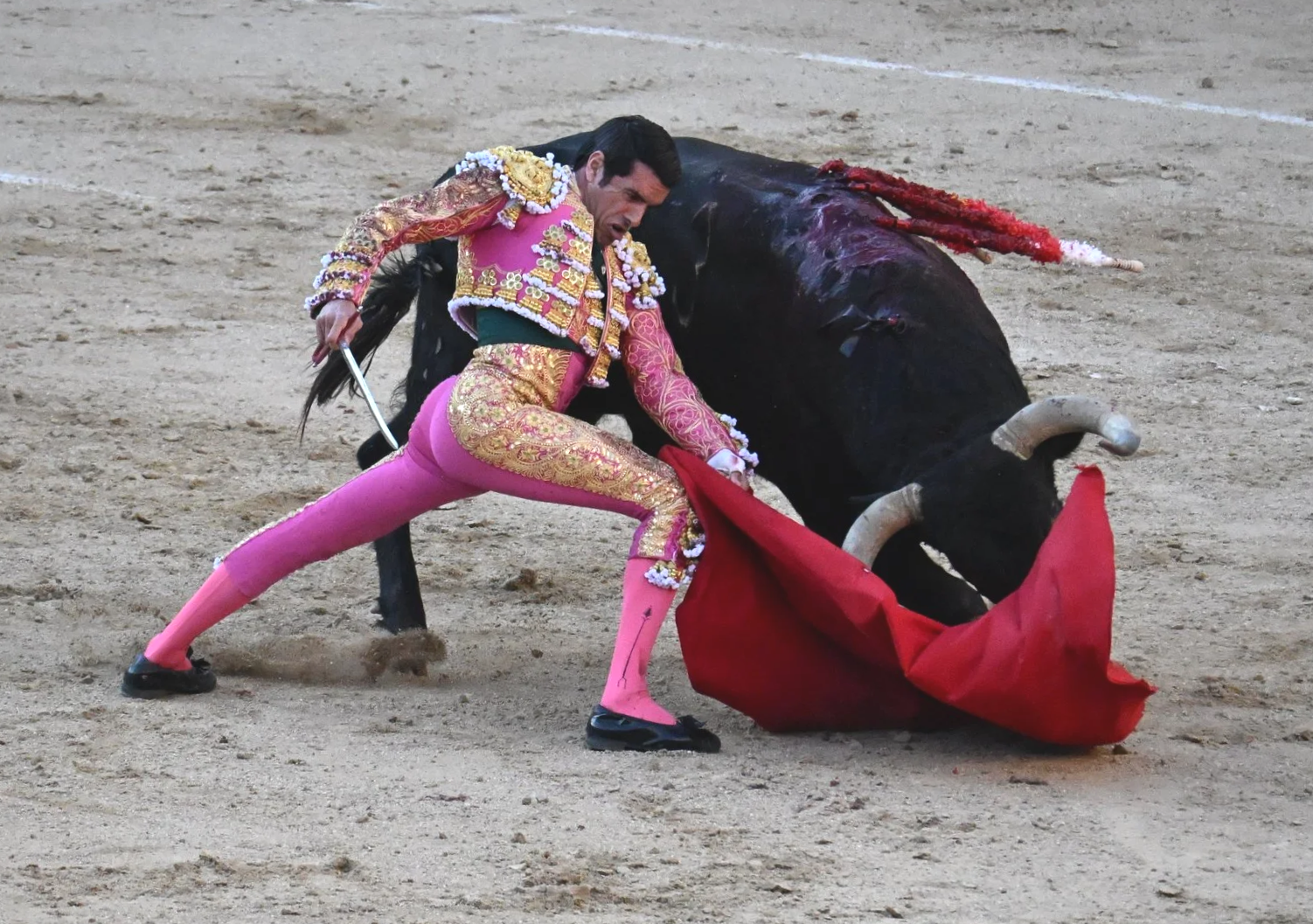
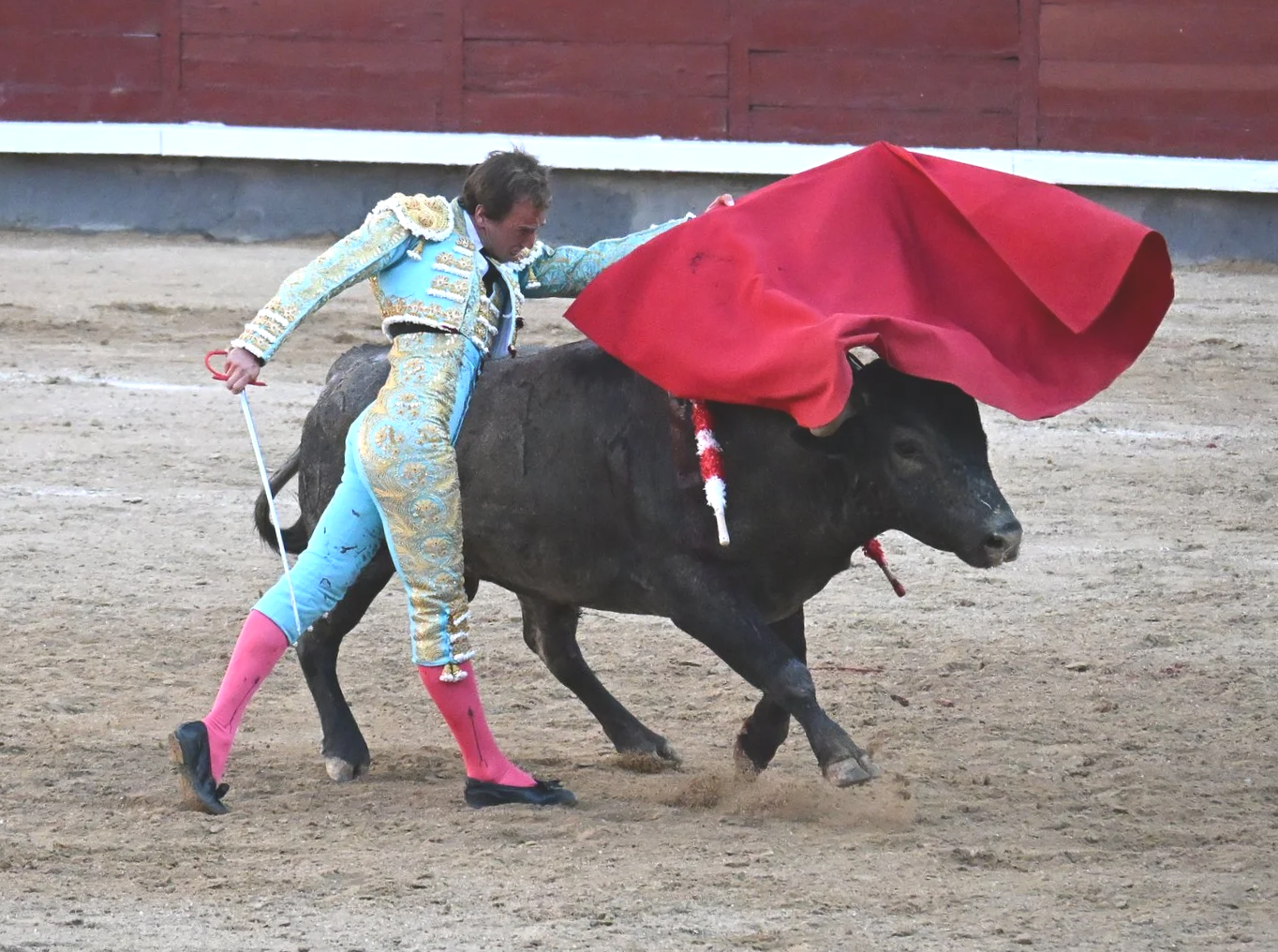
Antonio Ferrera’s Puerta Grande-winning performances were a mix of excellent classic toreo, as in the natural below, and typically eccentric actions, picing his third adolfo himself (above) and killing two bulls after walking in towards them from a distance (bottom).
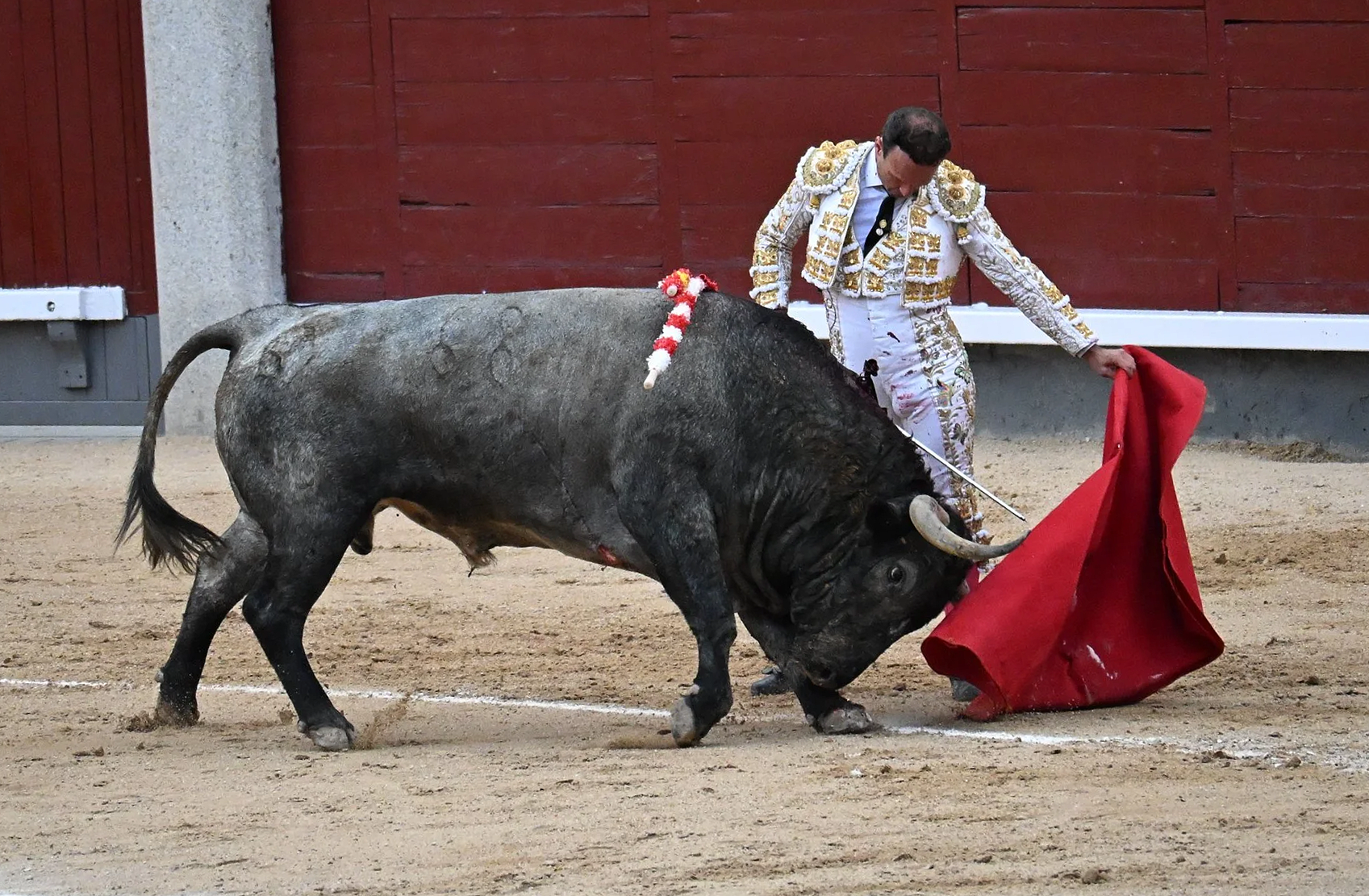
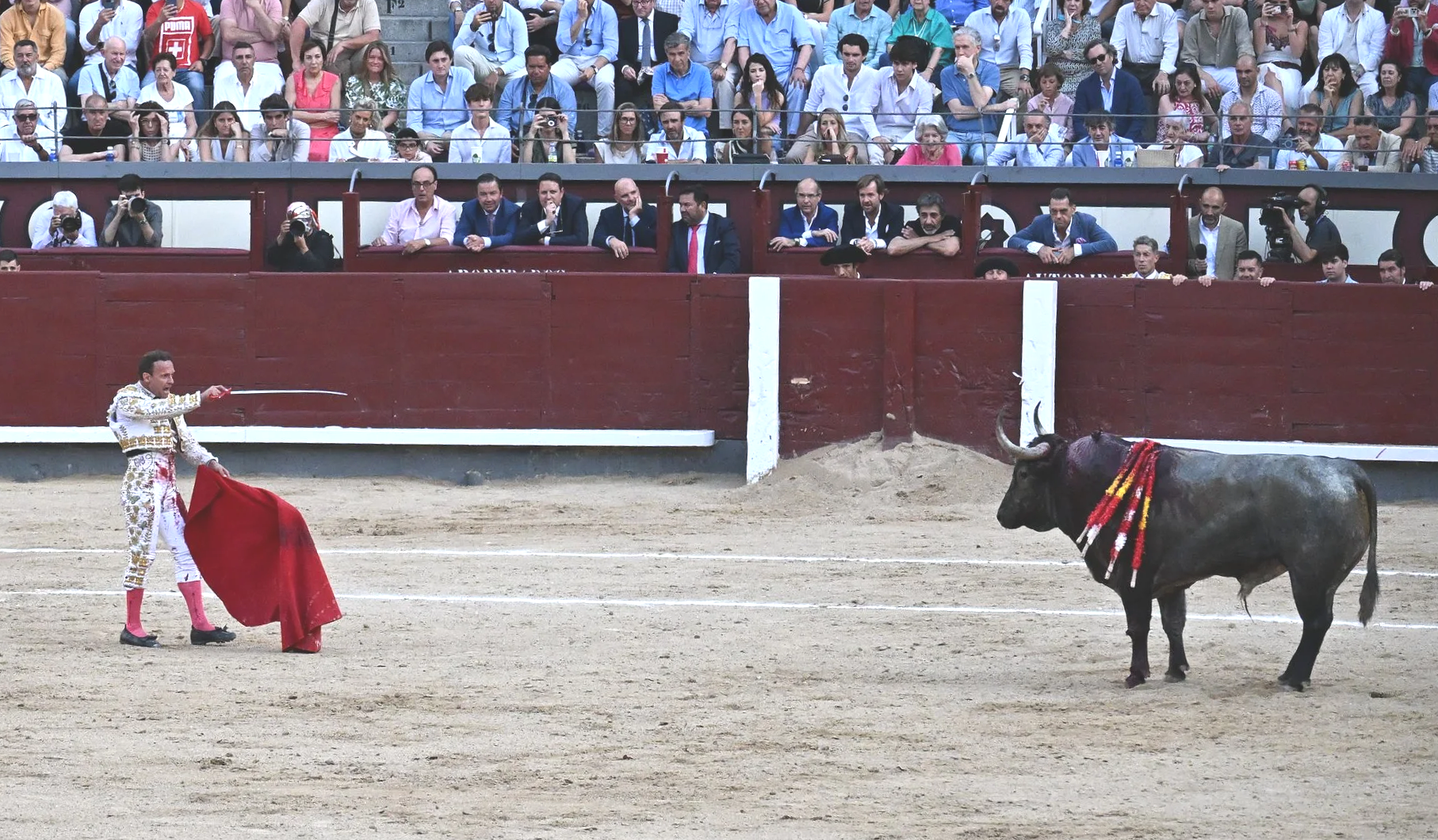
Paco’s departure left two further bulls for Antonio Ferrera. With the first, 'we were treated to an excellent faena, Antonio mainly dispensing with the ayuda to bring off templados series of derechazos and naturales, the bull, ‘Mentiroso’, an accomplice and the veteran stretching himself in passes. This was a wholly classical approach, until it became time for the kill, when Antonio, initially with the muleta on his shoulder, opted to cite from a considerable distance, walking in towards the bull to deliver a recibiendo swordthrust, unfortunately a pinchazo. Undeterred, however, the matador decided to repeat the spectacular suerte, this time successfully, and the subsequent petition resulted in the award of an ear. Ferrera’s approach with his final bull was more idiosyncratic. The initial capework included some occasional flourishes, then, when the picadors entered, the matador ordered one to dismount (a stark reminder as to how the standing of picadors has changed over the years) and took his place! Ferrera then piced the bull himself, handling three entries and picing well, even on the second entry when he decided not to employ the puya at all rather than place it with the adolfo already in the peto. The picing seemingly over, Antonio dismounted and ran across the arena, grabbing his blue capote from a peón, to bring off a quite. Then there was increasing uproar as the president refused to change the tercio despite the matador’s pleading; apparently, the regulations do not permit matadors to take on the role of picadors, so the president wanted to see two varas conducted by the proper person. In the end, in a confused situation, there was one more vara, no trumpet sounded for the change of tercio, and, after the banderillas (which, at one point, looked as if they might be placed by Ferrera, but in the end were not), Antonio did not seek permission to kill the bull from the president but instead went straight over to the barrera in front of the infirmary, where he placed his montera. This was a trickier adolfo, and the faena, although decent, was not as good as Antonio’s previous one, but the crowd was now firmly on the matador’s side. To end, Antonio placed the bull in the centre of the ring and pulled off the same suerte de matar as he’d performed last time, this time burying the sword in an al encuentro encounter, described as perfection by a neighbour of mine in the tendido. Despite the subsequent clear majority petition, the president left it late, but Antonio had won his second ear and a merited Puerta Grande as he had given the spectators an unforgettable afternoon with old-style adolfos.
June 2
Today’s José Escolar bulls were as beautiful-looking as ever (all were applauded on their entry to the ring) and made for a better showing than in their desafío with Rehuelga bulls here last September. However, the first matador on today’s bill, Pepe Moral, was sin ideas y sin recursos, so we never saw his two bulls at their best. He dedicated his first to the plaza, only to be extremely tentative in the faena, creeping up on his bull as if about to steal something. Only when the animal had slowed to an almost complete standstill did Pepe perform decent passes - single ones, of course. With his second bull, he was even worse, before killing with two swordthrusts and half a dozen attempts to descabellar in which he was so far away from the bull he was stretching to reach the animal.
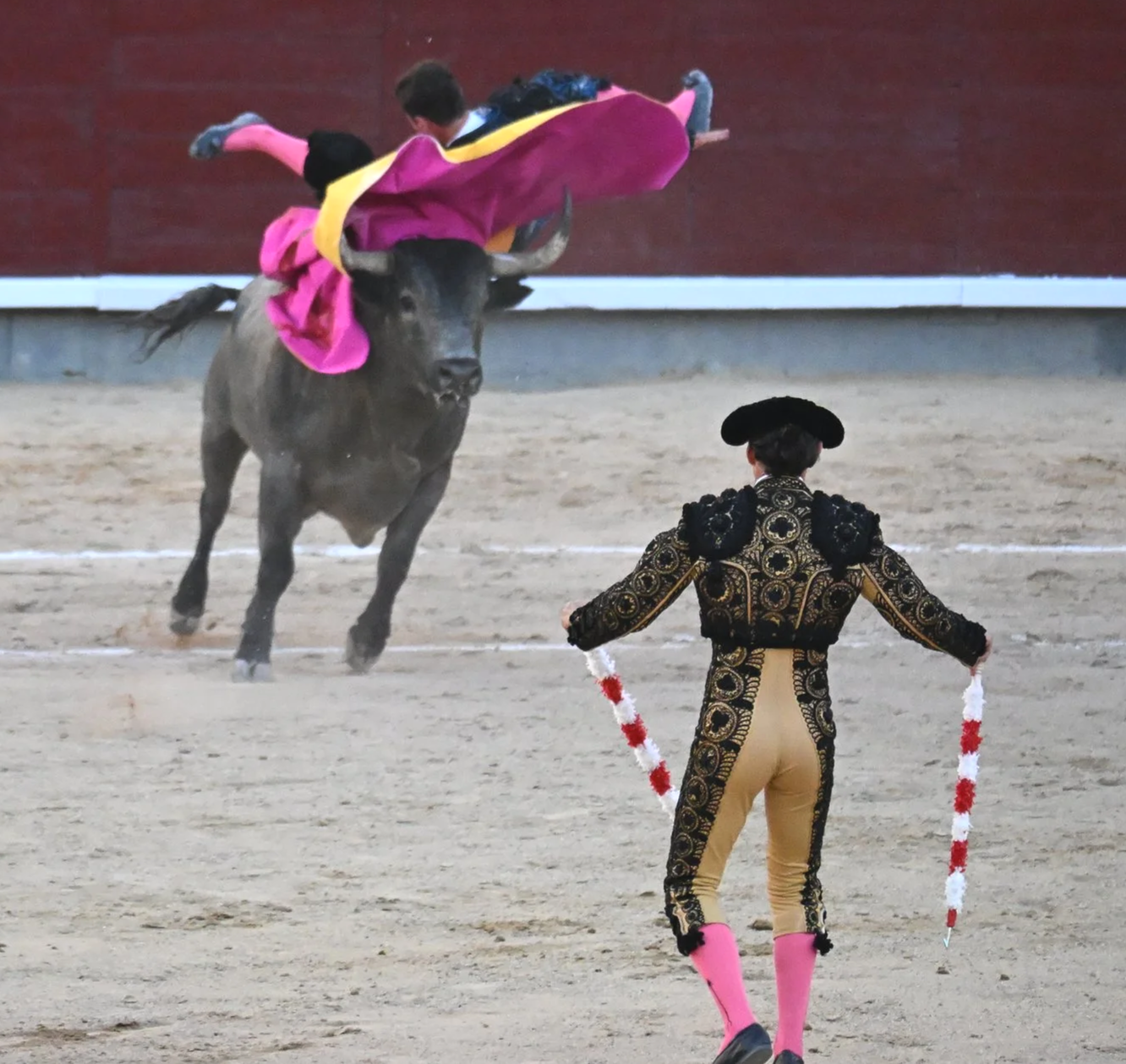
Rubén Sánchez was caught, gored and tossed while giving the brega to the fifth of today’s José Escolar bulls.
A do-or-die faena was then embarked upon by Sánchez’s matador, Damian Castaño.
Damian Castaño had a difficult first animal that leapt in the capework and, come the faena, was not keen to come forward and, when it did, looked for the man. His second was another tricky beast that caught peón Ruben Sánchez during the tercio de banderillas, sending him to the infirmary with a cornada grave in his right knee and a bloodied face. Castaño kept his montera on for this faena and managed to perform derechazos and naturales at great personal risk, using his feet a lot to get out of trouble, which frequently occurred as he tried to give his tandas proper endings. After delivering a pinchazo, the matador fell and was almost caught, but the bull’s attention was by now elsewhere. As Damian said later, sometimes toreo is not about beauty, but about emotions; this had been a scary faena, the matador clearly putting his life on the line to bring off passes, and, after an estocada and descabello, an appreciative audience encouraged the salmantino to take a vuelta.
A calmer, more thoughtful, faena was given to the last bull of the corrida by Gómez del Pilar, whose swordwork cost him any trophy.
Noé Gómez del Pilar experienced a difficult time with his first escolar, a beautiful animal that charged in strongly to the picador, but which offered nothing on the left horn and was curious about finding the matador just as much as the muleta. The torero was whistled after his protracted attempts to kill. His other animal, ‘Buenacara’, was strong to the horse and looking for the man too, and the banderilleros were reluctant to get to grips with it. But, in a faena de menos a más, Noé calmly set about toreando the bull cleanly, realising some excellent passes, especially naturales, despite also having to grapple with the wind that had plagued the corrida throughout. He would most likely have been awarded an ear were it not for the two descabellos that were required to finally drop his opponent, the madrileño receiving an ovation instead.
June 3
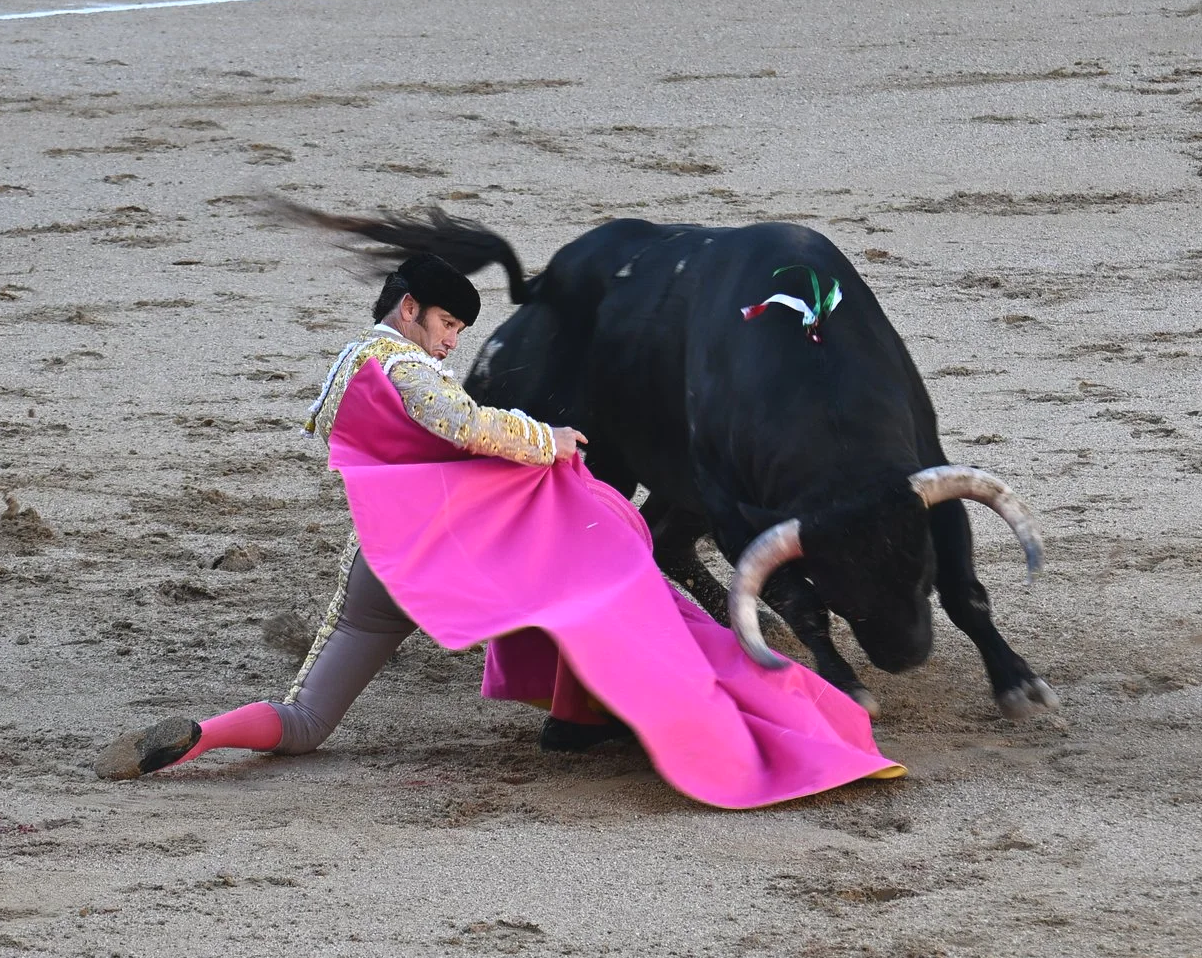
José Garrido on his way to winning an ear in what he later said was his strongest ever performance in Madrid.
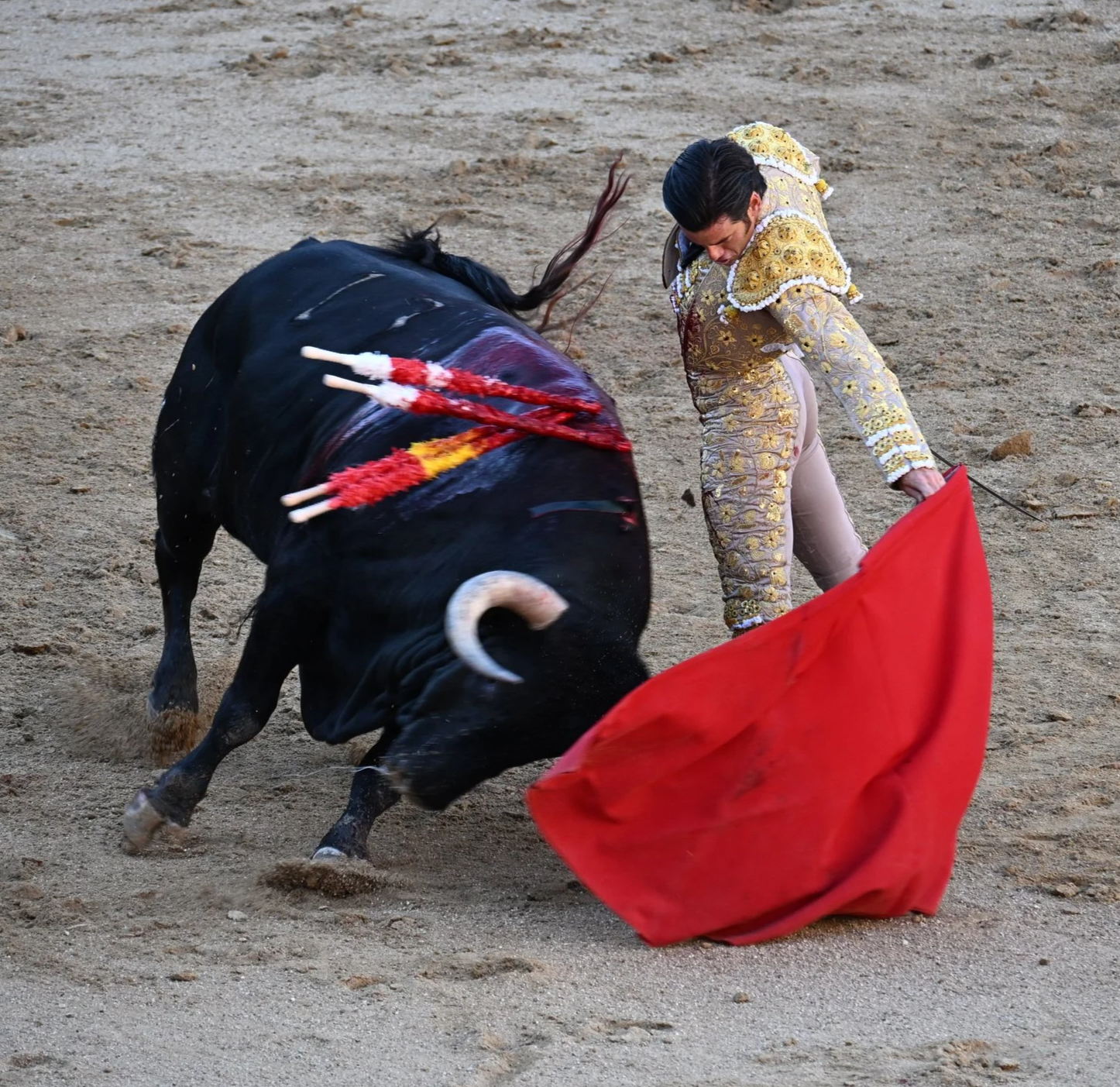
With the announced string of Lagunajanda bulls rejected by the vets and replaced by an encierro of Montalvo animals previously set for the final of the Copa Chenel, today’s corrida was an opportunity for young matadors to stake their claim for a place on the main feria circuit. The most experienced of these, José Garrido, had his first montalvo devuelto and replaced by a bull of Casa de los Toreros, which he greeted with some splendid half-kneeling capotazos, then followed through with a quite of chicuelinas, given with the feet together, and a superb closing larga. The faena was begun with half-kneeling passes too, Garrido going on to perform some fine tandas of derechazos and even better naturales, turning the bull around him and closing with chest passes. Unfortunately, today’s strong wind began to complicate things and sap Garrido’s confidence, but he ended with another impressive series of linked naturales and a no-nonsense estocada to win a deserved ear. José met his second bull a portagayola, showing his ambition for an even greater triumph, before giving verónicas and a media verónica in the centre of the ring. He began the faena by passing the bull from on his knees and went on to produce some fine muletazos, but the animal was soso and was killed with a half-sword and two descabellos, Garrido taking saludos.
The corrida also saw strong performances from Ismael Martín despite a nasty tossing during capework with his second bull. The salmantino placed some fine banderillas (below) and was fearless in his killing (bottom).
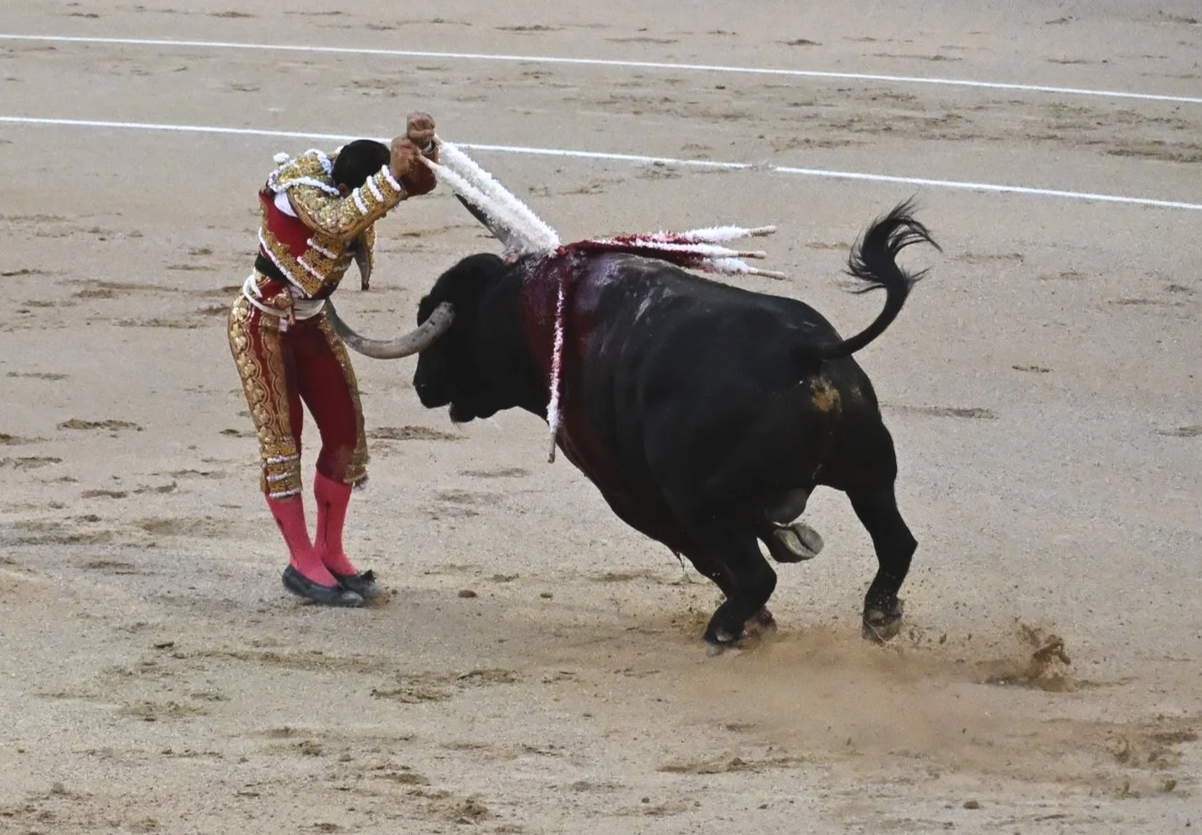
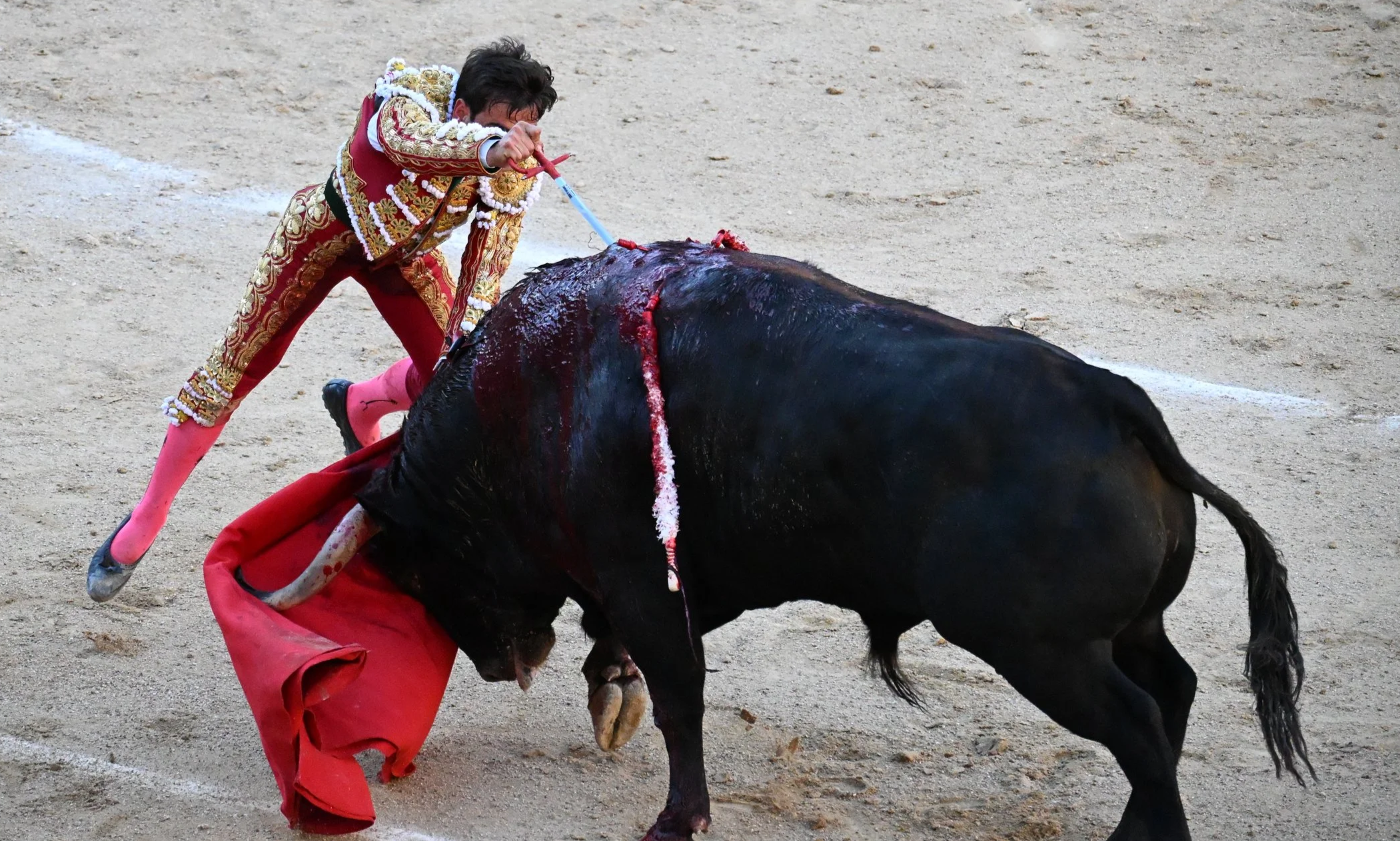
Ismael Martín came to Madrid determined to prove his worth and got off to a promising start with his first montalvo, showing variety in the initial capework - two largas de rodillas, two verónicas, three chicuelinas and a media verónica de rodillas - and again in a quite. His third pair of banderillas was of high quality, although his running in front of the bull afterwards in Fandi style wasn’t approved of by a sector of the ring, applause still winning out over the pitos. Ismael began his faena with an adjusted pase cambiado por la espalda, then produced linked series of derechazos and naturales, although the bull was passing at mid-height rather than humillando. There was a terrific estocada at the end, the young matador diving over the bull’s shoulders to place the sword and emerging with blood on his face, so low did he follow the sword through on the bull’s back. The petition for an ear was a minority one and the suggestion that Martín should take a vuelta was protested and consequently called off. Determined to make an impact, Ismael met his second bull a portagayola twice as the initial montalvo was devuelto, albeit not before it had caught the matador badly in his opening capework, throwing him high but doing no more than ripping his taleguilla. The sobrero, from Fermín Bohórquez, was given excellent verónicas and a revolera, two pairs of banderillas placed from the side and a final pair placed head-on whilst running backwards which brought several spectators to their feet. After dedicating to the tendidos, Ismael produced a good faena with another bull that kept its head high. A series of closing bernadinas, Martín switching the muleta from one side to another at short notice, raised the temperature further, a pinchazo and estocada caída leading to a strong petition for an ear which the president opted to ignore. Ismael took a vuelta instead, Tendido 7 protesting the action once more.
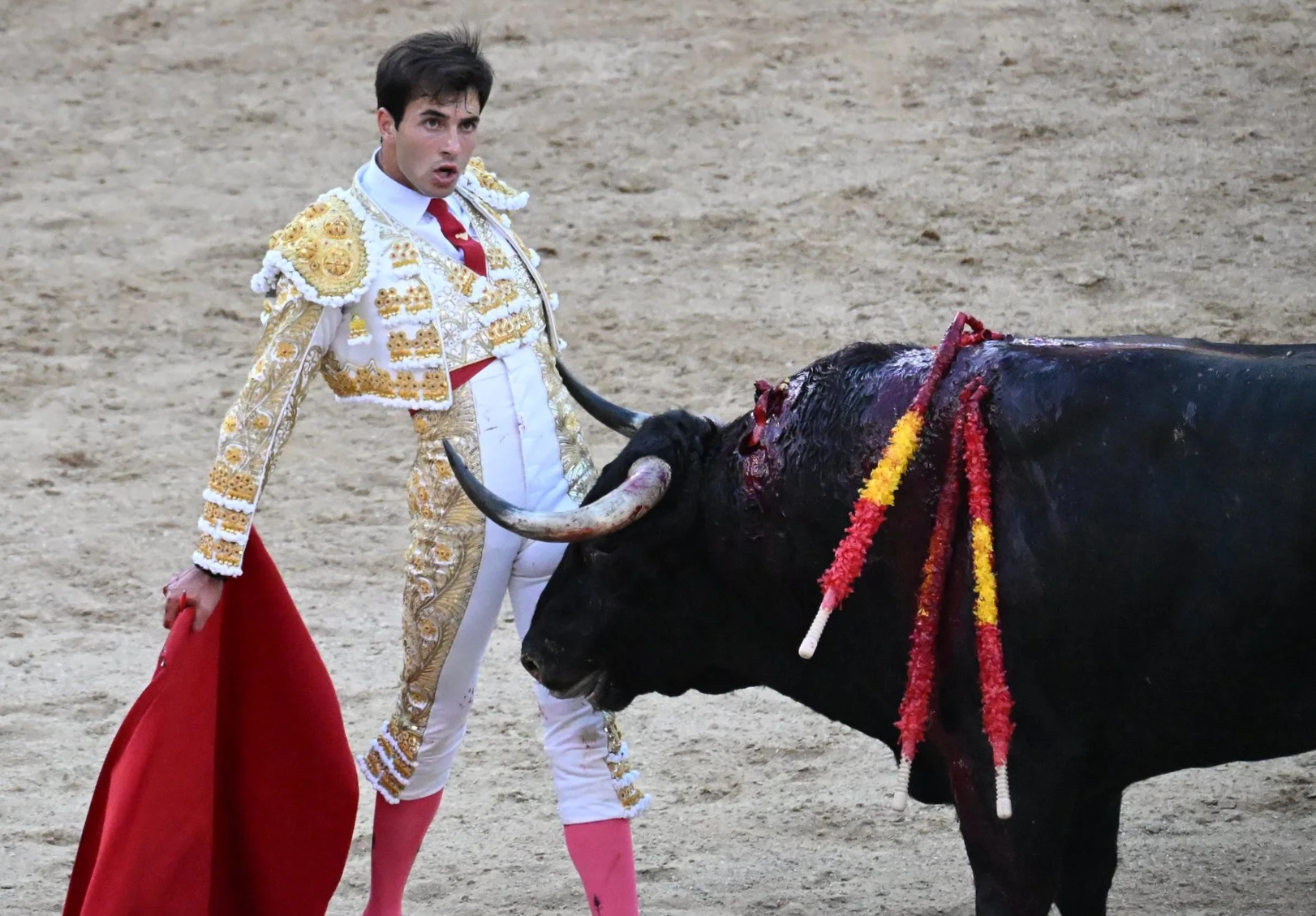
Samuel Navalón getting close to the horns
In an entertaining corrida, Samuel Navalón, the Las Fallas triunfador, was not to be left out. His opening wide-horned montalvo was protested on entry and transmitted its weakness throughout its lidia, Samuel ending up performing circulares that ended with the matador’s waist in between the bull’s horns. He took saludos to a division after killing well. He, too, met his final bull a portagayola, going on to perform two largas cambiadas de rodillas, verónicas, a media verónica and a revolera. After dedicating to the public, Navalón began the faena from on his knees, then stood for a pase de pecho and a natural mirando al público. Some fine series of derechazos followed, then, after moving the muleta to his left hand, Samuel was tossed. Dispensing with his shoes, the matador performed further naturales, then more series of derechazos, withstanding his bull halting mid-pass. He closed with swordless manoletinas and chest passes and would most likely have cut an ear were it not for the media estocada that preceded a fine swordthrust.
June 4
Emilio de Justo delivered two strong faenas, but in the end had nothing to show for it.
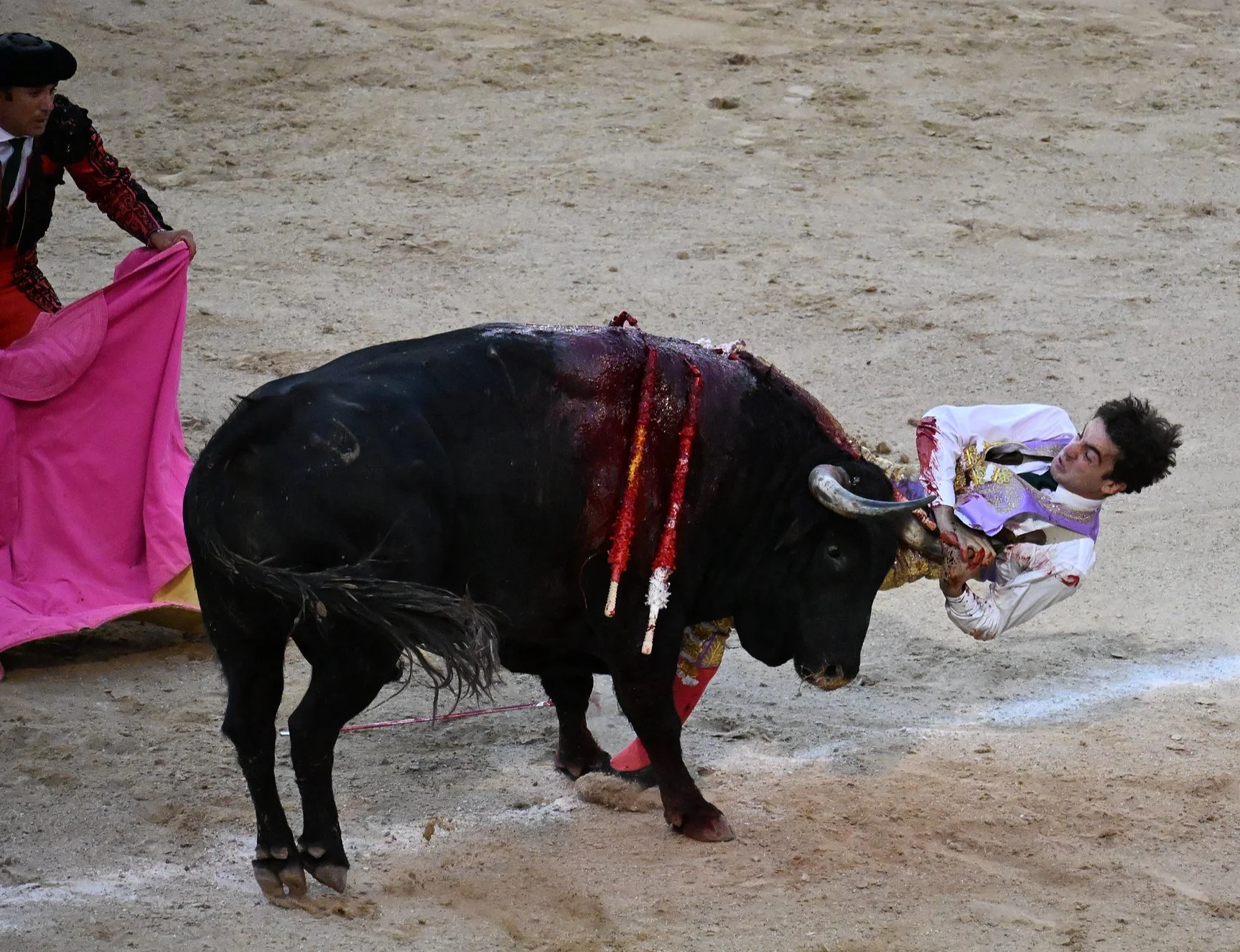
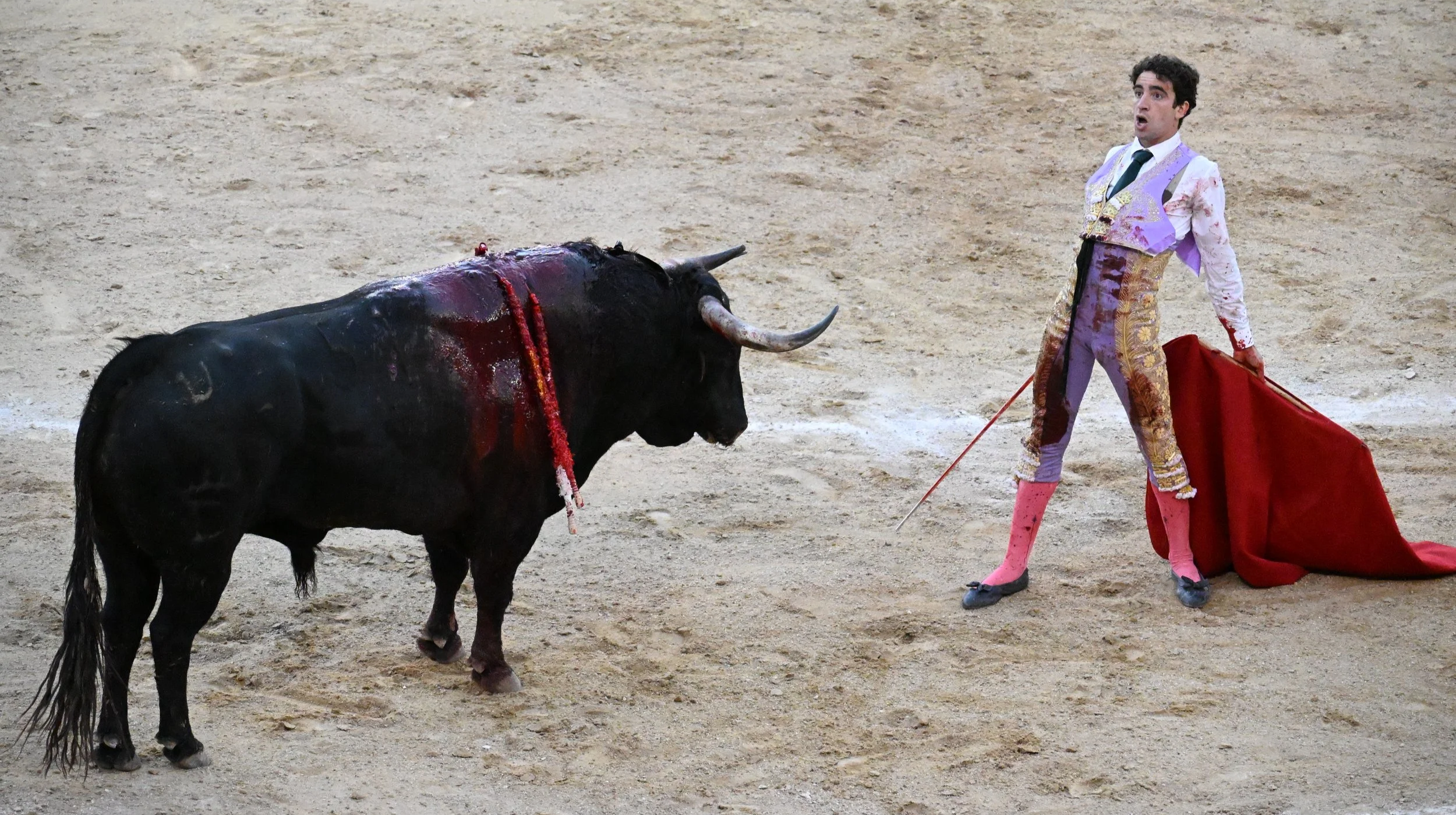
The two silences at the end of the lidias of Emilio de Justo’s Jandilla bulls today didn’t reflect the quality of the faenas the extremeño produced - he would probably have won an ear from each and left through the Puerta Grande were it not for his struggles with the estoque. The speed with which Emilio passed his bulls was offputting for some spectators, but, after a 2025 temporada in which the matador and his bull were frequently far apart, Emilio’s embroques are close affairs once more. His first jandilla was given some well-timed derechazos, a couple of templadas trincheras, a cambio de mano and a great chest pass to take it to los medios rat the start of its faena, de Justo going on to produce smooth linked series on either hand, the derechazos and naturales interspersed with chest passes, molinetes and trincheras. But it all fell apart with a poor media estocada, a bajonazo, two avisos and 10 descabellos. Emilio’s other bull was initially protested as being cojo on a hindleg, but charged strongly come the faena, dedicated to the public. De Justo embarked on terrific linked series, bringing spectators to their feet on a number of occasions, and inserting more variety in his passes as the faena progressed. Alas, troubles with the sword arose again, his estocada being caída and placed very far back, and the post-faena applause was limited to the bull en arrastre. Today featured one of the most attractive carteles of the Feria, but Borja Jiménez, while physically present, was absent in spirit, the more charitable commentators saying his mind was on his six-bull encerrona here in three days’ time. That left 25-year-old Víctor Hernández., like Borja provided with one jandilla and one bull of Santiago Domecq. The madrileño dedicated his first bull to the public, which was a mistake as the animal simply trotted to the cloth and exhibited a short charge. There were some promising passes, even tandas, but the material for a triumph wasn’t there, and a pinchazo, half-sword and descabello settled things. His Santiago Domecq opponent was made of sterner stuff and slammed into Víctor for a punishing opening cogida, its right horn piercing one of Víctor’s sleeves and dragging the matador out to los medios before man and bull could be separated. Amazingly unscathed and now jacket-less, and with the bull given a punishing time en varas, Hernández tried to produce a respectable faena, bringing off some fine passes, but also experiencing a number of near-cogidas. Then the bull caught him again, lifting the matador as he held on to one of its horns. It was another terrifying moment, but, once again, Víctor was unharmed. Showing utter sangfroid, Víctor set about giving passes once more before producing the best estocada of the afternoon, although several descabellos followed before the bull sat of its own accord.
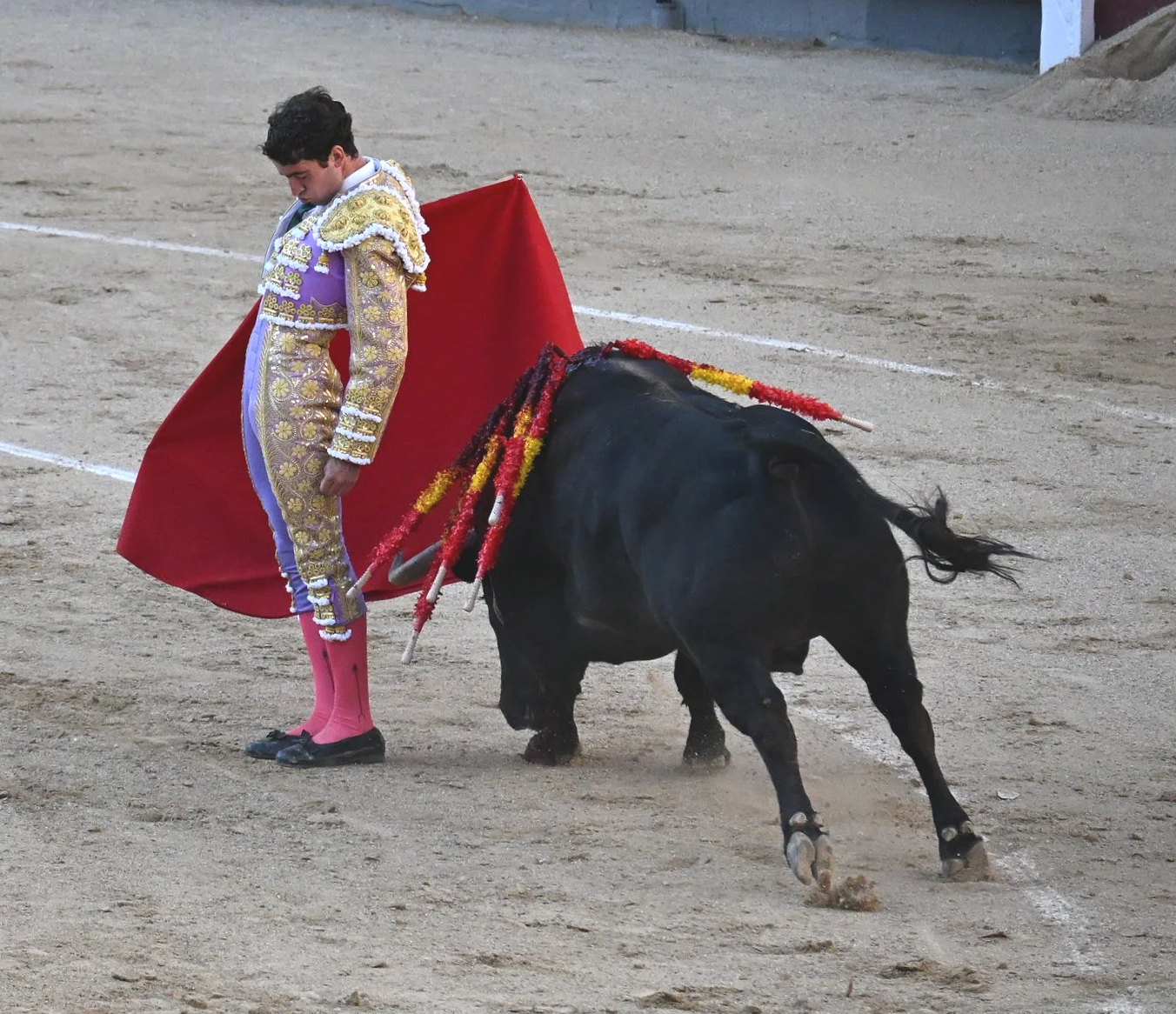
Víctor Hernández at the start of his first faena.
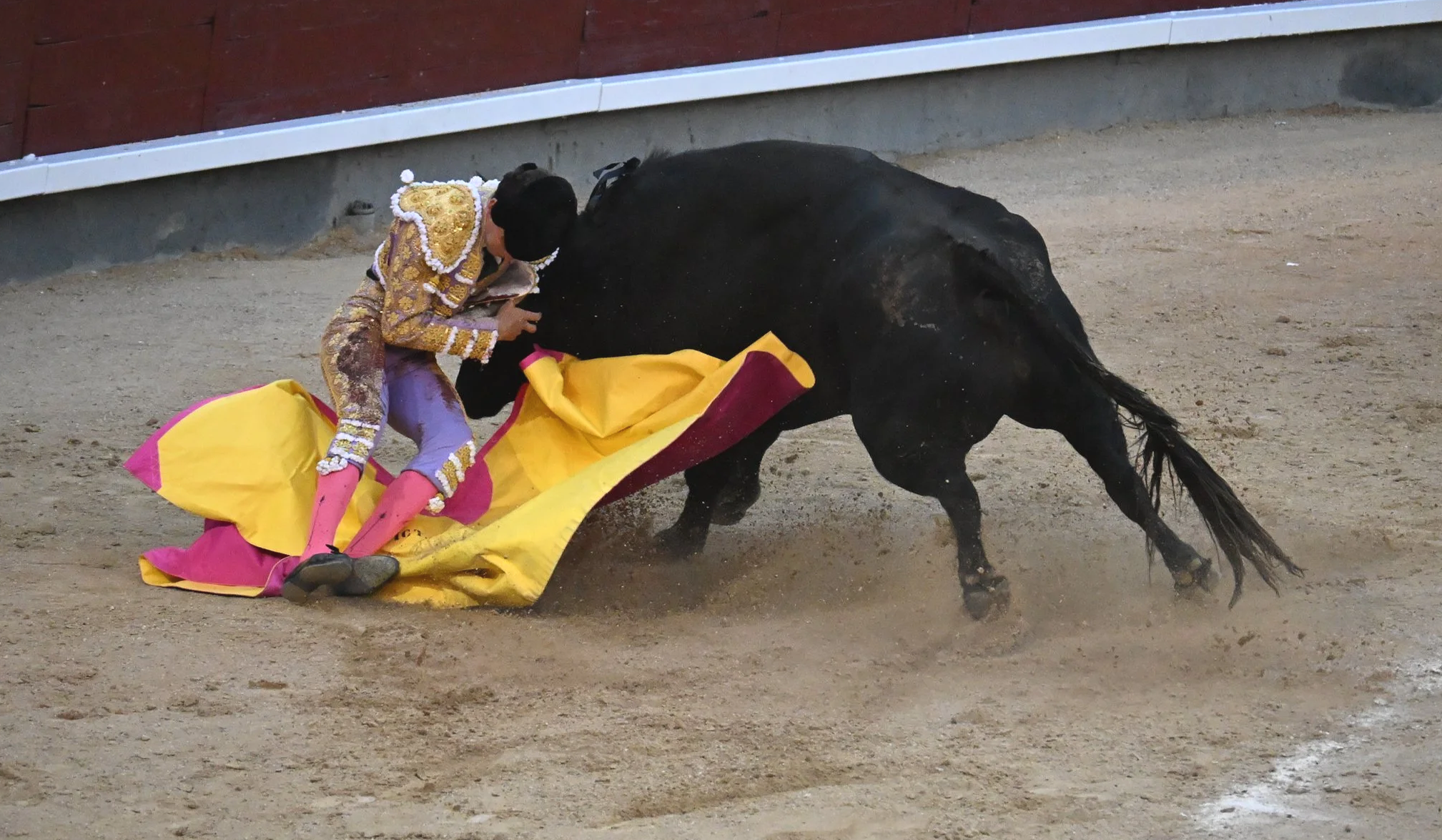
With his second bull, he suffered two terrifying cogidas.
Nevertheless, Víctor survived to fight another day, his stoicism impressing the Madrid public once again.
June 5
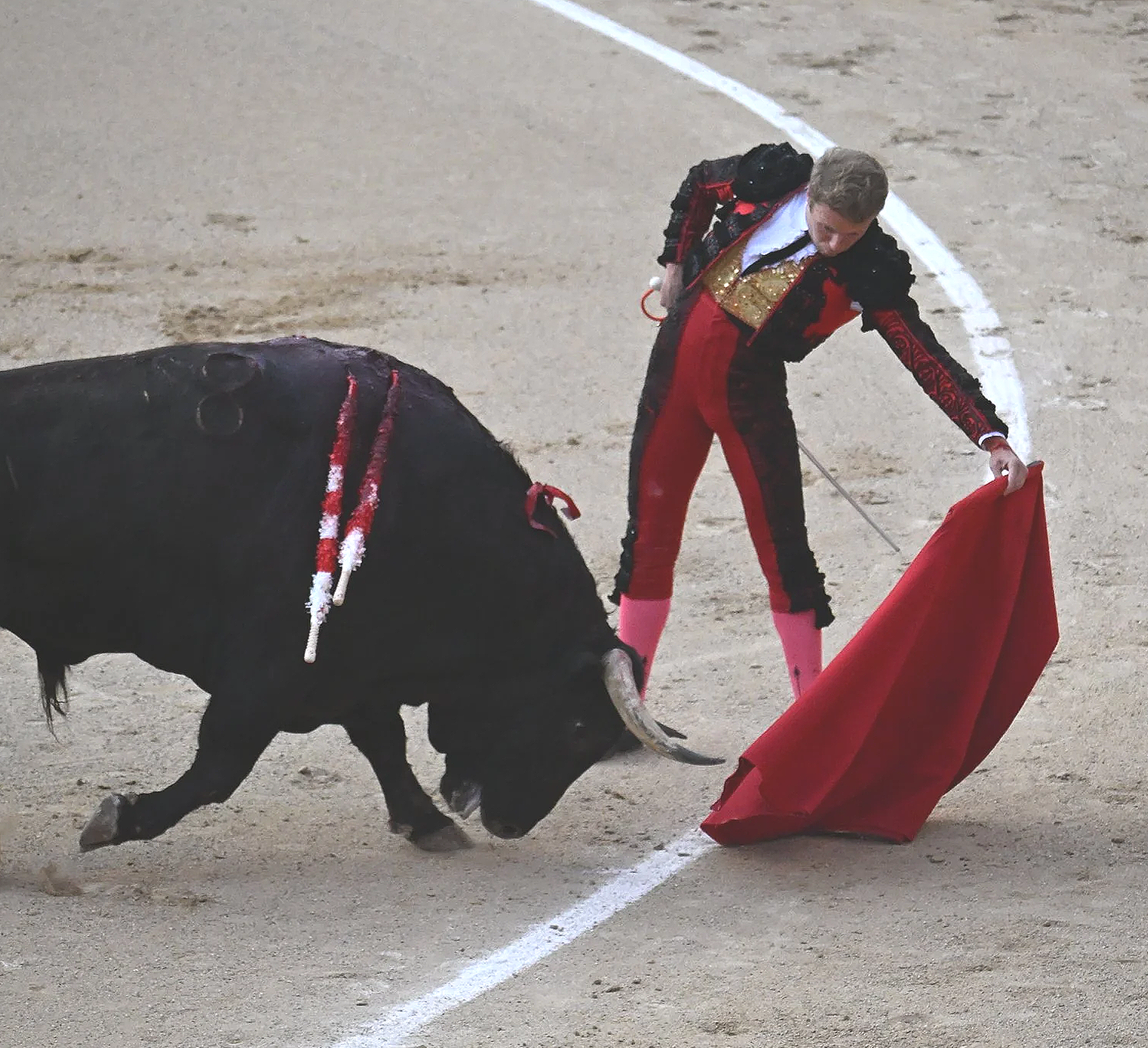
Clemente impressed with his toreo to the dangerous fifth bull. Fortunately, the cogida (below) was not as bad as it looked.
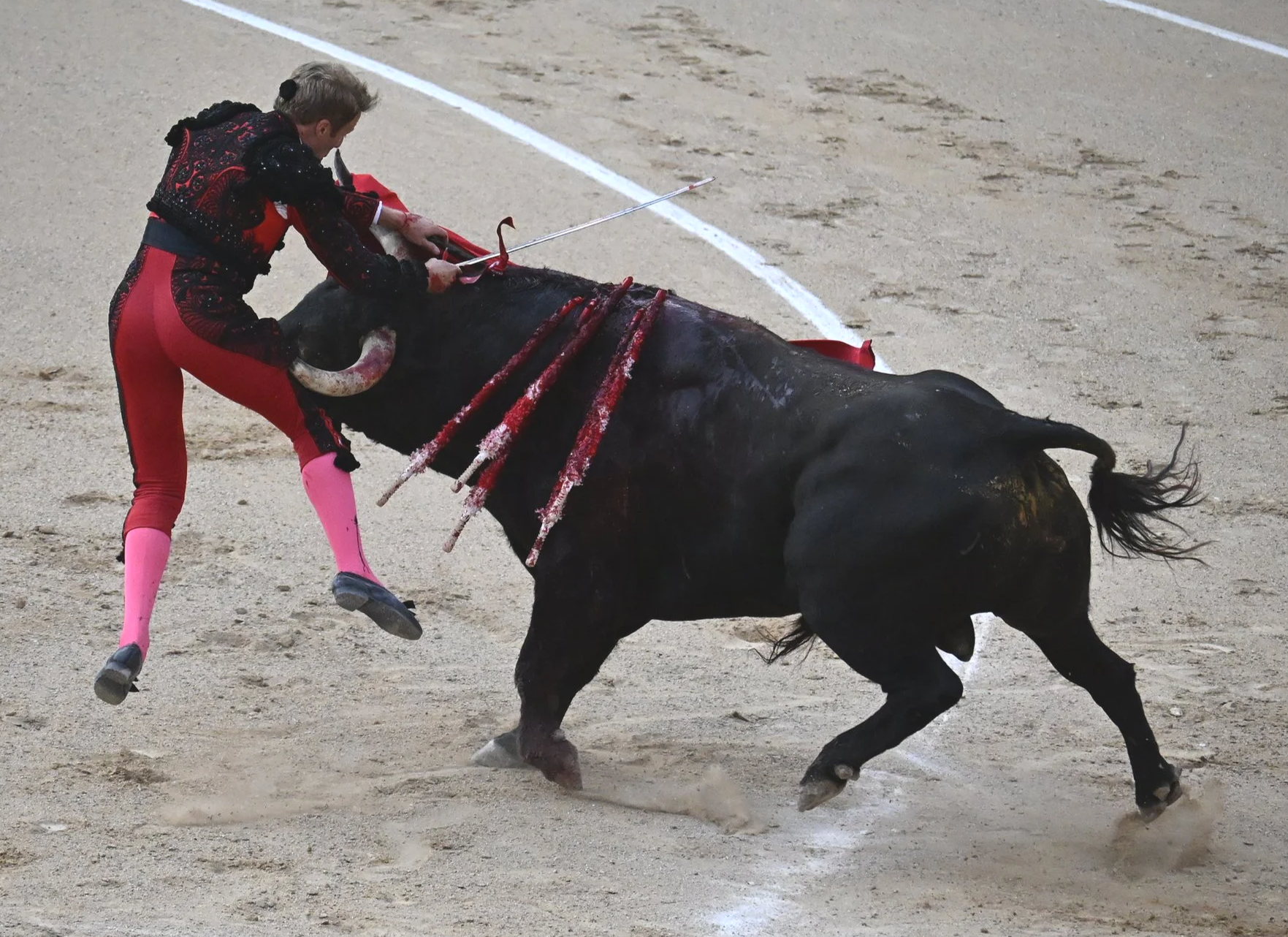
There were high hopes for today’s corrida de artistas, particularly after the good showing of the Juan Pedro Domecq ganadería in its opening San Isidro corrida on May 28. However, the string for this second corrida proved very different, the bulls being either weak or difficult. Ignacio Uceda Leal had an initial bull that turned quickly and increasingly sought the torero’s legs; he gave it some brief verónicas and a media verónica and a faena that soon became one of simply giving cutting passes in preparedness for the kill - a one-third estocada and three descabellos. Ignacio met his other animal with feet-together verónicas and delantales and no less than three media verónicas. By the time of the faena (dedicated to the tendidos), the bull was quite weak. After taking the bull to los medios, its matador began promisingly with naturales, but he found the animal difficult to control and his faena gradually went to pot: a media estocada and the bull fell for the puntilla. Pablo Aguado was the worst I’ve seen him - he cut short some nice verónicas to his first bull; performed a patchy quite of chicuelinas; and produced some decent derechazos in the faena, only to give up on the left hand, shortly delivering three swordthrusts running round to a bull that, in other hands, would have been toreable. His second bull had a torrid time en varas, receiving three puyazos and colliding twice more with the horse. Pablo managed to produce some isolated naturales, but again cut short the faena, this time at the crowd’s request. That left Clemente, who took part in quites to both Uceda Leal’s bulls (close tafalleras and a media verónica to the fourth bull being a highlight), but who, after his first juanpedro was devuelto, faced a Montalvo sobrero that offered little on the left horn, the Frenchman only producing derechazos of note, together with an effective estocada caída. Clemente is having a difficult year; for some reason, the French plazas are not contracting him much and the Spanish plazas never have in any sizable way anyway; today was only his second corrida of the season, with just three more announced to date, so he must have felt he had to make an impression. This he duly did by initially walking over to the toriles to meet his juanpedro a portagayola - a lance that went wrong, the matador throwing himself to the ground and nearly being caught immediately afterward by a quick-turning bull - and then by looking to toreando well what was clearly a very dangerous animal. He began the faena with some lovely estatuarios and then brought off some fine linked derechazos and naturales. Here was an ‘artista’ who was not going to wait for a bull that suited him. Then he brandished towards the tendidos prior to embarking on further naturales, only for the bull to charge forward and catch him unprepared. The cogida looked bad, the bull’s left horn piercing the matador’s right leg and Clemente clearly finding it difficult to move after he had crashed back down onto the sand, where he was lifted and carried off to the enfermería. Later, news came back that the horn had not pierced his flesh after all and the main injury was a badly dislocated elbow from his landing. Uceda Leal despatched the animal and Morenito de Arles took saludos on behalf of his departed matador, Clemente’s cuadrilla also being applauded on their leaving the ring at the corrida’s end.
June 6
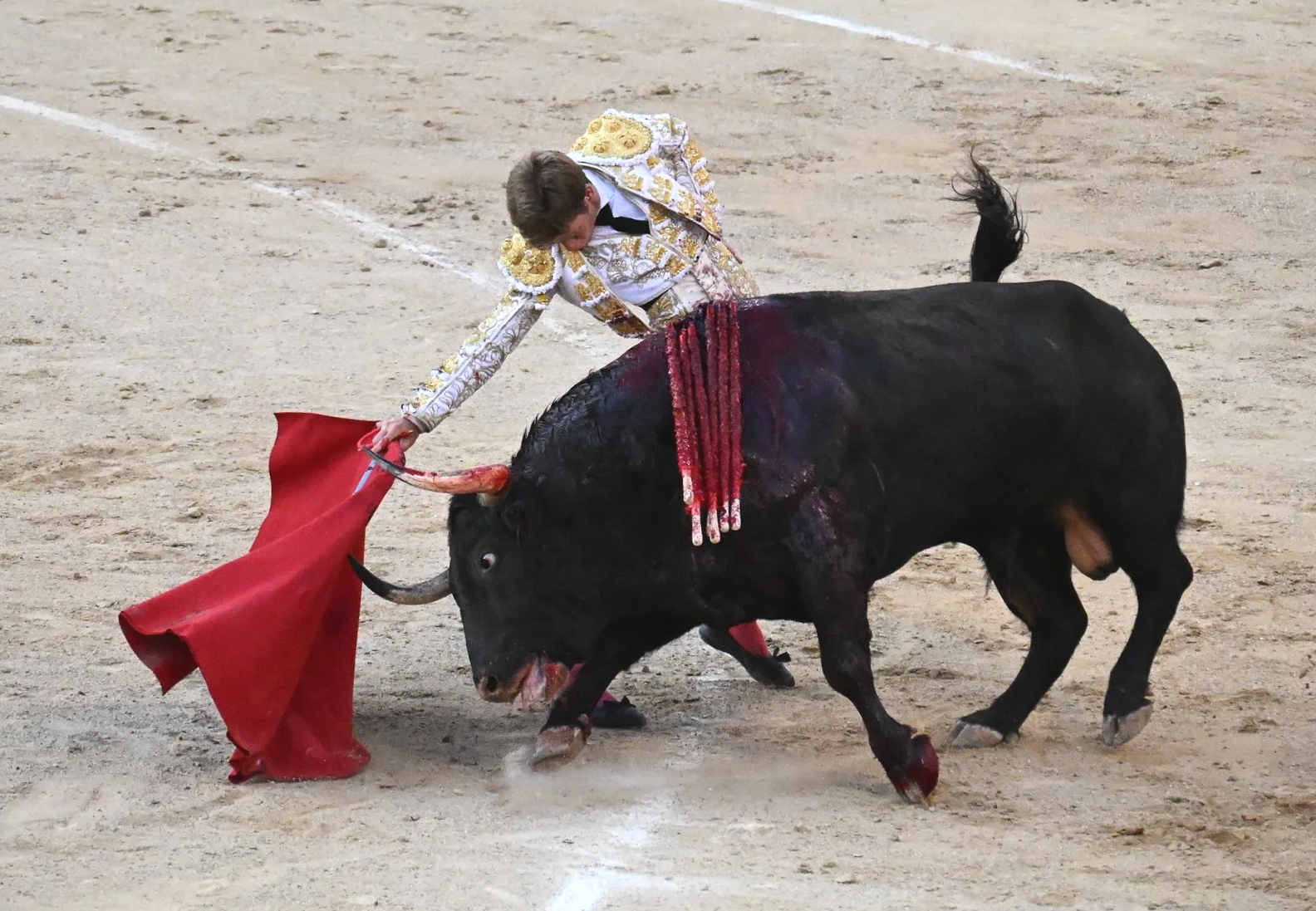
Román’s excellent faena to the third of today’s victorinos brought him its two ears and the ninth Puerta Grande of the Feria.
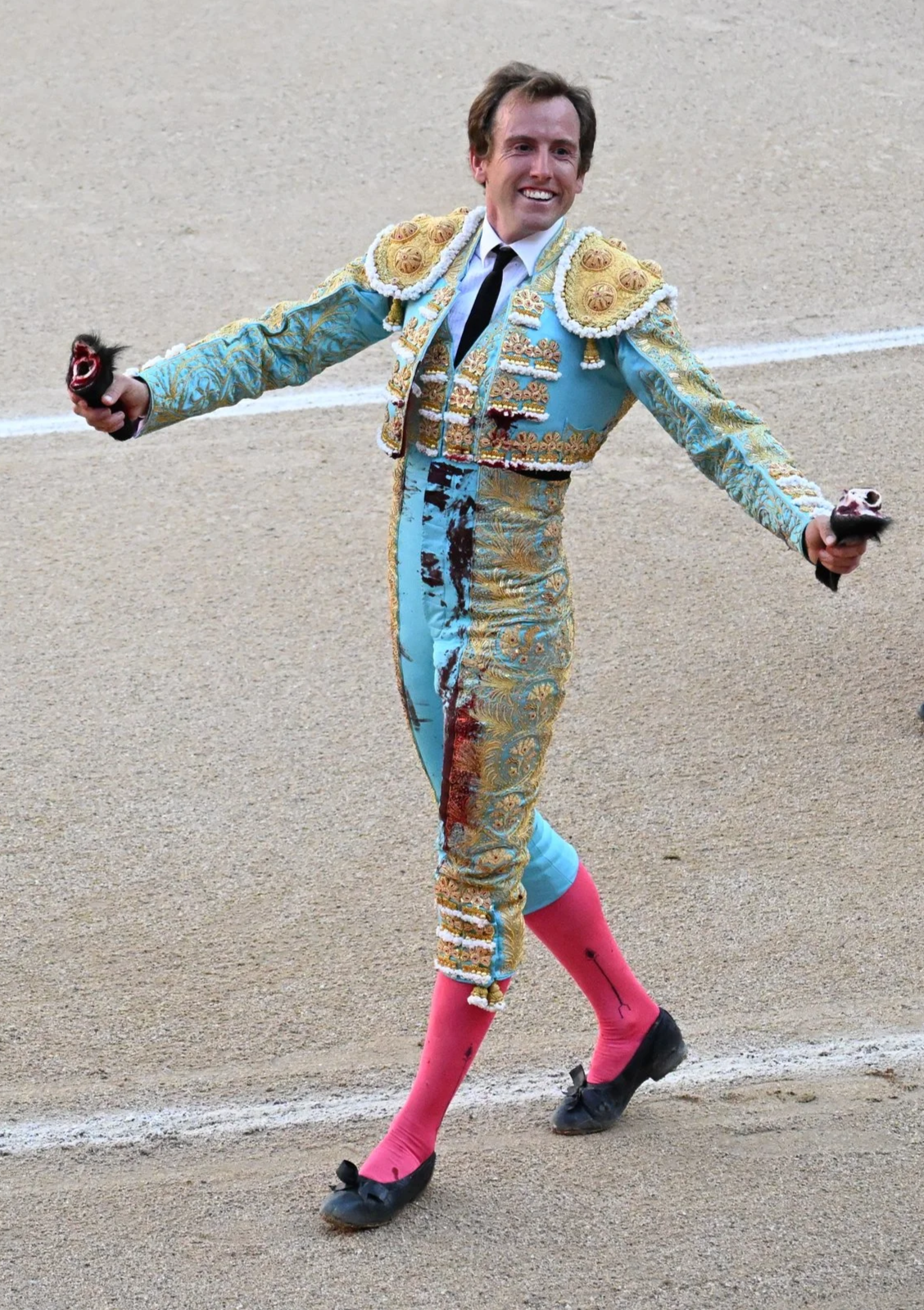
The San Isidro Feria officially closed with bulls of Victorino Martín for Morenito de Aranda, Fernando Adrián and Román Collado Gouinguenet Román - the 16th of this year’s 26 Feria events to be designated as ‘no hay billetes’. Morenito de Aranda left the impression that perhaps more could have been achieved in more capable hands. His first bull was humillando well in the capote and its faena was dedicated to the plaza. He produced some good naturales and chest passes, but things got trickier on the bull’s right horn before he killed with a media estocada, losing the muleta in the process and having to run from the animal. An aviso and descabello brought applause for the bull and silence for its matador. With the fourth bull, Morenito produced an unstructured faena, pegando pases (some of them fine-looking and templados) before a similar ending - this time a bajonazo, the matador losing the cloth once more and running from his foe, then receiving silence while the bull was applauded en arrastre. The gesture by Fernando Adrián in facing victorinos was unappreciated by the vocal inhabitants of Tendido 7, who complained throughout his opening faena and whistled the matador at its end, ignoring his opening templados capotazos, his several praiseworthy single muletazos and his excellent estocada, the dying bull lunging forward to expire at the matador’s feet. Unfortunately, Adrián’s other victorino was anovillado in appearance, drawing “miaow” calls from 7 as Fernando met it with the capote. Las varas drew further complaints, the palo breaking during the second entry to the picador (a frequent occurrence this San Isidro), and the complaining handclaps and barracking continuing throughout another faena of single passes. A pinchazo and estocada were followed by three descabellos. Román cut short his final faena of the day after it became clear his victorino wasn’t going to give up anything easily on either of its horns. But part of his thinking may have been that he’d done enough already, for his lidia of his first victorino, ‘Gallarete’, had brought him an award of two ears and his second Las Ventas Puerta Grande, the last occurring in a summer corrida nine years ago. He had given the animal some decent verónicas before it was poorly piced, then, in the faena, managed to keep the public’s attention when a fight broke out in the gradas, taking the bull from a distance and drawing it into excellent series of derechazos. There was just one series on the trickier left horn, before Román returned the cloth to the right hand, this time bringing off linked derechazos without the ayuda. Román is a popular torero in Madrid, having come close to Puerta Grande triumphs a number of times since 2017 and frequently sitting in the tendidos to watch the corridas here, always friendly and smiling and happy to chat with fellow spectators. The faena was definitely worth an ear, and then Román put the icing on the cake by placing his bull in the centre of the ring and killing with a superb suerte de recibir. The crowd’s handkerchief waving barely abated after the president showed his for the first ear, and the second ear was duly awarded.
June 7
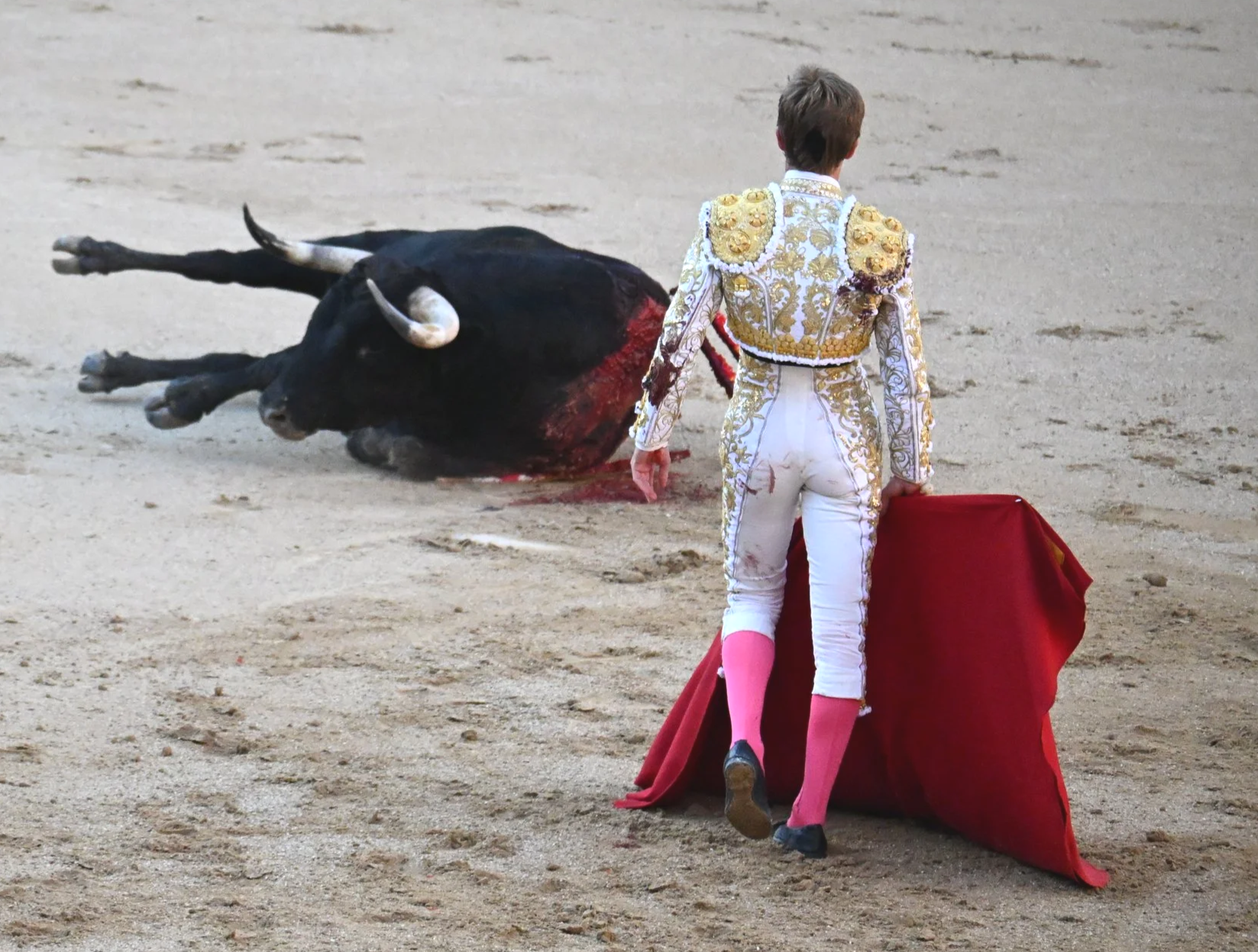
Borja Jiménez’s encerrona was plagued by falling bulls and poor swordwork when it mattered.
I should perhaps start this report by saying I have yet to be convinced by Borja Jiménez, to the extent that I swithered over whether or not I should stay for his six-bull Corrida In Memoriam de Ignacio Sánchez Mejías. Talking to other aficionados the night before the corrida, I discovered my doubts were shared - Borja was not regarded as a torero with much variety in his approach, while his irregular swordwork was also a factor that forecast another disappointing Madrid encerrona. As it turned out, there was another significant contributing factor to what then occurred, for the bulls selected (three of Domingo Hernández and three of Toros de Cortés) showed an alarming tendency to collapse - two of the former and one of the latter were sent back to the corrales, so unsuitable were they for the lidia. Of variety - long regarded as an essential ingredient when one matador is up against six bulls - there was none; indeed, there was just one quite in the six tercios de varas, given to the second bull. Borja did go to the toriles to meet three of his bulls a portagayola, but, apart from the first one - a statement of intent for the afternoon - the others were attempts to enliven a corrida that was getting away from him. With his killing, he managed to despatch today’s poor bulls well, but, on two of the animals he could have cut ears from (the first and fifth), in the first case the estoque landed low, and in the second four pinchazos and a media estocada were delivered. The lidia to the first of these involved a failed attempt at a larga cambiada a portagayola, but then came some exciting feet-together verónicas and delantales, a fine sequence of muletazos to take the bull out to los medios at the start of the faena and some well-executed linked derechazos and naturales, despite the bull sitting at one point. The best toreo of the day came with the fifth bull, an El Torero sobrero, where the faena comprised linked passes performed with exquisite temple. There were other factors not helping Borja - the so-called purists of Tendido 7, who barracked him every time they reckoned he needed to cross the bull’s path more, and who were in their element complaining about today’s bulls (is there really any point in continuing to clap one’s dissatisfaction with an animal once the third tercio is underway?), and the president, who decided not to give way to a strong petition and grant the ear of the fourth (from Toros de Cortés) after Borja had managed good capework, a decent faena (which the matador began on his knees) and a single, effective estocada. Borja opted to take a vuelta - something else for Tendido 7 to protest against. All in all, it was another disappointing Madrid encerrona for the history books.