The evolution of bravura
Carlos Crivell
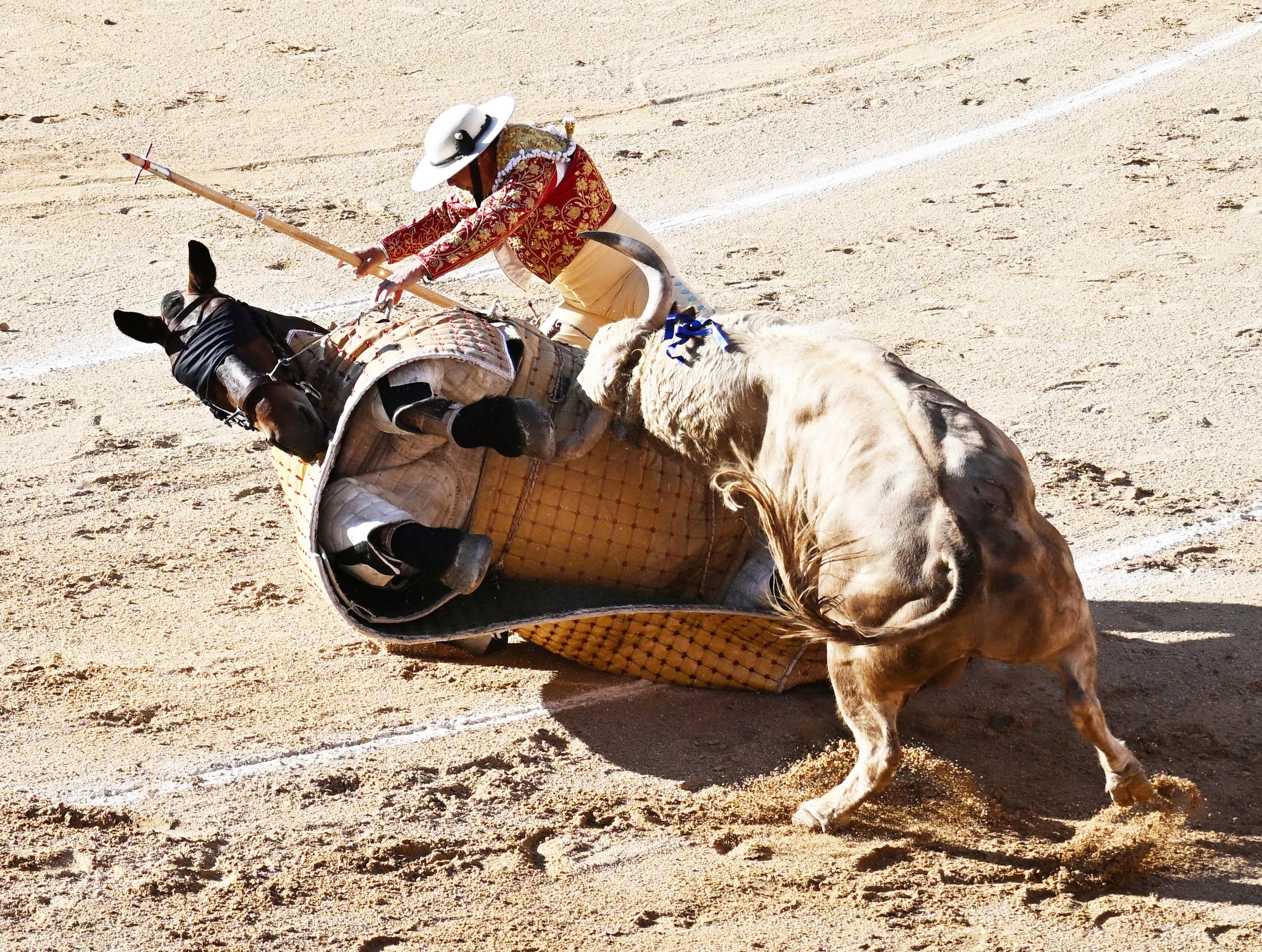
It seems indisputable that we aficionados need to change the concept we’ve had until now on bulls’ bravura. There was a time when the bull was considered to be more or less brave according to the number of horses it slaughtered during its lidia. It's an old concept which only serves as a reflection of a time when the picadors’ mounts had no peto and the bull attacked with extreme ferocity. The selection of the toro de lidia began at the beginning of the 20th century, but everything changed definitively with the peto’s introduction.
For a long time, it’s been thought that the only way to measure a bull’s bravura was its comportment in the suerte de varas. Selection in the tentaderos also held this suerte as fundamental when choosing vacas madres and sementales. Over time, this premise of the behaviour with the picador has lost importance to an extent, although it should not be deduced from this that aficionados wish to see the disappearance of the suerte de varas done well. All the tercios of the lidia are full of beauty. Las varas is a true delight, although the reality of the present times is that it has lost importance because almost everything is circumscribed in practice around la faena de muleta.
The good aficionado must defend la suerte de varas performed according to the canons, because that suerte continues to be a fundamental parameter for measuring the spirit and bravery of the bull. Currently, we are witnessing a notable decline, either because the bull can't withstand two or three well-placed puyazos, or because the matadors urge their picadors to hold off on the punishment so as not to diminish the strength of the bull during the muleta work. That’s to say, at present, in most of the bullfights held, there is no privileged place for the tercio de varas. It's a good time to congratulate and support those who continue to organize ferias in which three puyazos are a requirement.
The suerte’s decadence is a verifiable reality every afternoon of los toros. If this is the case, has the possibility of evaluating the bravura of a bull disappeared? Bravura itself hasn't been lost, but the selection and adaptation of today’s toro bravo has meant that the factors involved in assessing it are different.
It’s said that today’s bull is the bravest ever. I believe this is true. But we have to analyse what bravura is. Now it can be evaluated not just by a bull’s comportment with the horse: it should be seen as a broader concept that assesses how a bull behaves throughout its lidia. At the same time, new qualities have been introduced that give real meaning to the subject.
It’s been stated that bravura is the condition of the bull that enables it to fight aggressively up to the moment of its death. The time to assess bravura has been extended. Now, we speak of other concepts, such as a bull’s fixity in the cloth, its ability to keep its head low, the profundity and duration of its charge and its promptness in sprinting forward. According to Álvaro Núñez, bravura is displayed by the bull’s determined charge towards its meeting with the muleta. In several ways, all of these premises on the new concepts of bravura measure, principally, the way a bull charges in the final tercio.
What’s certain is that, in the current lidia, bulls can emerge that don't permit toreo with the capote, because they come out abantos (“fainthearted”, wary of the cloth) and there's no way to fix them; the tercio de varas in the second and third-class plazas is reduced to a single puyazo, often without full engagement, so that a bull could pass for being very manso or descastado. That bull, when it’s left alone with its lidiador, begins to charge with class in the muleta – a relatively new concept that includes its way of humillando, how it holds its head or the profundity of its charge. That bull that seemed to be of little spirit allows a great deal of work with the muleta, to the extent that such bulls are already starting to be classified as ‘brave’. It's a bravura that has circumvented the animal’s way of taking las varas. Everything has changed. In these moments, there’ s little capacity in the Fiesta for corridas concursos de ganaderías.
[In the recent Feria de San Isidro] was Victoriano del Río’s bull ‘Cantaor’ bravo? We’ll be in agreement that it was. Nevertheless, its behaviour in the tercio de varas was discreet. But its way of charging in the muleta was phenomenal. It’s a new concept of bravura.
In an ideal situation, it would be desirable for a truly brave bull to show its nature both in the way it charges to the horse and in its behaviour in the faena [supposedly requirements for an indulto - TW]. But today’s toreo takes on other dimensions. Many times, the public protest when they think the picador is punishing a bull a lot, simply because they think this punishment will reduce the number of passes in the faena de muleta.
I understand those who are reluctant to depart from the symbolic practice of la suerte de varas, but the ways of bullfighting are going down other paths. I don't know if this is a good or a bad thing. There are other means of gauging la bravura and the lidia has another appearance. Let’s hope it turns out for the good.
[This is a translation of an article in the current issue of Aplausos magazine. - TW]