Carlos Bueno
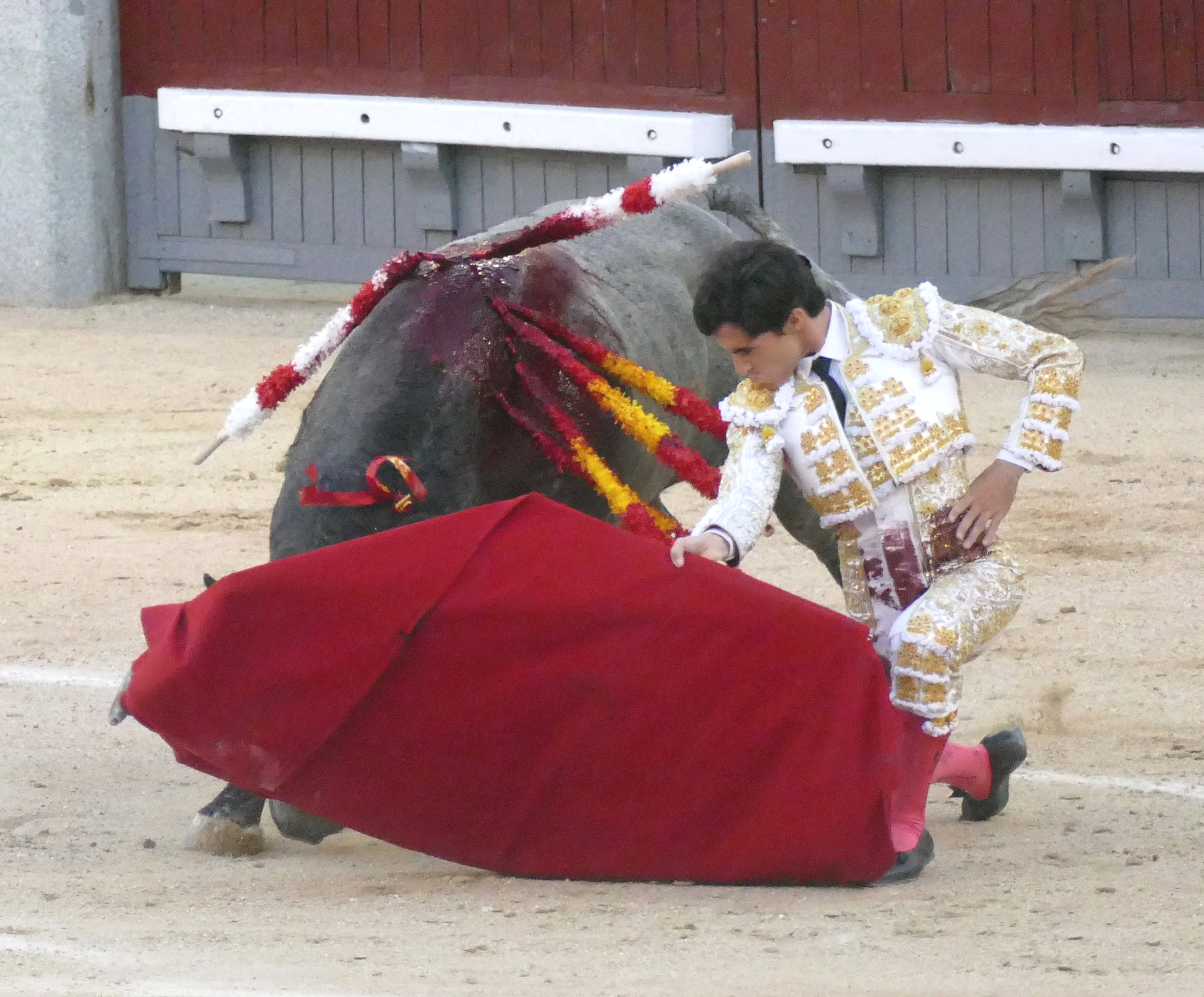
Álvaro Alarcón on the day of his alternativa
There was a time when la Tauromaquia knew how to wait. In which promises had room to grow, stumbling blocks didn’t lead to definitive sentences and toreros could develop little by little, to the rhythm of their conditions and circumstances. Today, however, immediacy prevails; it’s required to triumph straight away, and those who do not respond immediately to expectations are condemned to oblivion.
No one is born knowing everything. Learning takes time, maturity requires experience and the profession is built upon mistakes, too. Bullfighting history is full of toreros who needed time to reach their full dimension. If they had been judged solely by their first steps, many would never have reached the place they conquered.
But now it seems that a bad result weighs more than a trajectory; that a stumble erases the accumulated merits; and that business confidence disappears at the first failure. Someone who, yesterday, was an exciting promise, today becomes a name condemned to wait for an opportunity that may never come.
Take, for example, Nek Romero and Javier Zulueta, who starred in extensive campaigns as novilleros, arousing great expectations. Also there’s Diego García, Álvaro Alarcón, Alejandro Chicharro or Ángel Téllez, triunfadores in Madrid; Francisco de Manuel or Sergio Rodríguez, winners of la Copa Chenel; or Jorge Martínez, Alejandro Peñaranda and Daniel Crespo, toreros who’ve shown sufficient merits to believe in their possibilities. All of them, and many others, struggle to find a place in the ferias.
It’s one thing to demand and another to deny the time necessary to consolidate a career, because no one goes from being good to being bad from one day to the next.
Perhaps the problem lies in a business model that focuses on established names and safe box office values. Perhaps the weight of certain powers, and the difficulty of making one's way in structures where opportunities do not always seem to depend exclusively on merit, also play a role.
The result is that too many youngsters with enough going for them to interest the public are left out of the carteles. And that harms the toreros who see their professional horizon close; the aficionados, who miss the opportunity to discover new valores; and Tauromaquia itself, which needs to renew its incentives and awaken illusions.
El Mene, for whom many predict a promising future, has just taken the alternativa. We will soon know if he finds the margin of confidence that any matador who starts out needs, or if he is required to succeed afternoon after afternoon as if he were a consecrated figura.
La Fiesta needs competition, variety and opportunities so that the ranks do not become a closed circle with the same names always repeated. Haste was never a good thing, and perhaps least of all in toreo, where the profession, personality and maturity are not made to order.
Perhaps some of the toreros who are waiting for an opportunity today will be the figuras that fill plazas tomorrow. But, to discover this, you first have to afford them the time to establish themselves.
[This is a translation of a piece that first appeared on burladero.tv under the title ‘La pacencia que el toreo ha perdido’. - TW]