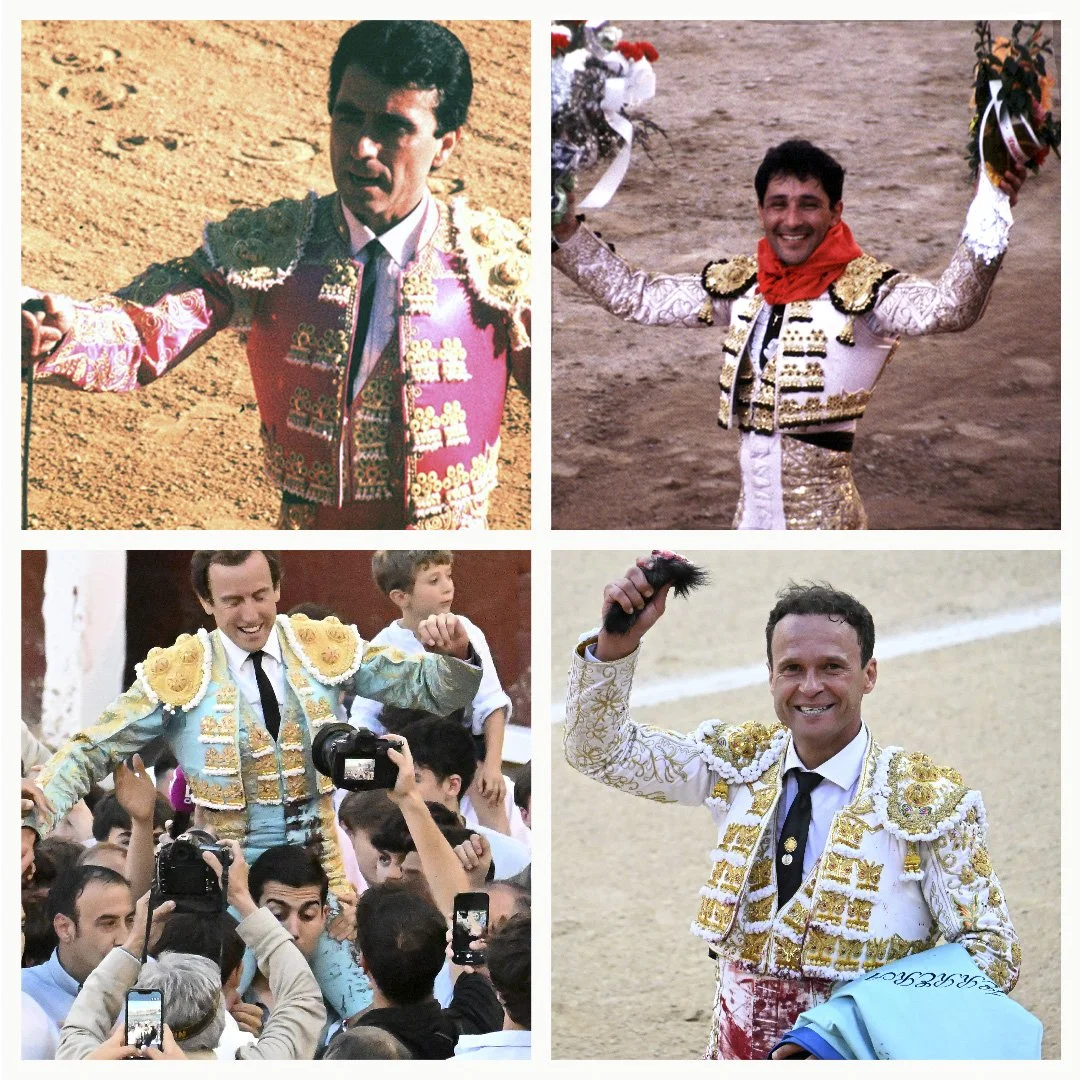
Clockwise from top left: Ortega Cano, César Rincón, Antonio Ferrera, Román
The recent successful Feria de Otoño mano a mano between Antonio Ferrera and Román was the first such Madrid corrida to see both participants carried out on shoulders since the 1991 Corrida de la Beneficencia featuring Ortega Cano and César Rincón. Thirty-five years apart, as chance would have it, I watched both festejos live from hotel rooms.
There was a lot of expectation around that June 6 Beneficencia. The Colombian Rincón had set the taurine world alight so far that season and his previous two Madrid appearances had both resulted in Puerta Grande triumphs. Ortega Cano was a respected torero with a decent track record in Las Ventas. The bulls would be from the renowned ganadería of Samuel Flores and the corrida would be televised across Spain.
I’d just finished attending Córdoba’s feria and was staying at a hotel in Arcos de la Frontera. It had a communal TV room, so near the appointed hour I went down there, relieved to find the room empty with no other hotel guests engrossed in another channel. Settling down, I watched Ortega Cano meet his first bull. Then there was a power cut affecting all of Arcos.
The period without electricity went on and on, and, by the time power was restored, I was sure that a large part of the corrida would have already taken place. But the taurine gods were generous that day, for the second bull had had to be returned to the corrales and a similar fate had befallen its successor. Consequently, with the programme restored, the bulk of the corrida was still to take place.
After both matadors had received ovations for their work with their opening bulls, Ortega Cano won two ears from his second animal and a further ear from his third, with the same outcomes occurring for César Rincón. Their toreo was impeccable; as Joaquín Vidal recorded, “Ortega Cano pulled off passes of dazzling beauty, especially in toreo redondo, which he performed with impressive depth and connection. There were moments when that toreo was pure art, and, between the artist bullfighter and the audience watching his work in awe, there was a complete identification of emotions and feelings. César Rincón showed courage and skill, and also flaunted his repertoire by adapting the most diverse moves to the changing conditions of his bulls.” It was my first sighting of the Colombian and I was duly impressed with his ability to torear according to the cánones and to give importance to the bull.
That corrida set the scene for the summer of 1991 and a large part of the 1992 temporada, for the public wanted to see Cano and Rincón on the same carteles and the empresas duly obliged. For Cano, it meant a resurgence in contract numbers, while the newcomer Rincón could now be seen in plazas across Spain.
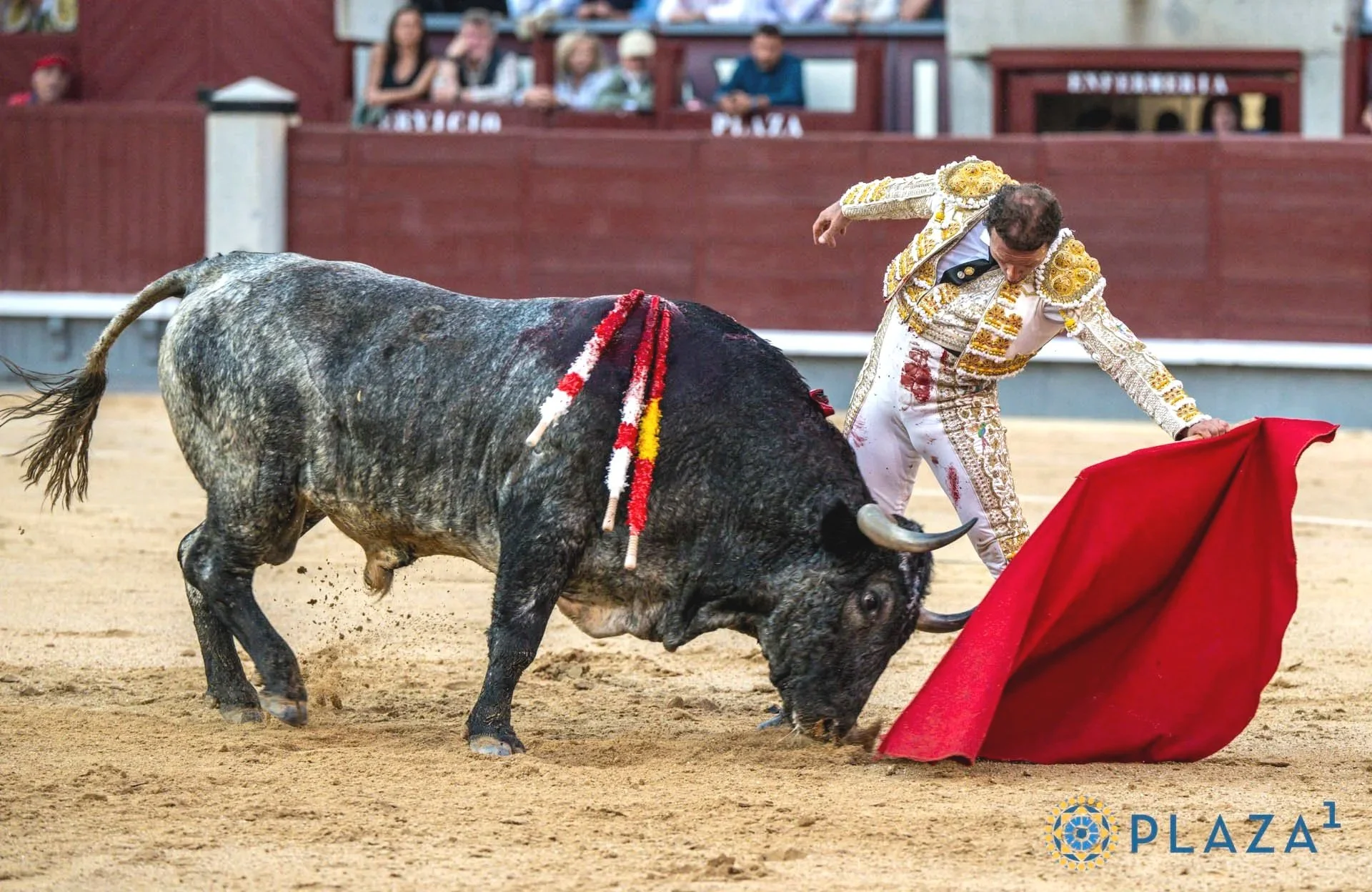
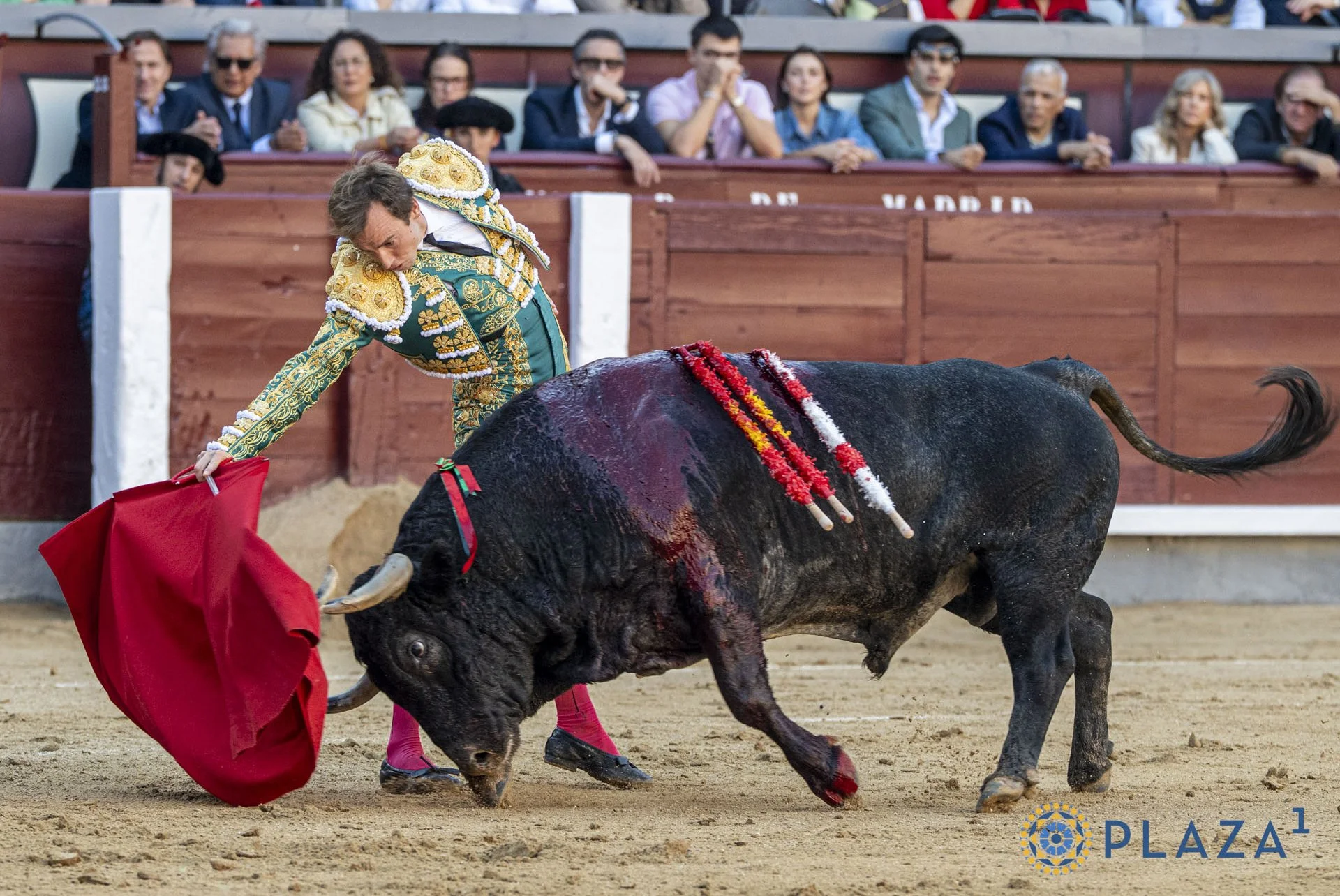
Antonio Ferrera (above) and Román (below) during their October 11 mano a mano at Las Ventas (Images by Plaza1)
On October 11 this year, I was flying in from Barcelona to Santander, where I was due to visit an art exhibition the next day. Conscious that this second weekend of Madrid’s Feria de Otoño would be streamed, I had my laptop with me, and, arriving at Santander’s airport just half an hour before the corrida was due to start and seeing the length of the queue for the bus into town, I took a taxi to my hotel.
Settled in my room with a beer from the fridge, I watched the mano a mano between two toreros I’d already seen from a plaza seat leave through Madrid’s Puerta Grande during this year’s San Isidro. How eccentric would Antonio Ferrera’s performance be this time? Would Román be able to repeat his June triumph? And what would the bulls from Adolfo Martín be like?
There was no repetition of Ferrera taking on the role of picador, but what we did get was further irregular legs-based toreo that led on to some profound toreo with the wrists, the extremeño clearly putting his heart and soul into his performances and focusing on naturales (some given with the right hand). And we were given two examples of his citing to kill from a distance, walking in towards the bull and meeting its charge (most spectacularly on his third animal) with cloth and sword when it eventually came forward. After receiving silence following the death of his first bull, Antonio won an ear from each of his other two.
Román achieved a similar result, the younger torero showing less mastery and more visible effort than his fellow matador (this was an corrida that took a lot out of both toreros). His first two bulls were highly challenging of the valenciano’s characteristically honest toreo, but Román came out on top of both encounters, taking a deserved vuelta after his first bull and winning an ear from the second before departing to the infirmary to check the impact of a bad tossing. When he returned for the day’s final bull, he found he had a more compliant animal before him and duly won his second ear.
In contrast with the mano a mano of 35 years ago, today’s bulls of Adolfo Martín played an exceptional part in the corrida’s success, being impressive-looking and - other than the sixth - tough.
This was a superb corrida, but I would be surprised if it has the same huge impact as the Beneficencia of 1991, as we live now in different times - ones in which contract numbers are reduced and the empresas and the figuras have a stranglehold on la Fiesta. But hopefully it will lead to at least modest increases in contracts for both Ferrera and Román as the 2027 temporada unfolds.