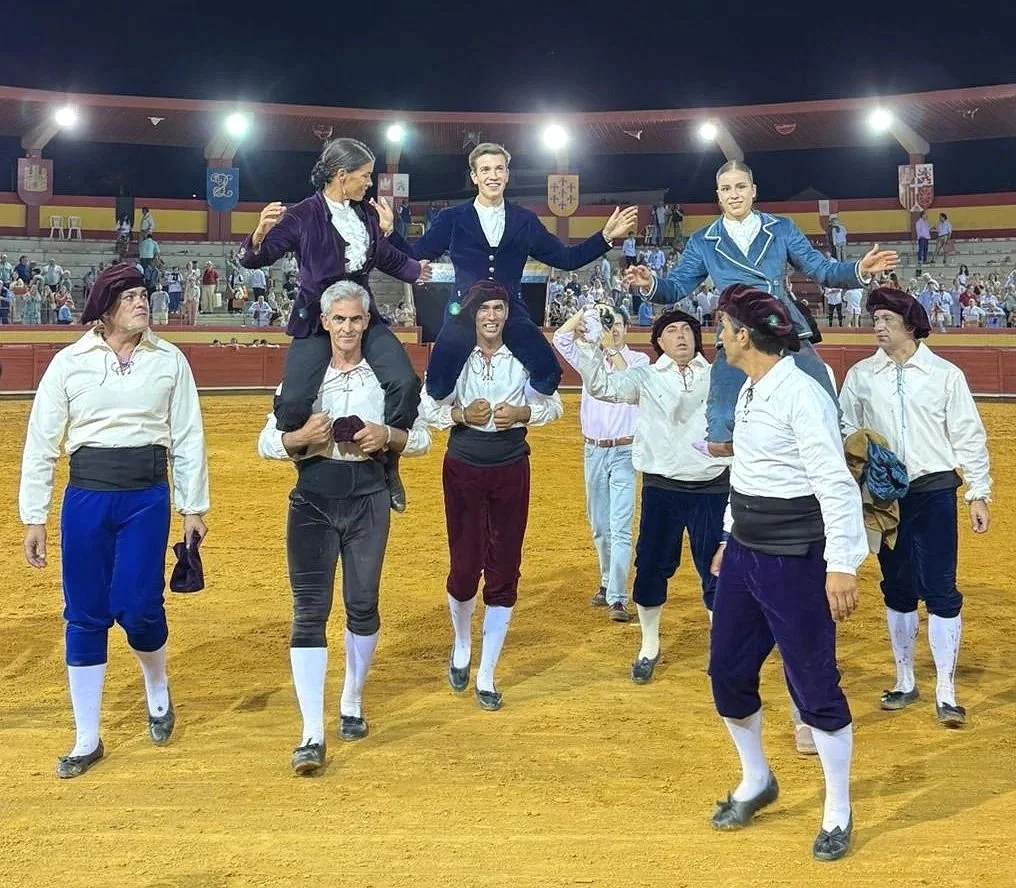
The citizens of Palos de la Frontera enjoyed a triumphal Corrida Pinzoniana mixta in 2025, but this year the event had to be cancelled following challenges to the festejo’s contracting
The world of taurine journalism isn’t particularly known for investigative reporting, so congratulations to writers at cultoro.es who (together with elDiario.es) have looked in more depth at what has been going on with the increasing involvement of tribunals to resolve contracting disputes (see too my earlier piece on ‘Tribunal tribulations’).
The investigators found that one particular company - Emilivia Espectáculos S.L. (based in Zaragoza Province) - has been involved in a substantial number of complaints about public authorities’ contracting of taurine events. Some of the complaints involved have been partially or wholly upheld, and the right to file complaints is not being questioned, but, as cultoro puts it, “the call on resources and the delay derived from the complaints’ resolution have contributed […] to placing the organization of festejos against the clock, compromising their celebration or leaving the authorities with little leeway to react. And when the exception begins to repeat itself municipality after municipality, season after season, it becomes important for the sector to understand what is happening.”
Cultoro reports that Emilivia Espectáculos has, in recent years, established a recurring activity of challenging contracts related to taurine festivities in various Spanish municipalities. Its methods appear recently to be being taken up by other companies, including Chinchón Inversiones, Eurofiestas España (also based in Chinchón), Toros Puebla (based in the province of Ciudad Real) and Promociones Taurinas Eloliga S.L. (based in Madrid) .
This season alone, Emilivia Espectáculos has lodged appeals against contract specifications at Arroyo de la Encomienda (Valladolid), El Burgo de Osma (Soria), Torrejón de Ardoz (Madrid), Las Rozas (Madrid) and Calatayud (Zaragoza), in addition to other procedures. In Collado Villalba an appeal against this season's bullfight contracting - after the town was left without toros in 2025 due to a similar dispute - was also recorded. Baeza (Jaén), Móstoles (Madrid), Andújar (Jaén) and Aracena (Huelva) also lost planned festejos this year, while challenges to taurine contracts were also experienced but fortunately overcome at Fregenal de la Sierra (Badajoz), Écija (Sevilla), Cortegana (Murcia), Beas (Huelva) and Montoro (Córdoba).
Appealing in itself should not be problematic. But, as cultoro has stated: “The problem is what happens when the appeals follow one another, the procedures go on forever and the bullfighting calendar continues to advance while the file remains trapped in an office. There the circumstances cease to be theoretical. There are dates that arrive. Contracts that cannot be closed. Toreros and ganaderías that need commitments. Ayuntamientos that run out of time. And aficionados who discover, when it is too late, that the festejo of their town has become trapped in an administrative procedure.”
To date, Emilivia Espectáculos has only put on two festejos itself, in Burgo de Osma in 2022 and in Vitigudino in 2023. The company was also awarded the contract for Zalamea la Real’s 2026 corrida, although the procedure led to an unusual situation when, according to the City Council itself, the three matadors included in Emilivia’s offer – José María Manzanares, Miguel Ángel Perera and David de Miranda – stated that the company had not contacted them to formalize their hiring. In the end, the feria in Huelva Province went ahead - but without its traditional taurine event.
Zalamea’s ayuntamiento have commented: “In recent years, the administrative arrangements in relation to festejos taurinos have become accompanied on certain occasions with denunciations, texts, threats and pressures that have made councils’ and their staffs’ work to legally progress these events enormously difficult […] There are recent examples of neighbouring localities that have become obliged to suspend or cancel their festejos taurinos as a result of the difficulties generated around these proceedings. If this dynamic continues, the people acting in this manner will end up achieving exactly what they apparently intend - fewer and fewer bullfighting events in our pueblos.”
Countering this trend
But perhaps the end of these practices is in sight. The Tribunal Administrativo de Recursos Contractuales de Andalucía has recently fined two organisations - one being Emilivia Espectáculos - for challenges to taurine contracting at Úbeda (Jaén) and Palos de la Frontera (Huelva).
At Úbeda, three organisations - Chinchón Inversiones, Toros Puebla and Emilivia Espectáculos - made tribunal submissions alleging faults in the public contracting for the town’s Feria de San Miguel. The tribunal dismissed Chinchón Inversiones’ case on the grounds that the organisation was not listed on the Registro de Empresas de Espectáculos Taurinos de Andalucía and had not made the regulatory guarantee of 250,000 euros and was therefore ineligible to bid for the contract in any case. While Toros Puebla was in the position of being an eligible bidder, the tribunal did not uphold its arguments about the contracting procedure. Emilivia Espectáculos was found to be in the same position as Toros Puebla, i.e. ineligible to bid for the contract, but was also fined 1,500 euros because it had chosen to return to the tribunal despite receiving the same decision a week earlier and without fulfilling the eligibility requirements in the meantime, thereby involving the tribunal and other parties in completely unnecessary work.
In the case of Palos de la Frontera, an unnamed company was fined 3,000 euros after it made three successive appeals against the contracting of the town’s 2026 Corrida Pinzoniana. The corrida did not go ahead after the ayuntamiento twice withdrew its proposed contract in the face of complaints from the anonymous party and then reluctantly decided there was insufficient time left to proceed with the October event. The tribunal, however, found there were substantial contradictions in the complaints that had been lodged and that the complaining company had abused the challenge mechanisms with “manifest recklessness” and a strategy aimed at hindering the contract.
Steps are also being taken within the mundillo to counter such strategies.
The president of the Unión Nacional de Picadores y Banderilleros Españoles (UNPBE), Rafael González Amigo, claims that the companies involved have an economic objective in mind. "These companies hijack the ferias to get a ransom", he says, describing these practices as "a crude way of operating" that affects the entire bullfighting sector. The empresas’ organisation ANOET, la Unión de Toreros, swordhandlers’ organisations and the UNPBE are now working together to thwart these activities. Their aim is to use the sector’s experience to strengthen the legal certainty of procurement procedures, anticipate deadlines and prevent resources from paralyzing the organisation of festejos.
"We have been defending ourselves against these companies for a long time; now we have to go on the offensive and attack them directly, because they are doing a lot of damage to the sector, not only in the towns where they invalidate the festejo, but also with bullfighting’s image," says González Amigo.
José Pedro Prados El Fundi, president of la Unión de Toreros, considers that the Andalucía tribunal’s recent resolutions against these practices, which have left dozens of festejos in municipalities cancelled in 2026, should mark a turning point. He reckons the activities end up being "disastrous for the aficionados, for the municipalities and for the empresas who do things correctly." With this in mind, the Union is examining the possibility of penalising matadors who collaborate with the companies involved, and Prados has asked for more transparency as to the names of companies and individuals behind the regular resorting to tribunals and has urged municipalities and administrations to issue their tenders as soon as possible so that a subsequent challenge does not stop events from happening. The Union is also committed to drawing up legally sound model contract specifications that reduce the chances of procedures being used to block awards. Work has already been done on a specific model with a lawyer specialising in public procurement in Madrid, with the aim of offering administrations tools that allow them to defend their tenders against abusive appeals.