Can Madrid’s El Batán learn from Sevilla’s La Venta de Antequera?
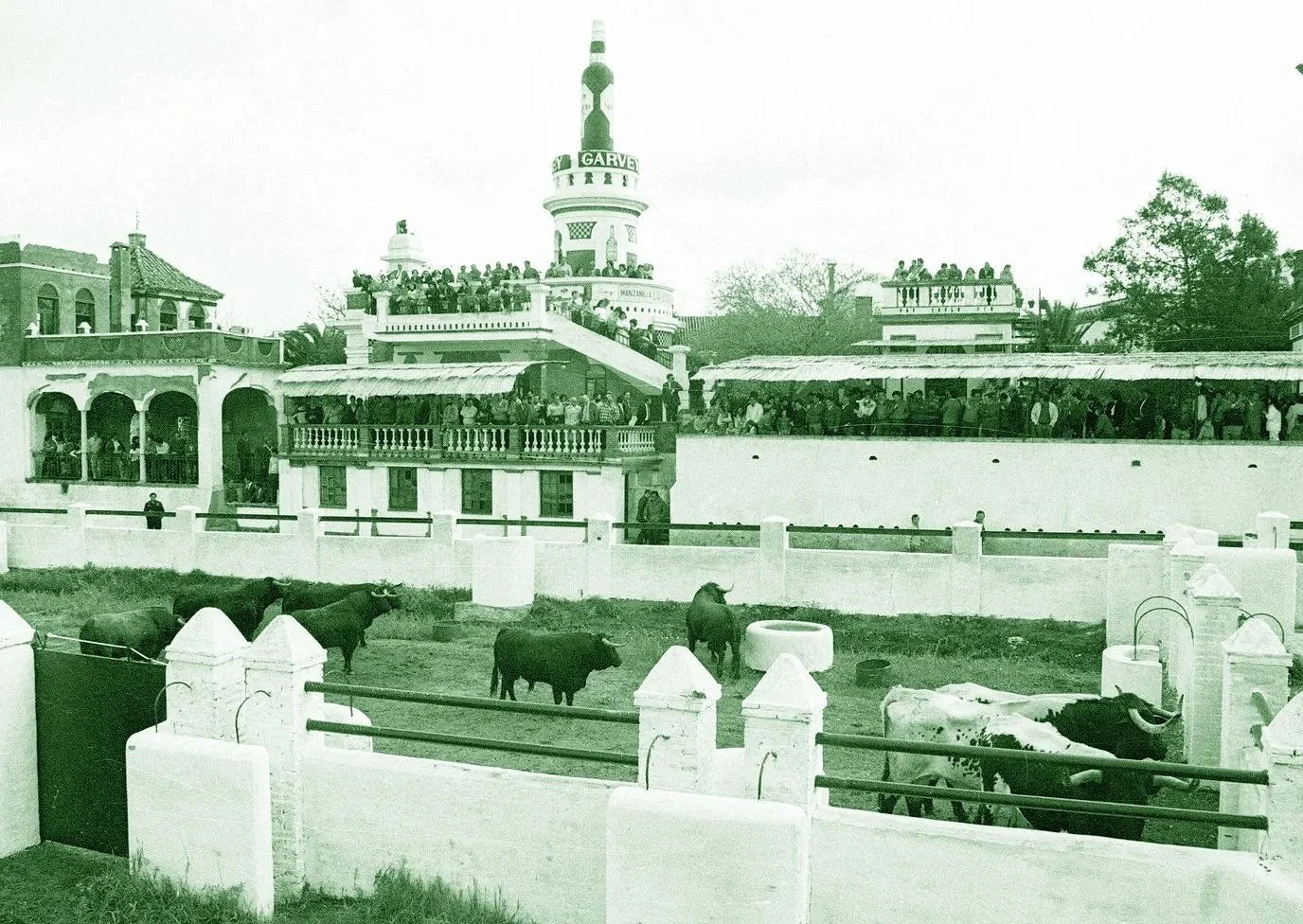
(Image from La Real Venta de Antequera de Sevilla website)
Twelve days after formally taking possession of La Maestranza, the Sevilla bullring’s new empresa, José María Garzón, gave a press conference outlining the future direction of los toros in Sevilla prior to a gala event in February to launch the plaza de temporada’s carteles. Most of what he said was in line with previous speculation - a slight increase in the number of carteles, a wider range of ganaderías, a return to a televised Feria de Abril, and better arrangements for abonados. But one surprise was his announcement of a return to using the corrales of the Real Venta de Antequera to display bulls prior to their corridas. Garzón said he hoped to show “five or six” strings of bulls there this year in the lead-up to the Feria de Abril.
La Venta was founded in 1916 by Carlos Antequera, who ran a small bodeguita, ‘Las Gradas de la Catedral’, facing Sevilla’s Cathedral, and had been a mozo de espadas of the matador Antonio Fuentes. Carlos acquired land in Guadaira, near the Betis stadium, where he built the first Venta, a space of approximately 10,000 square metres, with the intention of creating a haven of peace for travellers en route to Sevilla. La Venta acquired a taurine ambiente, not only due to the individual visitors it attracted, but also because corrales were constructed there, which, from 1927, housed bulls delivered to the nearby train station of Los Merinales as a final stop before their transfer to La Maestranza. With the start of each temporada, the Venta was transformed into a meeting point for aficionados, who would come to admire the bulls and hold reunions. La Venta also had broader cultural significance, as it hosted the first meeting of the poets of the Generation of '27, who, led by the matador Ignacio Sánchez Mejías, gathered there to mark the 300th anniversary of the death of the Baroque poet and dramatist Luis de Góngora.
In preparation for the influx of visitors that the 1929 Ibero-American Exhibition would bring to Sevilla, Carlos Antequera’s son decided to construct a larger Venta at Dos Hermanas (now part of Sevilla’s metropolitan area). He encouraged the winery owners of Jerez de la Frontera to get involved with the project, with the result that the new Venta featured individually-styled pavilions in the names of Agustín Blázquez, Domecq, Garvey Sánchez Romero, González Byass, Marqués de Mérito and Osborne. In 1930, King Alfonso XIII visited the Venta and added the ‘Real’ title to the project’s name.
After difficult times maintaining the Venta during and after Spain’s Civil War, the Antequera family sold it in 1958. The new owner added a bullring to the estate, opening it in 1962. Six years later, la Venta was sold again, gained a bus stop that linked it to central Sevilla, and began operating as a wedding venue. But further deterioration occurred and the site was sold once more. Eventually, the taurine empresa Diodoro Canorea, son-in-law of Eduardo Pagés, acquired the corrales, while the businessman and ganadero Gabriel Rojas purchased the rest of the estate, only to close it down for more than 10 years.
The corrales were last used in 1988. In 2012, María Dolores Rojas Álvarez, a niece of Gabriel Rojas, inherited the estate, and together with her husband, Daniel de la Fuente Soto, tried to recover what is considered a jewel of Sevillian regionalism. La Venta was reinaugurated in 2015, its bullring hosting a tienta with Pepe Luis Vázquez and Eduardo Dávila Miura as part of the celebrations (it has since been used by Sevilla’s escuela taurina). Today’s Venta features six halls - ‘Antequera’, ‘Cristal’, ‘Domecq’, ‘González Byass’, ‘Maestranza’ and ‘Osborne’ - a museum, some 6,000 square metres of garden, the corrales and the bullring. It hosts business meetings, corporate and social events (weddings and other celebrations), and continues its traditional focus on the worlds of flamenco, bullfighting and gastronomy.
Can Madrid learn from Sevilla?
Madrid’s similar corrales at El Batán have once again fallen into disuse after bulls were exhibited there for the 2023 Feria de San Isidro, the Real Unión de Criadores de Toros de Lidia (RUCTL) having asked la Comunidad de Madrid, owners of Las Ventas, to suspend such displays. Amongst the RUCTL’s concerns were that the veterinary inspection of animals exhibited at El Batán did not take place on their arrival there, but later once they had been moved to the Las Ventas corrales; any injuries incurred at El Batán, or deterioration in the bulls while they were there, were therefore viewed as being the ganaderías’ responsibility rather than the empresa’s. There’d been several examples of bulls being rejected by the veterinarios at Las Ventas after weight loss at El Batán, and the installations there needed improvement in order to enable veterinary inspections to take place at the corrales.
Individual ganaderos also expressed concerns about displaying bulls at El Batán - concerns that José María Garzón and La Real Venta de Antequera will also need to address. The toro bravo is a nervous animal and easily stressed to the point where it can stop eating or drinking, something that can be brought on by transportation or a change of habitat. Regular exercise is also considered important, with some ganaderos running their animals daily. Transfer to display pens rather than straight to the plaza de toros means an additional change of routine and a longer period of confinement, as well as a further embarkation. With people not very far away from the bulls, distractions can occur that can also produce fights amongst the animals.
In La Venta’s favour, the spectators that attend there are further away from the corrales than at El Batán and are also looking down at the bulls from a greater height, similar to the general approach in France at plazas where the public are able to see the bulls in their corrals. But the problems of a change of routine, a new habitat, lack of exercise and having to repeat transportation remain, as, potentially, is the timing of the animals’ veterinary inspection. It will be interesting to see how the ganaderos respond to having their animals displayed at La Venta, which ganaderías are selected, how the animals are dealt with by the vets, and their performances afterwards in La Maestranza. If this new initiative proves to be successful, it could point the way for modifications to be made to El Batán to enable toros bravos to return there too.